

Time:2026-04-14
In the competitive world of 2026 industrial lighting, a motion sensor is no longer judged only by its detection range. For Original Equipment Manufacturers (OEMs) and electrical contractors, the real value is the speed of setup. The industry is seeing a major shift toward "tool-less" designs—parts that snap into LED fixtures without complex wiring or special tools.
Setting up a high-performance motion sensor light system in big buildings used to take a lot of work. However, new updates have turned the motion sensor detector light switch and light controls into simple, ready-to-use tools. This change is greatly lowering the "Total Cost of Ownership" (TCO) for large facilities.
The main goal of a motion sensor is to provide light only when and where it is needed. While early systems were bulky and hard to set up, 2026 technology focuses on "Invisible Intelligence." Engineers now make powerful sensors small enough to fit directly inside the light housing.
In the past, an outdoor motion sensor light needed a separate box on the wall or pole. This caused more parts to break and caught more wind. Modern designs use internal sensors that sit inside the fixture. This "built-in" style protects the electronics from the weather while keeping the LED light looking clean and sharp.
In offices and stores, the motion sensor light switch has replaced old-style switches. By mixing manual control with automatic sensing, these devices follow strict energy rules like Title 24 and IECC. For contractors, the benefit of a modern motion sensor detector light switch is that it fits standard wall boxes. Many models do not even need a neutral wire, which makes them perfect for quick upgrades.
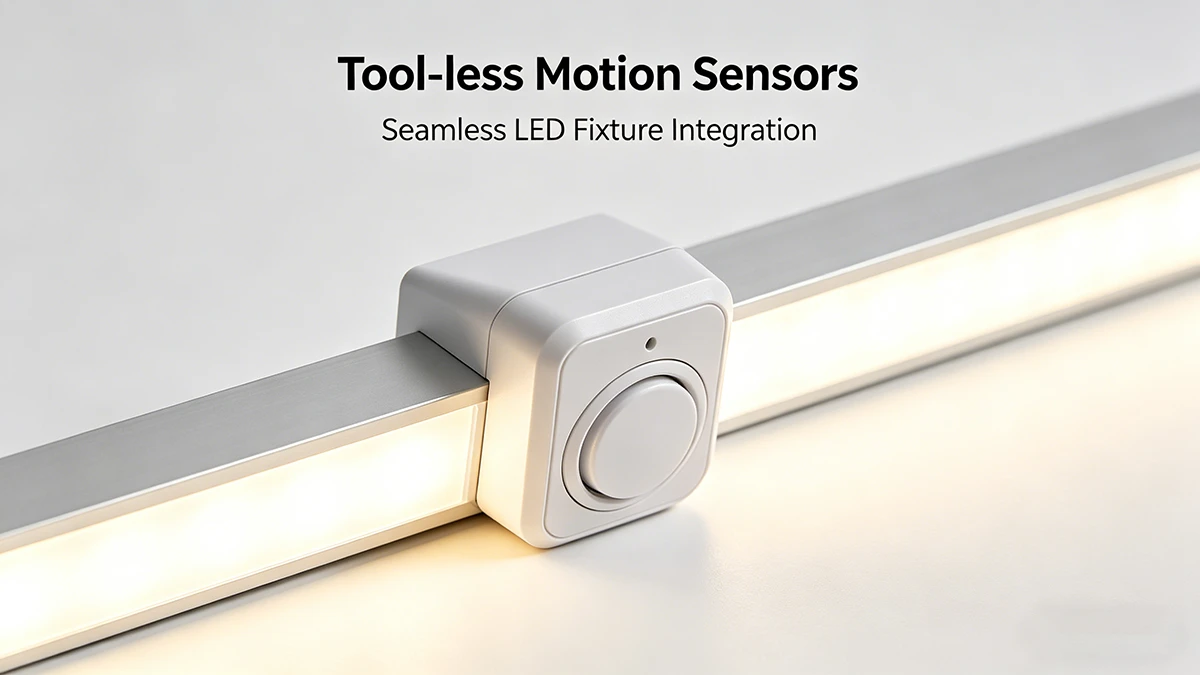
"Tool-less Integration" means a design where the motion sensor can be installed, replaced, or updated by hand. This usually happens through a twist-lock or a push-and-click system.
In a warehouse project with 500 lights, wiring sensors by hand can take up 30% of the labor cost. A tool-less motion sensor removes this extra cost. By using a standard 4-pin or 8-pin base, the sensor is simply pushed into the bottom of the light and twisted. This cuts the setup time from fifteen minutes to less than thirty seconds per light.
Technology moves faster than hardware. An LED light might last for 100,000 hours, but sensor tech may update every three years. Tool-less designs let managers swap out an old motion sensor light bulb or sensor part for a newer version without replacing the whole light fixture.
A high-quality lighting system depends on its detection logic. To avoid the trouble of lights turning off while people are still working, engineers focus on the motion sensor detection angle.
For high ceilings (40ft+), a narrow, vertical motion sensor detection angle is needed to stop the sensor from seeing movement in the next aisle. In a meeting room, a wide 180-degree or 360-degree view is better. This catches the small movements of people sitting at a table.
In homes and outdoor areas, "false triggers" are a big concern. This is often caused by wind or animals. The solution is the pet immune motion sensor. By using two types of tech (Heat and Radar), these sensors can tell the difference between a 150lb human and a 40lb dog. This ensures outdoor motion sensor lights only turn on when a person is actually there.
Outdoor motion sensor lights face tough conditions like hot sun, heavy rain, and freezing cold.
When picking a sensor for outside, the IP rating is very important. For 2026, the standard is IP65 or higher. A tool-less outdoor sensor must have a high-quality seal that keeps water out the moment it is twisted into the light. This ensures the outdoor motion sensor light stays working even in wet or salty air.
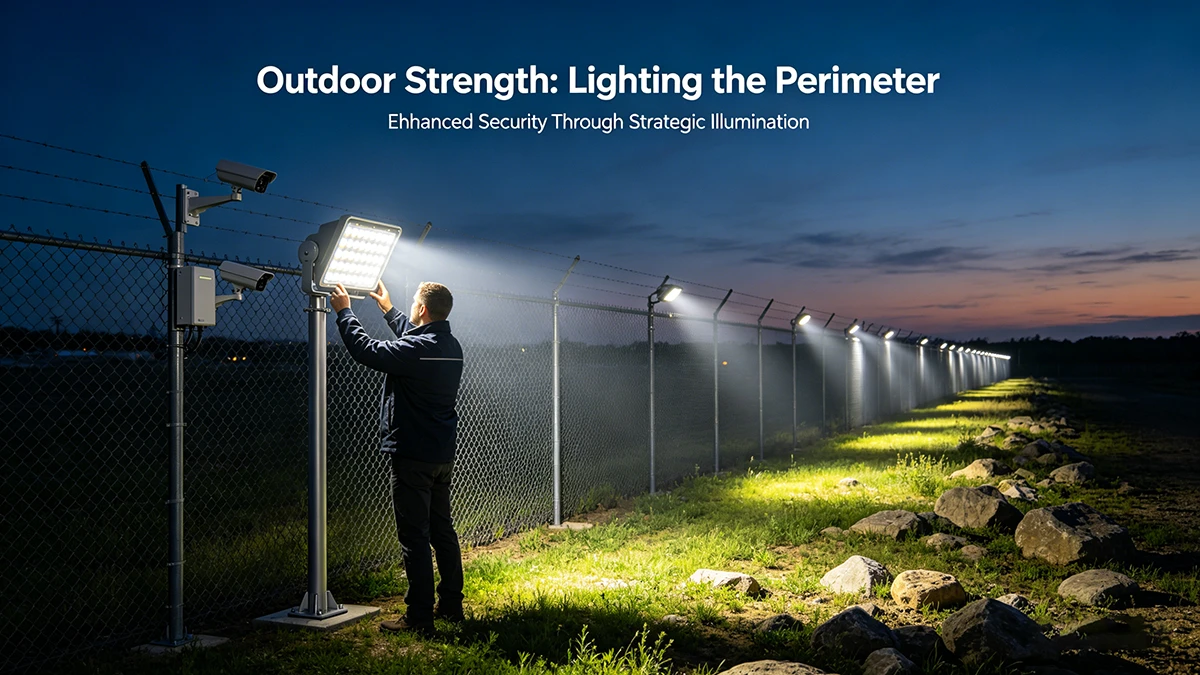
The biggest trend in green upgrades is the outdoor solar motion sensor light. By pairing a solar panel with a tool-less sensor, these lights run entirely on their own. This is the best choice for fence security where digging for wires is too expensive or impossible.
The most common question from facility managers is how to maintain a sensor. Easy maintenance is a major plus of the tool-less system.
While a motion sensor light bulb is a quick fix for a home porch, industrial buildings need stronger sensors. In these places, "maintenance" usually means changing settings like "Hold Time." Modern sensors let you do this with a remote or a phone app, removing the need for ladders or lifts.
People often ask, "how to change battery in adt motion sensor" or "how to replace adt motion sensor battery." While industrial sensors get power from the light itself, the easy-access design in 2026 takes notes from the security industry. Just as you can pop the cover on a home sensor, modern lighting parts are made for "one-hand" access. This makes work safer and faster for the crew.
As buildings get smarter, the light fixture is the most valuable spot on the ceiling. It provides the power and the height needed for the motion sensor to collect data.
By choosing tool-less sensors, you choose flexibility. You cut your labor costs, remove the need for complex wire maps, and make sure your building can handle new tech. Whether it is an outdoor motion sensor light for a park or a motion sensor light switch for an office, the goal is the same: fast setup and easy use.
The best units use high-quality solar panels and long-lasting batteries. Look for "split-mount" designs where you can put the panel in the sun and the motion sensor over the door.
Most new sensors use "masks." These are plastic clips that snap over the lens to narrow the view. This stops the sensor from seeing movement in the next aisle. You can also use a remote to change the sensitivity.
Yes, but they work best when mounted at the right height (7-9 feet). If they are too low, a large pet might trigger the sensor. When set up right, they are very reliable for modern security.
A motion sensor light switch lets you control the light by hand. This is often required by law (Vacancy Mode) to make sure lights do not turn on for pets or sun, but always turn off when the room is empty.


)
)
)
)

+86 15899791249

+86 755 2955 3313


Address: Huafeng No.1 Science and Technology Park, Sanwei, Bao'an District, Shenzhen, Guangdong, China.
