

Time:2025-12-17
The way we interact with lighting systems has undergone a paradigm shift in recent years, moving from manual switches and rigid schedules to dynamic, user-centric control. At the forefront of this transformation is voice controlled smart lighting—a technology that leverages voice recognition to enable hands-free, intuitive management of illumination. From simple commands like “turn on the lights” to complex scene customization via voice prompts, this innovation has redefined convenience, accessibility, and efficiency across residential, commercial, and public environments. Unlike niche voice control variants (e.g., no-wake-word systems), voice controlled smart lighting encompasses a full spectrum of voice-driven interactions, adapting to diverse user needs and scene. For homeowners, facility managers, and business owners, it represents a cornerstone of modern smart environments, bridging the gap between users and lighting infrastructure. This article explores the evolution, core value, scenario-specific applications, implementation guidelines, and future trends of voice controlled smart lighting, highlighting its role in shaping the next generation of intuitive illumination management.
Traditional lighting control methods—reliant on physical switches, wall panels, or basic remote controls—have long failed to keep pace with the dynamic needs of modern life and business. Physical switches restrict control to on-site operation, making it impossible to adjust lighting when away from the space, leading to energy waste and inconvenience. Rigid scheduling systems cannot adapt to unexpected changes in occupancy, such as a business staying open late or a homeowner returning early. Even early smart lighting solutions often required complex app navigation, creating a technical barrier for users with limited digital literacy.
These limitations are amplified in fast-paced or hands-busy environments. A chef in a commercial kitchen cannot pause to adjust a light switch while cooking; a warehouse worker carrying heavy goods cannot operate a remote control; an elderly resident with mobility issues may struggle to reach wall-mounted switches. Voice controlled smart lighting addresses these gaps by eliminating the need for physical interaction, putting comprehensive lighting control at the user’s voice, and making smart lighting accessible to everyone—regardless of technical expertise or physical ability.
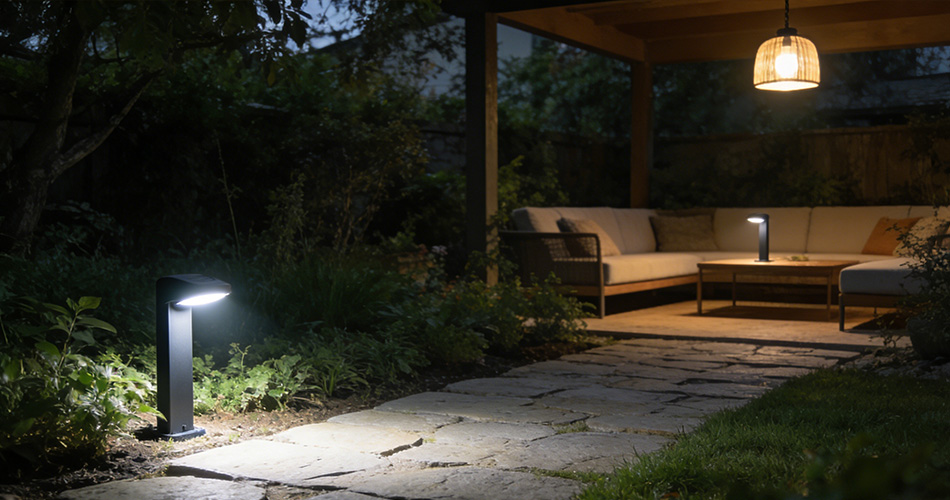
Voice controlled smart lighting delivers four transformative benefits that elevate it beyond traditional and early smart lighting solutions:
First, seamless hands-free convenience. The most fundamental advantage is the ability to control lighting without physical interaction. Users can issue voice commands to turn lights on/off, adjust brightness, change color temperature, or activate custom scenes—all while keeping their hands busy or moving freely. For example, a parent carrying a baby can dim the living room lights with a simple voice prompt; a presenter in a meeting room can brighten the presentation area without leaving the podium. This convenience streamlines daily routines and enhances productivity in commercial settings.
Second, enhanced accessibility for all users. Voice control lowers the barrier to entry for smart lighting, making it accessible to elderly users, those with mobility or cognitive impairments, and children. Users who struggle with app navigation or physical switches can easily manage lighting via natural language commands, promoting independence in residential and care environments. For example, a resident with arthritis can avoid painful switch operation by saying “turn off bedroom lights,” while a child can master simple commands to control their room lighting.
Third, dynamic personalization and scene control. Beyond basic on/off commands, voice controlled smart lighting enables users to create and activate custom lighting scenes with voice prompts. For instance, a user can say “activate movie night mode” to dim lights, adjust color temperature to warm tones, and turn off accent lights; a yoga studio owner can say “start class mode” to set soft, cool lighting. This personalization ensures that lighting aligns with specific activities, moods, or business needs, enhancing user experience and ambiance.
Fourth, seamless integration with smart ecosystems. Voice controlled smart lighting acts as a hub for connecting with other smart devices, including voice assistants (Amazon Alexa, Google Assistant), motion sensors, thermostats, security cameras, and audio systems. Users can set up automation rules like “turn on entryway lights when the security camera detects motion and I say ‘welcome home’” or “sync lighting brightness with music volume.” This integration transforms lighting from an isolated system into a critical component of a cohesive smart environment.
Voice controlled smart lighting adapts to diverse environments, delivering targeted value across residential, commercial, healthcare, and recreational sectors:
Smart gyms and fitness studios: Fitness facilities rely on lighting to enhance workout experiences and support different exercise types. Voice controlled smart lighting allows trainers to adjust lighting with voice commands during classes—brightening for high-intensity interval training (HIIT) or dimming for yoga and meditation. Members can also personalize lighting at individual workout stations via voice, creating a tailored environment that boosts motivation.
Intelligent retail showrooms: Retailers use voice controlled smart lighting to highlight products and adapt to changing displays. Staff can use voice commands to adjust lighting for new product launches (e.g., “brighten luxury watch display”) or create ambiance for seasonal promotions (e.g., “activate holiday mode”). This flexibility reduces the time and effort required to reconfigure lighting, enhancing operational efficiency.
Remote and hybrid workspaces: Home offices and co-working spaces benefit from voice controlled smart lighting’s ability to support productivity. Users can issue commands like “activate focus mode” to set bright, cool lighting that reduces eye strain, or “take a break mode” to dim lights and switch to warm tones. Integration with video conferencing tools allows users to adjust lighting via voice before meetings, ensuring optimal visibility.
Senior living communities and assisted care facilities: These environments prioritize accessibility and safety. Voice controlled smart lighting enables residents to manage room lighting, hallway lights, and bathroom lights without physical interaction, reducing the risk of falls. Caregivers can use voice commands to adjust lighting in resident rooms during check-ins, ensuring a non-disruptive experience while maintaining safety.
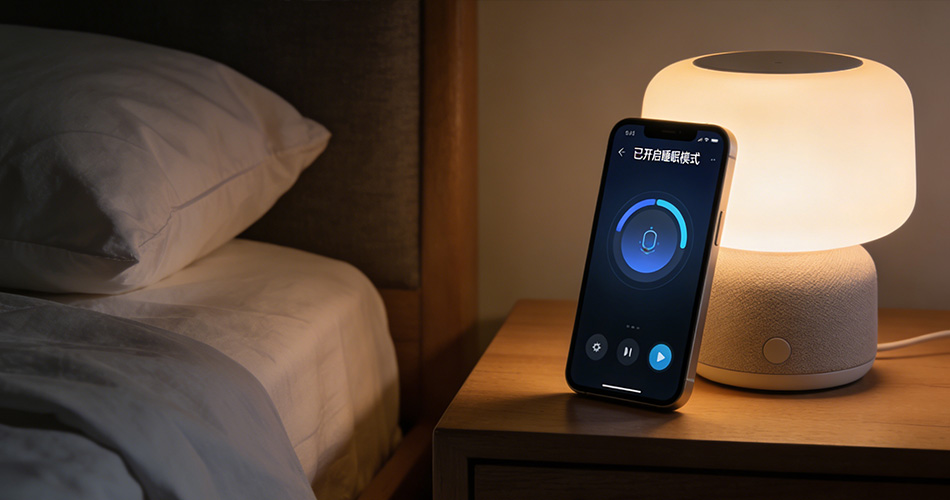
To maximize the value of voice controlled smart lighting, follow these strategic implementation guidelines:
First, select a voice control ecosystem aligned with user needs. Choose a system that supports the preferred voice assistants (e.g., Alexa, Google Assistant) and is compatible with existing or planned smart lighting fixtures. For commercial settings, prioritize systems that offer centralized management and multi-user permission controls, allowing staff to access relevant features without compromising security.
Second, prioritize user experience and intuitive command design. Define clear, simple voice commands tailored to the environment to minimize confusion. For example, a hospital ward might use commands like “patient room 5 lights on” instead of complex phrases. Provide user training materials (e.g., quick-reference guides for common commands) to ensure smooth adoption, especially for users new to voice technology.
Third, ensure reliable connectivity and recognition accuracy. Voice controlled smart lighting relies on stable internet and network connectivity—invest in robust Wi-Fi or wireless protocols (e.g., Zigbee) to avoid command delays or failures. Choose systems with advanced voice recognition algorithms that can adapt to accents, background noise, and different speech patterns, ensuring consistent performance in diverse environments.
Fourth, prioritize privacy and data security. Voice control systems collect audio data, so select solutions that offer end-to-end encryption, local data processing options, and transparent privacy policies. Ensure compliance with global data protection regulations (e.g., GDPR, CCPA) to protect user information, especially in sensitive environments like healthcare facilities or residential homes.
As voice recognition, AI, and IoT technologies advance, voice controlled smart lighting is evolving to deliver even greater intelligence and integration:
One trend is AI-driven personalized lighting profiles. Future systems will use artificial intelligence to learn user preferences, habits, and biometric data (e.g., circadian rhythms) to deliver personalized lighting automatically via voice. For example, the system might learn a user’s preferred morning lighting and suggest “activate morning routine” via voice, or adjust lighting based on the user’s stress levels detected through voice tone.
Another trend is edge computing for enhanced privacy and reliability. Systems will process voice commands locally (on-device) rather than in the cloud, reducing latency, improving reliability in low-connectivity areas, and enhancing privacy by minimizing data transmission. This is particularly valuable for commercial and healthcare settings where data security is critical.
Finally, multi-modal voice integration. Voice controlled smart lighting will combine with other input methods (e.g., gesture, eye tracking) to enhance accuracy and versatility. For example, a user could point to a specific light fixture while saying “dim this” to target individual lights, or use voice commands to override gesture controls if needed.
In conclusion, voice controlled smart lighting represents a significant evolution in illumination management, delivering seamless, accessible, and personalized control across diverse environments. By eliminating physical interaction barriers, integrating with broader smart ecosystems, and adapting to user needs, it has become a cornerstone of modern smart homes and businesses. Through strategic implementation focused on ecosystem compatibility, user experience, and security, organizations and homeowners can unlock the full potential of this technology. As AI and edge computing advance, voice controlled smart lighting will become even more intelligent, reliable, and integral to our daily lives. For anyone investing in smart lighting solutions, prioritizing voice controlled smart lighting is a strategic choice that delivers long-term convenience, accessibility, and user satisfaction—key factors for success in the evolving smart environment landscape.


)
)
)
)

+86 15899791249

+86 755 2955 3313


Address: Huafeng No.1 Science and Technology Park, Sanwei, Bao'an District, Shenzhen, Guangdong, China.
