

Time:2025-11-03
In the realm of commercial smart lighting, weatherproof photocells play a pivotal role in optimizing energy efficiency and operational convenience—especially for outdoor or semi-outdoor spaces like warehouses, parking lots, stadiums, and building exteriors. However, their performance and longevity hinge heavily on meeting weatherproof photocell IP rating compliance requirements. For businesses investing in commercial smart lighting solutions, understanding these compliance standards is not just a regulatory necessity but a critical step in ensuring reliable, long-term operation of their lighting systems.
Weatherproof photocells are designed to detect natural light levels and trigger lighting systems automatically, eliminating the need for manual control. But exposure to harsh environmental conditions—rain, dust, humidity, extreme temperatures, and even debris—poses significant risks to their functionality. IP (Ingress Protection) ratings, defined by the International Electrotechnical Commission (IEC) standard 60529, quantify a device’s resistance to solid particles and liquid ingress.
Failing to meet weatherproof photocell IP rating compliance requirements can lead to costly consequences. A photocell with an insufficient IP rating may suffer from water damage, dust accumulation, or short circuits, resulting in frequent replacements, unexpected downtime, and compromised energy savings. For commercial spaces where lighting reliability directly impacts safety (e.g., parking garages, walkways) or productivity (e.g., outdoor work areas), non-compliant photocells can create liability risks and operational disruptions.
Compliance also builds trust with clients and stakeholders. Commercial smart lighting solutions that prioritize IP rating compliance demonstrate a commitment to quality and durability, which is particularly valuable for businesses operating across regions with varying climate conditions—from humid coastal areas to dusty industrial zones.
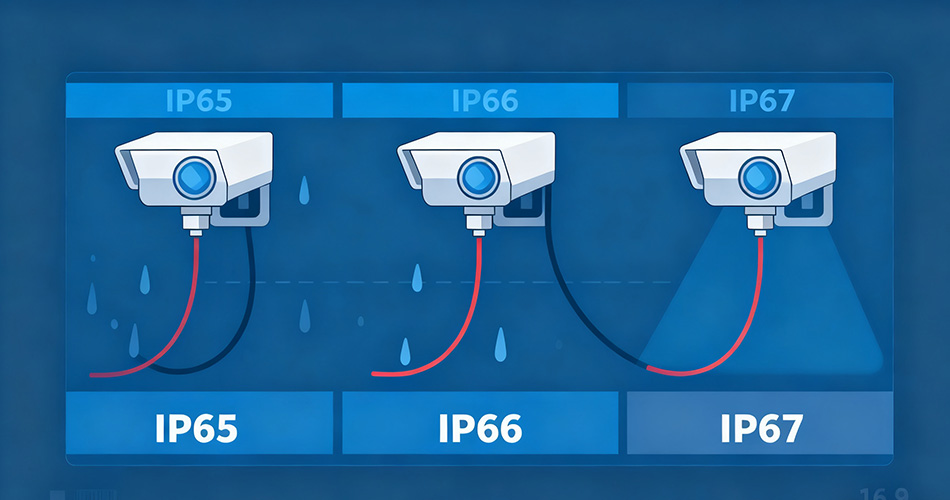
IP ratings consist of two digits: the first indicates protection against solid objects (e.g., dust, dirt), and the second denotes resistance to liquids (e.g., rain, splashes, submersion). For commercial smart lighting applications, specific IP rating thresholds are considered industry standards for compliance:
A minimum rating of IP5X is recommended for most commercial outdoor settings. This level ensures protection against dust ingress that could interfere with internal components, such as sensors or wiring.
For industrial environments or areas with high dust concentrations (e.g., construction sites, manufacturing facilities), a rating of IP6X (complete dust tightness) is ideal to meet stricter compliance expectations.
IPX5 (protection against low-pressure water jets) is suitable for covered outdoor areas like building overhangs or partially enclosed warehouses.
IPX6 (protection against high-pressure water jets) is required for exposed spaces such as open parking lots, stadiums, or loading docks, where heavy rain or cleaning sprays are common.
- In regions prone to flooding or heavy downpours, IPX7 (protection against temporary submersion) may be necessary to maintain compliance and functionality.
Beyond the IEC’s IP rating system, weatherproof photocell IP rating compliance requirements may include regional certifications. For example:
- European markets often require CE marking, which mandates adherence to IP rating standards for electrical equipment used in outdoor environments.
In North America, UL (Underwriters Laboratories) or ETL certifications verify that photocells meet IP-related safety and performance criteria.
Industries like healthcare (outdoor clinic lighting) or education (school campus grounds) may have additional compliance guidelines to ensure lighting systems support safety protocols.

For businesses implementing commercial smart lighting solutions, integrating weatherproof photocells that meet IP rating compliance requirements is a seamless process when aligned with overall system design:
- Scene-Specific Compliance: Assess the environmental conditions of the application area to select the appropriate IP rating. A parking lot in a rainy region, for instance, requires a higher liquid protection rating (IPX6 or above) than a covered warehouse loading bay.
- Synergy with Smart Controls: Compliant photocells work in tandem with smart controllers, gateways, and remote management systems to enhance efficiency. For example, a weatherproof photocell with IP65 compliance can communicate seamlessly with a central controller to adjust lighting levels based on real-time light detection and environmental data.
- Long-Term Cost Savings: Investing in compliant photocells reduces maintenance costs and extends the lifespan of the entire lighting system. Businesses avoid the expense of frequent repairs or replacements, while maximizing the energy-saving benefits of smart lighting.
Weatherproof photocell IP rating compliance requirements are non-negotiable for reliable, safe, and efficient commercial smart lighting solutions. By understanding the IP rating system, regional standards, and application-specific needs, businesses can select photocells that withstand environmental challenges and meet regulatory expectations. Compliance not only mitigates risks but also enhances the value of smart lighting investments, ensuring consistent performance across commercial spaces—from warehouses and stadiums to office parks and educational campuses.
For organizations seeking to elevate their commercial smart lighting systems with compliant, high-performance components, partnering with a provider that prioritizes IP rating compliance ensures a seamless integration of weatherproof photocells, controllers, and smart technologies. The result is a lighting solution that delivers on efficiency, durability, and regulatory adherence.


)
)
)
)

+86 15899791249

+86 755 2955 3313


Address: Huafeng No.1 Science and Technology Park, Sanwei, Bao'an District, Shenzhen, Guangdong, China.
