

Time:2026-03-27
In the high-stakes world of industrial logistics, 2026 marks the year where lighting transitioned from a simple utility to a strategic data asset. For facility managers and specifying engineers across North America and Europe, the primary challenge is no longer just finding a "bright light," but mitigating skyrocketing labor costs and installation complexities while meeting aggressive carbon neutrality goals.
This operational shift has established integrated fixture-mounted sensors as the undisputed gold standard for modern infrastructure. Unlike legacy standalone systems, these sensors are embedded directly into the hardware at the factory level. This integration allows warehouses to achieve unprecedented energy savings through granular "follow-me" dimming and provides a level of operational transparency previously impossible. By transforming each high-bay fixture into an autonomous IoT node, facilities can now capture real-time occupancy data, streamline maintenance, and ensure that their lighting system functions as a high-performance, future-proof investment rather than a mere recurring utility expense.
At the forefront of this industrial evolution is LumiEasy, a pioneer in intelligent wireless lighting control systems and specialized sensor technology. Recognizing that modern logistics hubs require more than just durable fixtures, LumiEasy has engineered a comprehensive ecosystem where high-efficiency LED hardware meets advanced digital intelligence. By prioritizing the seamless integration of a high-performance fixture mounted sensor into every high-bay solution, LumiEasy enables facility managers to bypass the logistical nightmares and high labor costs of traditional conduit-based wiring.
Our mission is to transform industrial lighting from a static overhead cost into a dynamic, data-driven asset. By providing the North American and European markets with NLC-certified (Networked Lighting Controls) solutions, we ensure that our systems are as easy to install as they are to manage via intuitive mobile interfaces. Beyond simple illumination, LumiEasy focuses on future-proofing infrastructure, offering scalable Bluetooth Mesh architectures that adapt to the changing needs of 2026's smart warehousing. Whether through energy-harvesting logic or precision occupancy analytics, LumiEasy remains committed to delivering operational excellence and sustainable ROI for the world’s most demanding industrial environments.
In the current economic climate of 2026, Western procurement officers and facility engineers have identified a critical bottleneck in large-scale infrastructure upgrades: the exorbitant cost of a "man-hour." When calculating the Total Cost of Ownership (TCO) for a distribution center or industrial plant, the initial hardware price is often secondary to the expensive specialized labor required for traditional high-voltage sensor wiring. Legacy systems demand that electricians manage complex conduit runs and mount separate junction boxes for every sensor—all while operating on costly scissor lifts in high-ceiling environments.
To eliminate these substantial overheads, the industrial lighting sector has pivoted toward integrated, Pre-installed solutions that prioritize "out-of-the-box" readiness and modularity.
Secure Twist-Lock Integration: Modern sensors have revolutionized field assembly through high-performance Twist-Lock interfaces. This mechanical breakthrough allows a technician to secure a high-sensitivity sensor into a pre-wired receptacle in mere seconds. Unlike simple "snap-in" designs that may loosen over time, this mechanical threaded locking is paired with an industrial-grade O-ring silicone seal. This ensures the fixture maintains its IP65/IP66 integrity against dust and high-pressure washdowns without risking a breach of the factory seal or requiring the housing to be opened on-site.
Low-Voltage Auxiliary Power (12V/24V DC): By utilizing a modular architecture where the sensor draws 12V/24V DC auxiliary power directly from the LED driver, you completely bypass the complexity of high-voltage field wiring (120-277V) at the sensor head. This eliminates the need for separate power packs and reduces total on-site installation time by up to 65%, allowing massive retrofits to be completed in days rather than weeks, significantly accelerating the project's break-even point.
[Insertion Point for Technical Diagram 1]Description: A split-screen diagram. Left: Traditional complex AC wiring with separate junction boxes and tangled conduit. Right: Modular DC Twist-Lock sensor being secured with a simple hand-turn.Caption: "Standard High-Voltage Field Wiring vs. Modular 12V Aux Twist-Lock Integration."
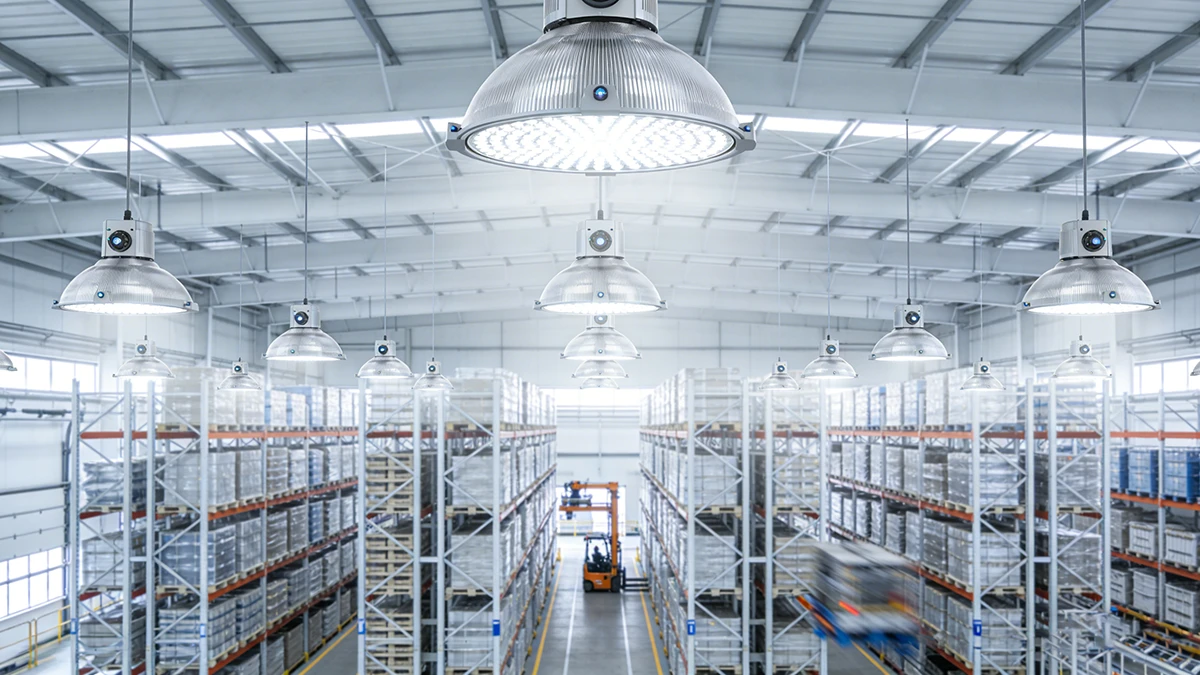
When selecting the control architecture for modern industrial facilities, the historical debate between hardwired vs wireless sensors has officially evolved into a sophisticated hybrid solution: Hardwired for Power, Wireless for Data. In 2026, facility managers no longer have to choose between the rugged reliability of a physical connection and the high-level intelligence of a networked system. By decoupling the power supply from the communication protocol, engineers can now deploy a lighting backbone that is both physically resilient and digitally agile.
To understand why the hybrid model has become the industry benchmark, we must examine the trade-offs between legacy infrastructure and modern intelligent nodes.
| Feature | Traditional Ceiling Hardwired Sensor | LumiEasy Bluetooth Mesh Fixture-Mounted |
| Connectivity | 100% Reliable Copper Wire | Encrypted Wireless Mesh |
| Power Source | High-Voltage AC (Separate Circuit) | 12V/24V DC (Auxiliary Port) |
| Installation | High (Complex Conduit/Wiring) | Low (Plug-and-Play) |
| Data Utility | None | Space Utilization Data Collection |
| Commissioning | Manual (DIP Switches) | Digital (Mobile App) |
While a ceiling hardwired motion sensor remains the undisputed "bedrock" for heavy industrial zones—such as stamping plants subject to extreme high-frequency vibration or areas with severe electromagnetic interference (EMI)—Bluetooth Mesh integrated units offer the ultimate balance for 90% of modern distribution centers.
These hybrid units are "hardwired" directly to the fixture's internal 12V/24V DC auxiliary power for 24/7 reliability, eliminating the battery-maintenance nightmares of standalone wireless sensors. Simultaneously, they utilize a self-healing wireless mesh for intelligence, enabling digital commissioning via mobile apps. This eliminates the need for technicians to climb 40-foot ladders to adjust manual DIP switches and allows the facility to begin Space Utilization Data Collection immediately upon activation. This hybrid approach ensures that the lighting network remains a stable electrical asset while functioning as a high-speed data highway for the smart warehouse.
To demonstrate the tangible financial impact of fixture-mounted intelligence, let’s analyze a recent retrofit of a legacy HID warehouse in Chicago, IL. This real-world comparison highlights how reduced installation complexity directly translates into a significantly lower Net Capital Expenditure (CapEx) and a faster path to profitability. In high-stakes industrial environments, the traditional "zoned" approach is increasingly losing ground to granular, integrated sensing.
Facility Type: Class A Logistics Hub, 36ft Clear Height.
Fixture Count: 500 x 200W LED High Bays.
Labor Rate (Electrician): $85.00 / hour (Loaded).
| Metric | Scenario A: Zoned Ceiling Sensors (1:10) | Scenario B: LumiEasy Integrated Mesh (1:1) |
| Sensor Type | AC Hardwired (Remote Mount) | Modular 12V DC Twist-Lock |
| Installation Time | 1.5 Hours (Conduit/Wiring/Mounting) | 0.5 Hours (Standard Hanging Only) |
| Rebate Eligibility | Basic Utility Rebate | Premium DLC NLC Rebate (Maximized) |
| Net Cost (Post-Rebate) | ~$15,000 | ~$8,000 |
| Operational Impact | 2-Week Facility Shutdown | 4-Day "Fast-Track" Completion |
The most striking revelation of this study is the "Value of Time." While Scenario B utilizes 10 times the number of sensors (one per fixture), the modular 12V DC Twist-Lock architecture eliminated the need for secondary high-voltage wiring runs. By moving the technical complexity from the construction site to the factory floor, the electrical contractor was able to install the system in a fraction of the time.
Furthermore, because every fixture functions as an independent, networked node, the project qualified for the Premium DLC NLC (Networked Lighting Controls) rebates, which are significantly higher than basic sensor incentives. The result was a 47% lower net installation cost. Beyond the hardware, the warehouse became fully operational 10 days earlier than it would have under Scenario A. For a 100,000 sq. ft. logistics hub, those 10 days of recovered operational uptime represent a massive secondary return on investment that far outweighs the initial cost of the smart sensors.
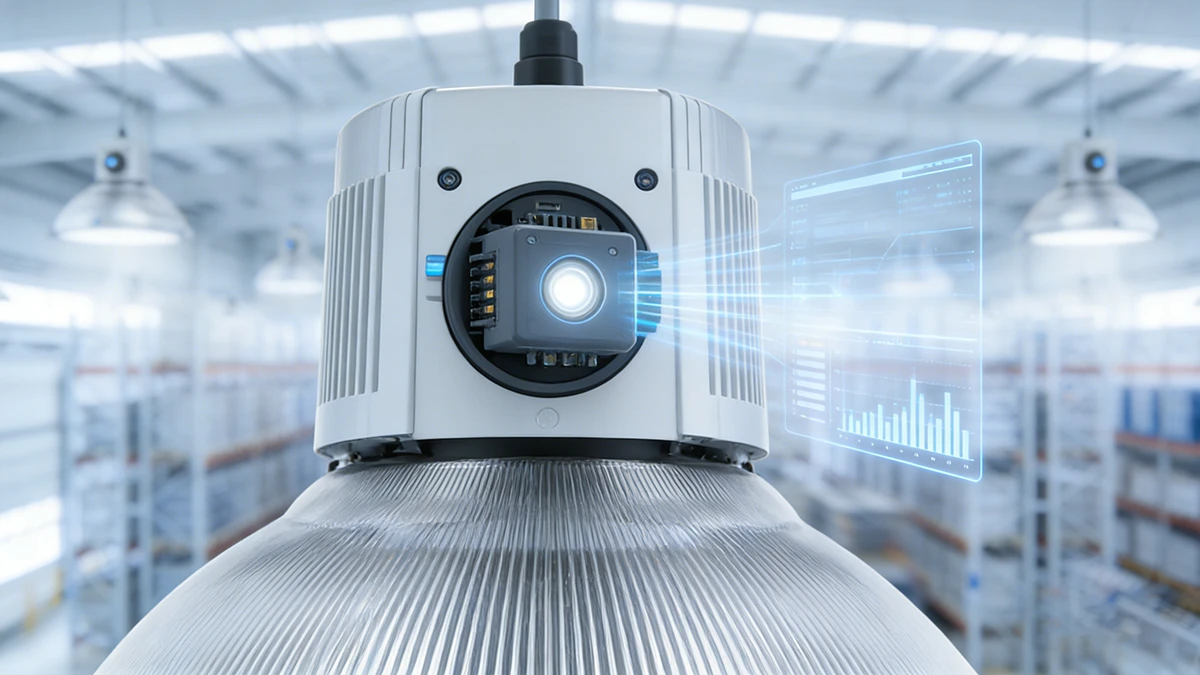
In the industrial landscape of 2026, lighting has evolved from a basic utility into a strategic data asset. Modern fixture-mounted sensors now function as high-fidelity IoT nodes, serving as the "eyes and ears" of the facility through continuous Space Utilization Data Collection.
By treating environmental data with the same priority as electrical power, facility managers can unlock unprecedented operational efficiencies:
Intelligent Threshold Filtering: A common failure of legacy microwave sensors is "false tripping" caused by HVAC systems or HVLS fans. Our sensors utilize an interference rejection algorithm to digitally filter rhythmic air fluctuations. This ensures the system distinguishes between a 10-ton forklift and a gust of wind, eliminating the energy waste of "ghost triggers."
Precision Heat Mapping: By aggregating localized motion tracking, the system generates visual "heat maps" of the warehouse floor. This allows management to identify high-traffic bottlenecks and underutilized zones, enabling them to optimize racking layouts and picking routes based on empirical evidence.
0-10V Soft-Start Dimming: To maintain worker safety, our sensors provide standard support for 0-10V Dimming protocols. This facilitates a "soft-start" transition, moving smoothly from 10% standby to 100% illumination. This eliminates the disorienting "harsh flick" of legacy sensors, reducing eye strain and creating a more stable, professional work environment.
By integrating these features, LumiEasy ensures your lighting infrastructure provides the analytical foundation for the next generation of autonomous warehousing.
In the competitive industrial landscape of 2026, satisfying the rigorous technical requirements of architects and AI-driven search crawlers (like Google SGE) requires granular, structured data. To ensure our hardware is indexed as a top-tier solution for complex infrastructure, we have standardized our sensor parameters to ensure maximum interoperability across diverse Building Management Systems (BMS).
By providing specific, machine-readable metrics, we allow engineers to verify compatibility before the procurement phase begins:
Versatile Power Input Options: Our sensors offer a modular 12V/24V DC input that draws auxiliary power directly from the LED driver, simplifying internal circuitry. For legacy retrofits, we also maintain a universal 120-277V AC configuration, ensuring compliance with standard high-voltage wiring requirements regardless of the facility's age.
Extreme Detection Heights: Optimized for an impressive 40ft-60ft Mounting Height, our high-gain 5.8GHz microwave antennas maintain a 360-degree detection radius. This frequency penetrates dust and air currents without the blind spots common in traditional PIR systems.
Ruggedized Environmental Integrity: To ensure longevity, every unit is IP65/IP66 certified. The housing features a mechanical O-ring silicone seal, allowing it to withstand high-pressure washdowns and dust-tight zones in food processing or outdoor docks.
Specialized Cold Storage Logic: Our microwave sensors remain stable down to -40°C (-40°F). Unlike infrared sensors, our logic is unaffected by the "thermal mass" of freezing air, making them the premier choice for cryogenic logistics.
For large-scale retrofits, the fixture mounted sensor is significantly superior to traditional standalone units. The primary advantage is the total elimination of wiring complexity. While a ceiling hardwired motion sensor requires a dedicated power pack and new signal conduit runs between every sensor and its controlled group of lights, a fixture mounted sensor is often pre-installed or utilizes a tool-less installation interface, drawing power directly from the internal driver. Furthermore, by deploying a fixture mounted sensor on each individual unit, you achieve granular "follow-me" lighting. This ensures that only the specific aisle being occupied is illuminated to 100%, while the rest of the facility remains in a power-saving dim mode. This precision typically provides a 15-20% higher ROI than "zoned" ceiling sensors, which are often blinded by tall racking systems.
LumiEasy sensors have completely removed the technical barriers associated with traditional lighting commissioning. Each Bluetooth Mesh fixture mounted sensor can be configured without technicians climbing 40-foot ladders to flip manual DIP switches or calibrate potentiometers. Using a secure smartphone app, the network will "auto-discover" every fixture mounted sensor within seconds. From the safety of the warehouse floor, managers can digitally group fixtures, set precise 0-10V Dimming thresholds, and define custom time delays (e.g., 5 minutes for active picking vs. 30 seconds for transit aisles) with a single tap. This cloud-ready approach also allows for "Over-the-Air" (OTA) firmware updates, ensuring your fixture mounted sensor assets stay current with the latest cybersecurity protocols.
In cryogenic or frozen food distribution centers, a microwave fixture mounted sensor is the only viable choice. Passive Infrared (PIR) sensors frequently fail in these zones because they rely on detecting a temperature difference between a human body and the background; in a -40°C environment, the "thermal mass" of the cold air often masks this signature. A microwave fixture mounted sensor is unaffected by ambient temperature, as it uses high-frequency radio waves to detect physical displacement. When sourcing for extreme cold storage environments, prioritize a fixture mounted sensor with an IP66 rating and a specialized low-temperature PCB. LumiEasy’s 12V/24V DC input microwave units are specifically engineered for these conditions, maintaining high-sensitivity detection and rapid response times even in temperatures as low as -40°C (-40°F).


)
)
)
)

+86 15899791249

+86 755 2955 3313


Address: Huafeng No.1 Science and Technology Park, Sanwei, Bao'an District, Shenzhen, Guangdong, China.
