

Time:2025-12-03
As the global push for smart building transformation intensifies, commercial facilities are increasingly adopting technologies that balance operational efficiency, energy sustainability, and user-centric experiences. Wireless lighting control stands out as a pivotal innovation, breaking free from the limitations of traditional wired lighting systems to deliver flexible, scalable, and intelligent lighting management. By leveraging wireless connectivity, this technology empowers facility managers to oversee lighting operations with unprecedented precision, while reducing energy consumption and operational costs. In today’s competitive commercial landscape, wireless lighting control is no longer a luxury upgrade but a strategic necessity for businesses aiming to future-proof their facilities.
The primary allure of wireless lighting control lies in its ability to eliminate the drawbacks of wired infrastructure. Traditional lighting systems require extensive cabling, which not only drives up installation costs but also restricts facility layout flexibility. Retrofitting wired systems in existing buildings or historic structures is often intrusive and disruptive, leading to prolonged downtime. In contrast, wireless lighting control can be deployed quickly and seamlessly, with minimal disruption to daily operations. Facility teams can install wireless controllers, sensors, and fixtures without structural modifications, enabling rapid activation of intelligent lighting management across the entire facility.
Energy efficiency is a defining benefit of wireless lighting control. Unlike conventional systems that rely on manual switches or fixed schedules, wireless solutions integrate with occupancy sensors, ambient light sensors, and smart scheduling tools to optimize energy use. For instance, in a commercial office, wireless lighting control can automatically turn off lights in unoccupied cubicle areas, dim fixtures when natural light is abundant, or adjust brightness based on real-time occupancy patterns. This targeted approach to energy management can reduce lighting-related energy expenses by 35-50%, aligning with corporate sustainability goals and global carbon reduction initiatives.
Intuitive and centralized management further enhances the value of wireless lighting control. Modern systems feature user-friendly dashboards accessible via desktop computers, mobile apps, or cloud-based platforms, allowing facility managers to monitor and adjust lighting settings from anywhere. This remote accessibility enables quick responses to unexpected events, such as modifying lighting for a last-minute client meeting or addressing a lighting issue in a remote warehouse zone. Centralized management also simplifies maintenance by providing real-time data on fixture performance, enabling proactive identification of faulty components before they cause operational disruptions.
Scalability is another critical advantage. As businesses grow or reconfigure their facilities, wireless lighting control can be easily expanded to accommodate new spaces or updated requirements. Adding new lighting zones, integrating additional sensors, or updating lighting scenes requires no rewiring—facility teams can simply add new wireless devices and configure them via the central platform. This scalability ensures that the lighting system grows in tandem with the business, avoiding the waste and expense of replacing rigid wired infrastructure.
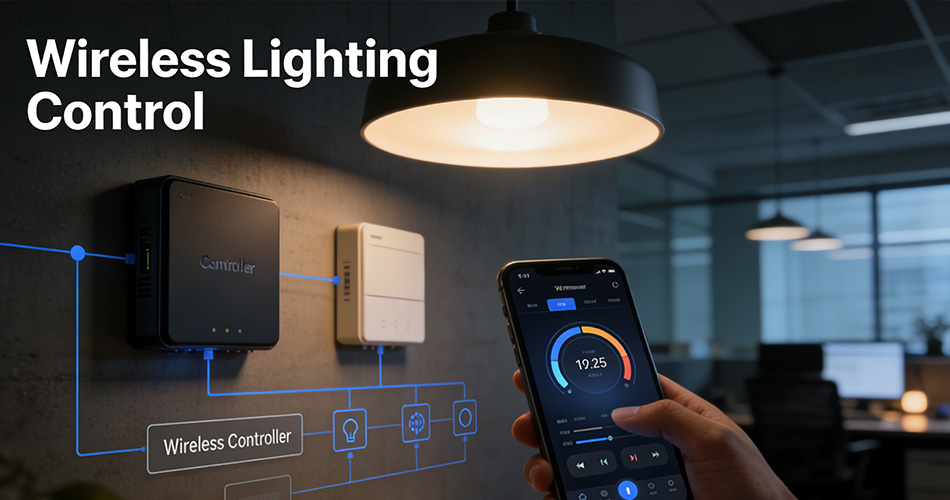
The versatility of wireless lighting control makes it adaptable to a wide range of commercial sectors, each leveraging its capabilities to address unique operational challenges.
In hospitality settings, such as hotels and resorts, wireless lighting control plays a key role in enhancing guest experiences while optimizing energy use. Hotels can use wireless systems to create customized lighting scenes in guest rooms—warm, dim lighting for evening relaxation, bright lighting for morning grooming—with guests able to adjust settings via in-room controls or mobile apps. Public areas, such as lobbies and restaurants, can feature dynamic lighting that shifts with the time of day or event type, creating a welcoming ambiance. Wireless control also enables staff to manage lighting across multiple zones remotely, ensuring consistent service while reducing energy waste in unoccupied areas.
Retail environments benefit significantly from wireless lighting control’s ability to enhance merchandise presentation and customer engagement. Retailers can use wireless systems to adjust lighting in product displays—highlighting seasonal items with bright, focused lighting or creating mood lighting for luxury goods sections. The flexibility to reconfigure lighting zones without rewiring supports frequent store redesigns, enabling retailers to adapt quickly to changing consumer trends. Additionally, wireless lighting control integrates with retail management systems to sync lighting with store hours, promotional events, and even foot traffic patterns, maximizing energy efficiency while boosting sales potential.
Educational institutions, from K-12 schools to universities, rely on wireless lighting control to create optimal learning environments and reduce operational costs. Classrooms can feature adjustable lighting scenes—bright lighting for lectures, dimmer settings for multimedia presentations—with teachers able to control settings via simple interfaces. Hallways, auditoriums, and outdoor spaces can use motion-triggered lighting to save energy during off-hours, while remote management allows facility teams to oversee lighting across large campuses efficiently. Wireless systems also support sustainability education initiatives, demonstrating energy-saving practices to students and staff.
Logistics and distribution centers leverage wireless lighting control to balance safety and efficiency in large, dynamic spaces. Warehouses can use wireless sensors to activate lighting only in occupied aisles, reducing energy waste in vast unoccupied areas. Loading docks can feature adjustable lighting that adapts to delivery schedules and weather conditions, ensuring optimal visibility for workers. The wireless design eliminates the risk of wiring damage from forklifts or heavy equipment, enhancing system reliability and reducing maintenance costs.
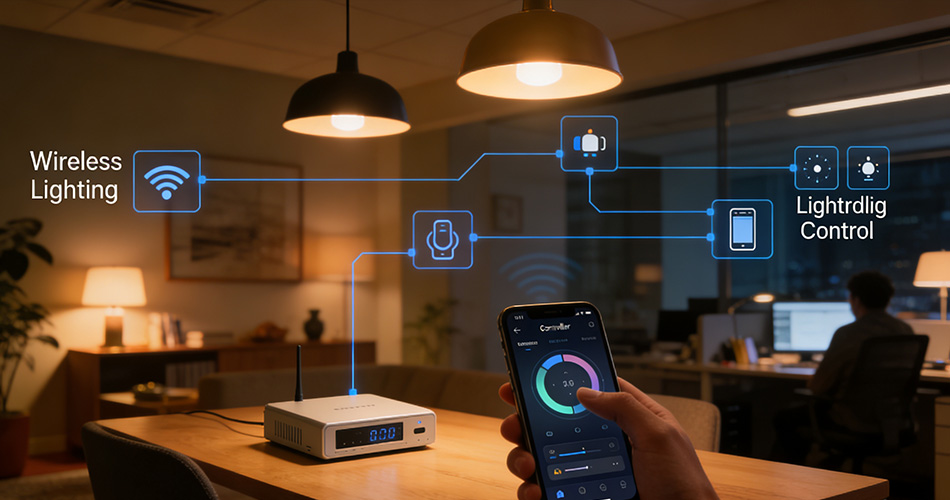
Wireless lighting control is continuously evolving, driven by advancements in smart building technology and changing business needs. One key trend is the integration of wireless lighting systems with the Internet of Things (IoT) and edge computing. Edge computing enables real-time data processing at the device level, reducing latency and enhancing the responsiveness of wireless lighting control. IoT integration allows lighting systems to communicate with other smart building devices, such as HVAC systems, security cameras, and access control systems, creating a holistic facility management ecosystem.
The adoption of 5G technology is another game-changing trend. 5G’s high bandwidth and low latency enable seamless connectivity for large-scale wireless lighting networks, supporting real-time control of hundreds or thousands of fixtures in complex commercial facilities. This technology is particularly beneficial for smart cities and large campuses, where reliable, fast wireless communication is critical for efficient lighting management.
Data-driven insights and predictive analytics are also becoming integral to wireless lighting control. Modern systems collect data on energy use, occupancy patterns, and fixture performance, using analytics tools to identify optimization opportunities. Predictive analytics can forecast maintenance needs, such as predicting when a fixture is likely to fail, enabling proactive replacements that reduce downtime. These insights help facility managers make informed decisions about energy management and operational efficiency.
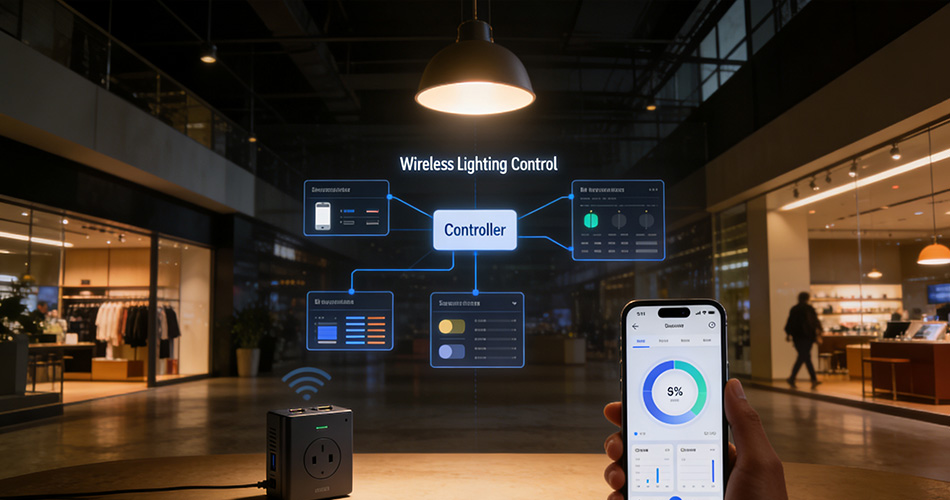
In conclusion, wireless lighting control has established itself as a cornerstone of smart commercial facility management, offering unparalleled flexibility, energy efficiency, and scalability. Its ability to adapt to diverse commercial environments—from hospitality and retail to education and logistics—makes it a versatile solution for businesses of all sizes. As IoT integration, 5G technology, and data analytics continue to advance, wireless lighting control will become even more intelligent and integral to holistic facility management. For businesses looking to enhance operational efficiency, reduce environmental impact, and create superior user experiences, investing in wireless lighting control is a strategic step toward long-term success in the smart building era.


)
)
)
)

+86 15899791249

+86 755 2955 3313


Address: Huafeng No.1 Science and Technology Park, Sanwei, Bao'an District, Shenzhen, Guangdong, China.
