

Time:2025-12-01
As the global push for smart buildings and sustainable operations intensifies, Wireless lighting control has evolved from a convenience feature to a core infrastructure of commercial smart lighting solutions. By seamlessly integrating with intelligent sensors, controllers, remotes, gateways, and switches, Wireless lighting control breaks the limitations of traditional wired systems, unlocking a new era of flexibility, energy savings, and intelligent management for commercial spaces—from corporate offices and retail malls to industrial warehouses and hospitality venues. For facility managers, business owners, and building operators, embracing Wireless lighting control is not just a technological upgrade; it is a strategic move to enhance operational agility, reduce carbon footprints, and elevate the overall value of commercial properties.
Traditional lighting systems are static, energy-inefficient, and difficult to adapt to changing space needs—shortcomings that Wireless lighting control addresses comprehensively. Unlike wired alternatives, Wireless lighting control operates without cumbersome cabling, enabling flexible configuration and reconfiguration of lighting layouts without costly construction work. This agility is particularly valuable in dynamic commercial environments where space usage evolves frequently, such as pop-up retail zones, collaborative office hubs, or multi-purpose event venues.
More than just flexibility, Wireless lighting control drives a paradigm shift in energy management. By leveraging real-time data from intelligent sensors (occupancy, daylight, ambient light), the system automatically adjusts lighting intensity, on/off status, and color temperature to match actual demand. This not only cuts energy consumption by 40-60% compared to traditional systems but also extends the lifespan of lighting fixtures by reducing unnecessary operation. For businesses, this translates to substantial utility cost savings and stronger alignment with global sustainability goals, a key differentiator in today’s eco-conscious market.
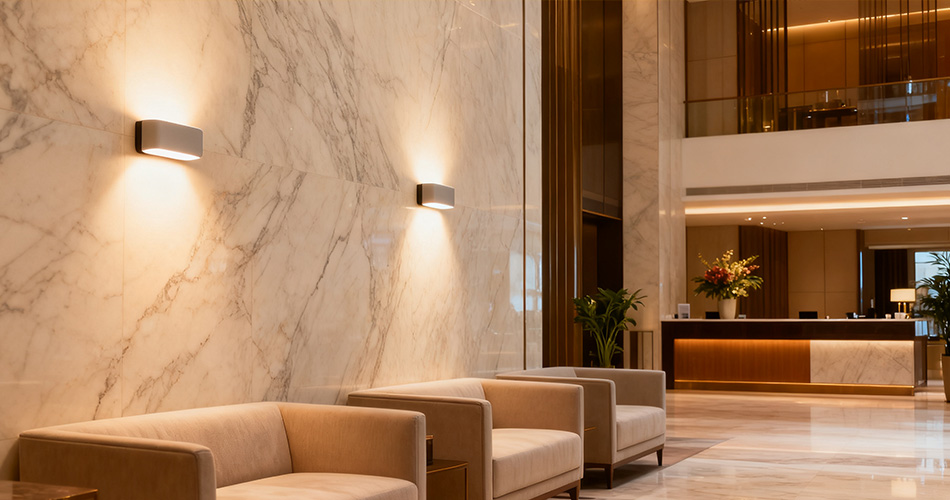
Modern Wireless lighting control is no longer an independent system but a critical node in the broader commercial smart ecosystem. Its innovative advantages lie in seamless integration and intelligent synergy, with key highlights including:
Advanced Wireless lighting control systems integrate effortlessly with other smart building systems, such as HVAC, security, and building management platforms (BMS). For example, when the security system detects after-hours activity, it can trigger the lighting system to turn on targeted zones for surveillance; when the HVAC system adjusts temperature based on occupancy, the lighting system synchronizes to optimize comfort. This cross-system synergy creates a unified, efficient smart building ecosystem that enhances operational coordination and reduces management complexity.
Leading Wireless lighting control solutions leverage artificial intelligence (AI) to analyze historical data on occupancy patterns, lighting usage, and energy consumption. Based on this analysis, the system proactively optimizes lighting schedules and settings—for instance, predicting peak occupancy times in office lobbies to pre-adjust lighting, or adjusting retail lighting intensity based on daily foot traffic trends. This AI-driven automation reduces manual intervention, ensures optimal performance at all times, and continuously improves energy efficiency as the system learns from usage patterns.
Wireless lighting control puts control in the hands of users through intuitive interfaces, including mobile apps, wall-mounted smart switches, and voice commands. In office environments, employees can customize lighting preferences for their workstations to reduce eye strain and boost productivity; in hospitality settings, guests can adjust room lighting via remotes or mobile devices to create personalized ambiance. This personalized experience enhances user satisfaction, whether for employees, customers, or guests, and reflects the human-centric design of modern commercial spaces.
Compared to wired lighting control, Wireless lighting control significantly simplifies deployment—especially for retrofitting existing commercial buildings. Without the need for extensive wiring, installation can be completed in a fraction of the time, minimizing disruption to business operations. Additionally, wireless systems support over-the-air (OTA) upgrades, allowing businesses to easily add new features (such as advanced analytics or AI optimization) without replacing hardware. Remote monitoring capabilities also enable facility teams to detect and resolve issues (e.g., sensor malfunctions, signal interruptions) from a central platform, reducing maintenance costs and downtime.

To fully unlock the value of Wireless lighting control, businesses should focus on three critical pillars during implementation:
First, select a reliable wireless communication protocol. Protocols like Zigbee and BLE are ideal for commercial spaces due to their low power consumption and strong signal stability, while Wi-Fi may be suitable for smaller spaces requiring high-speed data transmission. Second, prioritize system security. Choose solutions with end-to-end encryption, secure authentication, and regular security updates to protect the lighting system from unauthorized access and potential cyber threats. Third, ensure compatibility with existing and future smart components. Opt for systems based on open standards to facilitate seamless integration with intelligent sensors, controllers, gateways, and other smart building devices, avoiding vendor lock-in.
Wireless lighting control is more than a lighting solution—it is a catalyst for transforming commercial spaces into efficient, intelligent, and sustainable environments. By integrating with a suite of smart components, it creates a connected ecosystem that adapts to human needs, optimizes resource usage, and supports business growth. As the demand for smart buildings continues to rise, Wireless lighting control will remain a cornerstone technology for businesses aiming to stay competitive and future-ready.
Whether you’re upgrading an existing commercial space or designing a new smart building, investing in Wireless lighting control is a decision that delivers long-term returns in cost savings, operational efficiency, and user satisfaction. Embrace this innovative technology to redefine the potential of your commercial lighting system and build a more sustainable future.


)
)
)
)

+86 15899791249

+86 755 2955 3313


Address: Huafeng No.1 Science and Technology Park, Sanwei, Bao'an District, Shenzhen, Guangdong, China.
