

Time:2026-01-22
Wireless lighting has moved from “new gadget” to a practical way to modernize buildings—especially when owners want faster upgrades with less disruption. A well-designed Wireless lighting control system reduces wasted runtime, simplifies scheduling, and improves operational consistency across offices, retail spaces, warehouses, and factories.
For most projects, wireless is attractive for one simple reason: it delivers control benefits without the cost and downtime of pulling control wiring everywhere. And when paired with occupancy/daylight strategies, wireless controls can deliver measurable energy reductions—particularly in spaces with intermittent use.
This article explains what modern wireless systems include, how wireless lighting control installation typically works, how to plan wireless zone lighting control, when battery free wireless lighting makes sense, and how to select a solution for wireless lighting control commercial and industrial environments.
Wireless lighting control uses connected devices—such as sensors, switches, controllers, and gateways—to manage lighting without relying on dedicated control wiring for every device. Instead of reworking electrical circuits and running new low-voltage control cables, wireless networks allow fixtures and controls to communicate through a wireless protocol and apply automation rules (occupancy, daylight, schedules, scenes).
In practice, a modern wireless system typically includes:
Wireless sensors (occupancy/motion; daylight/illuminance)
Wireless wall controls (keypads, scene controllers; sometimes battery-free)
Fixture-level or zone-level controllers/dimmers
A gateway/hub (often used for building-wide coordination, dashboards, and remote access)
Software/app for commissioning, scheduling, and monitoring
Wireless systems are especially popular in retrofit projects because they reduce disruption and simplify expansion when buildings change.

Wireless reduces the amount of physical control wiring required, which can shorten installation time and limit disruption to occupied spaces—an important factor for offices, retail, schools, and 24/7 logistics sites.
Commercial tenants reconfigure layouts. Warehouses change racking and aisle patterns. With wireless, you can regroup fixtures and update behaviors in software rather than rewiring.
Wireless systems commonly use occupancy sensors and schedules. In practice, occupancy-based strategies work best in intermittently used spaces, while timer-based schedules often fit areas with predictable usage.
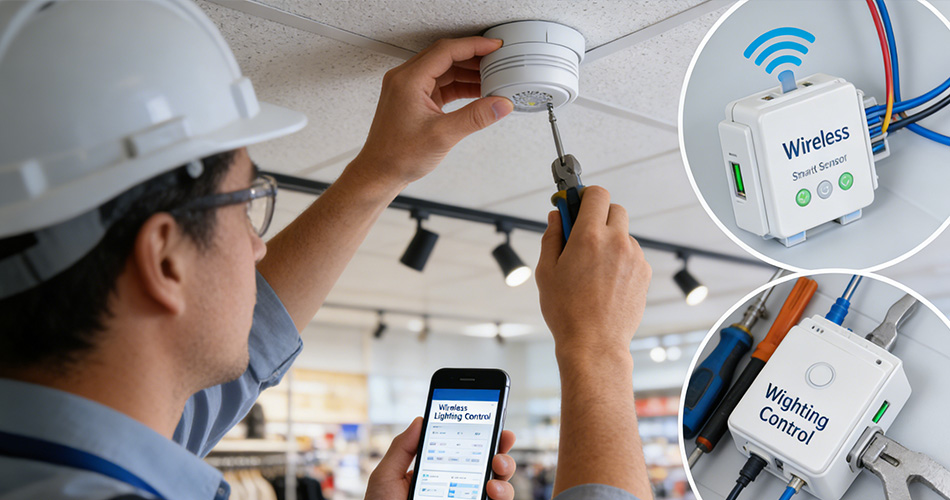
For wireless lighting control commercial projects (offices, retail, education, healthcare, hospitality), the most valuable outcomes usually come from four capabilities:
Program business-hour schedules, holiday exceptions, cleaning modes, and after-hours behavior (dim-to-low or off). Scheduling is often the quickest ROI lever because it eliminates “lights left on” waste with minimal occupant impact.
Occupancy mode: auto-on/auto-off for convenience
Vacancy mode: manual-on/auto-off to increase savings by preventing unnecessary activation
Selecting the right approach depends on space type, user expectations, and safety requirements.
Perimeter zones and skylit areas can automatically reduce output when daylight is present—improving comfort and lowering energy use.
A building-wide software layer is what makes wireless systems operationally valuable: it keeps policies consistent across floors, enables easy changes, and supports long-term optimization.
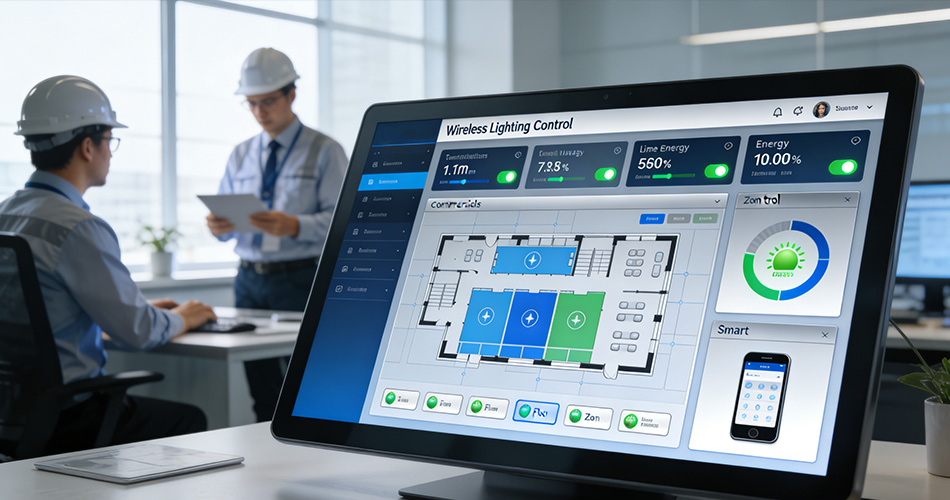
If you want wireless projects to succeed, don’t start with devices—start with zones.
Wireless zone lighting control means grouping fixtures and sensors into functional zones that match how people use space:
Open office neighborhoods
Meeting rooms
Corridors and stairwells
Restrooms and storage rooms
Retail aisles and feature displays
Warehouse aisles, docks, and staging areas
Production workcells vs travel lanes
Practical rule: Smaller, purpose-based zones usually outperform oversized “all-in-one” zones. Better zoning reduces complaints, improves perceived comfort, and increases real energy savings.
A growing trend in modern retrofits is battery free wireless lighting controls—often used for wall switches or scene keypads. The value is practical and long-term:
No battery replacement program
Lower maintenance burden
Easy placement (useful when you can’t easily run control wiring)
Battery-free controls can be particularly useful in:
High-access-cost areas (finished interiors, difficult-to-open walls)
High-volume deployments (multi-floor offices, schools, hotels)
Buildings with strict maintenance schedules
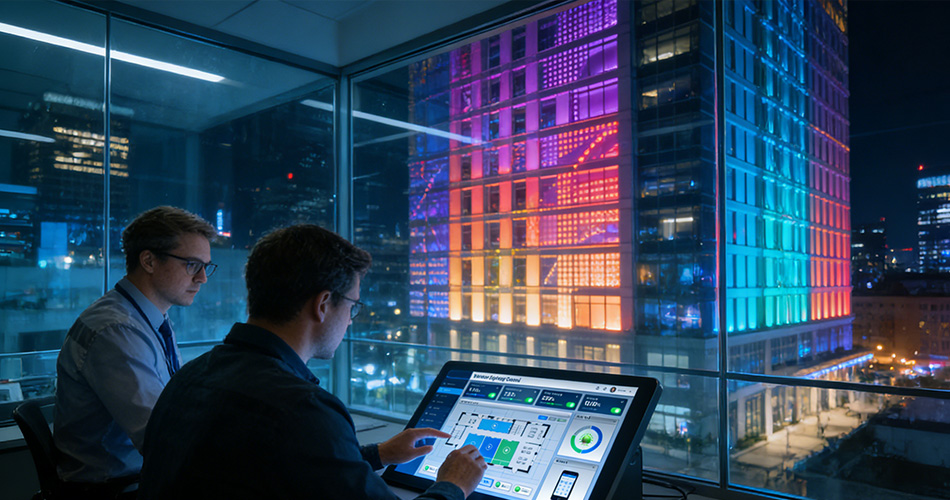
A professional wireless lighting control installation typically follows five steps:
Document:
Space types and operating hours
Where occupancy varies (best sensor zones)
Daylight conditions (windows/skylights)
Safety requirements (egress, exterior, shift work)
IT/security constraints (cloud policy, user access governance)
Choose:
Sensors (occupancy, daylight)
Controllers (fixture-level vs zone-level)
Wall controls (standard vs battery-free)
Gateway placement (coverage, reliability, future expansion)
Install controllers/sensors, then pair devices into the network. Wireless reduces wiring, but you still need disciplined electrical practices and consistent labeling for smooth commissioning.
This is where projects succeed or fail:
Build wireless zone lighting control groups
Set sensor timeouts and dim levels
Program schedules and exceptions
Configure scenes and overrides
Validate behavior with real occupancy patterns
Test daylight response (no visible “pumping”)
Confirm after-hours behavior
Train facility staff on basic operations and overrides
Establish a review routine (monthly/quarterly tuning)
Wireless isn’t only for offices. In industrial environments, wireless control can be a powerful retrofit option—especially where running new control wiring is expensive or disruptive.
Where wireless performs well:
Warehouse aisles with intermittent picking activity
Staging and dock areas with time-based peaks
Low-traffic storage zones (sensor-driven savings)
Temporary or changing layouts (seasonal operations, re-racking)
The key is choosing industrial-appropriate hardware and designing zones around workflow.
If too many fixtures share one sensor or schedule, occupants will feel the system is “wrong.” Use smaller, functional zones.
Busy, constantly occupied areas may not benefit as much from occupancy sensors as intermittently used areas. In consistently active spaces, schedules and scene control may provide better results.
Establish roles: who can change schedules, who can override, who can commission. Without governance, performance drifts.
Wireless works best with a simple operating model:
Monthly review of runtime outliers
Quarterly schedule updates (seasonal changes)
Annual recommissioning for key zones
When comparing solutions, focus on long-term performance:
Can it scale from one floor to whole-building management?
Does it support reliable wireless zone lighting control (easy regrouping, scenes, schedules)?
What is the recommended workflow for wireless lighting control installation and commissioning?
Are battery free wireless lighting controls supported, and where do they fit best?
What monitoring and reporting are available to sustain energy savings?
What is the fallback behavior if the gateway or network is unavailable?
Wireless lighting control uses connected sensors, controllers, and software to manage lighting without extensive control wiring, enabling zoning, scheduling, and automation across commercial and industrial spaces.
Yes. Wireless lighting control commercial upgrades are popular because they reduce disruption, speed deployment, and make it easier to regroup zones in software as tenant layouts and business needs change.
A professional wireless lighting control installation includes a site survey, device selection and network planning, physical installation, commissioning (zoning + tuning), and verification/handover. The best results come from matching control strategies to each space type.
Battery free wireless lighting refers to wireless wall controls that don’t require battery replacements, reducing long-term maintenance and enabling easier placement in retrofit projects.
Wireless zone lighting control reduces energy by aligning lighting behavior to real usage: occupancy/vacancy strategies prevent unnecessary runtime, daylight response reduces output when sunlight is available, and schedules eliminate after-hours waste.
If you’re planning a retrofit or new build and want faster deployment with less disruption, Wireless lighting control is one of the most practical ways to modernize operations—especially when paired with strong wireless zone lighting control design, a disciplined wireless lighting control installation process, and the right mix of sensors, schedules, and (where appropriate) battery free wireless lighting wall controls.
For an accurate proposal, prepare:
Building type (office / retail / warehouse / factory) and key zones
Fixture types and dimming requirements
Operating hours and pain points (after-hours waste, complaints, safety)
Network/IT constraints and access requirements
Preferred rollout plan (phased floors/zones vs full deployment)
【Contact us to get a free quote】
Related Articles
Wireless Lighting Control: A Complete Guide for Commercial Projects | LumiEasy


)
)
)
)

+86 15899791249

+86 755 2955 3313


Address: Huafeng No.1 Science and Technology Park, Sanwei, Bao'an District, Shenzhen, Guangdong, China.
