

Time:2025-11-28
In the era of intelligent commercial buildings, wireless lighting control has emerged as a game-changing technology that redefines how businesses manage their lighting ecosystems. Integrated seamlessly with intelligent sensors, controllers, remotes, gateways, and switches, wireless lighting control eliminates the limitations of traditional wired systems, offering unprecedented flexibility, scalability, and energy efficiency. For commercial spaces ranging from offices and retail stores to hotels and industrial facilities, adopting wireless lighting control is no longer a luxury but a strategic necessity to enhance operational efficiency, elevate user experience, and reduce environmental impact. This article explores the core value and implementation essentials of wireless lighting control for modern commercial smart lighting solutions.
Traditional wired lighting control systems are plagued by rigidity, high installation costs, and difficulty adapting to changing business needs. wireless lighting control addresses these pain points head-on, making it an indispensable component of commercial smart lighting. One of the key advantages is flexibility: wireless systems allow businesses to adjust lighting layouts, program custom scenes, and modify control settings without the need for costly rewiring. This is particularly valuable for retail spaces that frequently rearrange merchandise or offices adopting hybrid work models that require dynamic space utilization.
Moreover, wireless lighting control drives significant energy savings by enabling precise, data-driven lighting management. Through integration with occupancy sensors and daylight harvesting technology, lights are automatically turned on, off, or dimmed based on real-time occupancy and natural light levels—reducing energy consumption by 30-50% compared to traditional systems. Additionally, wireless control systems offer centralized management, allowing facility managers to monitor and adjust lighting across multiple locations from a single platform, streamlining operations and reducing maintenance costs. For businesses, these benefits translate to tangible ROI, while for users, they result in a more comfortable and intuitive lighting experience.

Wireless lighting control delivers a range of tailored benefits for different commercial environments, leveraging its flexibility and intelligence to meet diverse operational needs. Below are the key advantages that make it a preferred choice for modern businesses:
Unlike wired systems that require extensive modifications to expand, wireless lighting control supports seamless scalability. Businesses can easily add new lighting fixtures, sensors, or control points as they expand their footprint or adjust their operations—whether opening a new retail outlet, expanding an office floor, or renovating a hotel wing. This adaptability ensures that the lighting system grows with the business, eliminating the need for premature replacements and reducing long-term costs.
Wireless lighting control enables personalized lighting experiences that cater to the unique needs of employees, customers, and guests. In offices, employees can adjust lighting brightness or color temperature via mobile apps or remotes to suit their work preferences (e.g., cooler light for focus work, warmer light for creative tasks). In retail spaces, managers can program custom lighting scenes to highlight merchandise, create ambiance for seasonal promotions, or guide customer flow. In hotels, guests can control room lighting with intuitive interfaces, enhancing comfort and satisfaction during their stay.
Advanced wireless lighting control systems collect and analyze data on lighting usage, occupancy patterns, and energy consumption. These insights provide facility managers with valuable information to optimize space utilization (e.g., identifying underused office areas), refine lighting schedules, and predict maintenance needs. For example, retail managers can use occupancy data to adjust staffing during peak hours, while office managers can optimize lighting to reduce energy waste in low-traffic zones. This data-driven approach turns lighting from a passive utility into an active tool for operational efficiency.
Without the need for extensive wiring, wireless lighting control significantly reduces installation time and costs—especially in existing buildings where retrofitting wired systems would be disruptive and expensive. Maintenance is also simplified: wireless components can be remotely monitored for malfunctions, and issues can be diagnosed and resolved without the need for on-site inspections of every fixture. This reduces downtime, lowers maintenance labor costs, and ensures that the lighting system operates at peak performance.
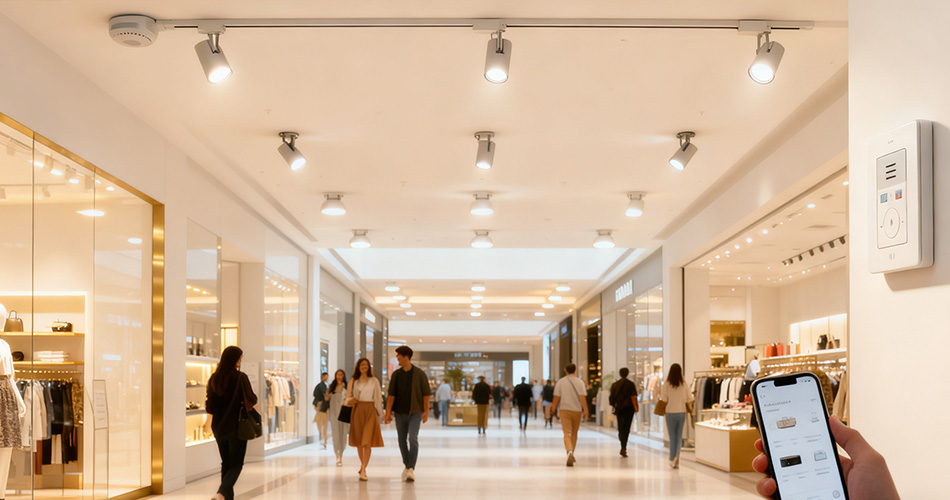
To maximize the value of wireless lighting control, businesses should consider the following key factors during implementation:
First, select a reliable wireless protocol (e.g., Zigbee, BLE, Wi-Fi) that aligns with the size and complexity of the commercial space. For large, multi-zone facilities, protocols with strong signal penetration and low power consumption (like Zigbee) are ideal, while BLE may be sufficient for smaller spaces. Second, ensure seamless integration with existing building systems (e.g., HVAC, security, building management systems) to create a unified smart building ecosystem. Third, prioritize security: choose wireless control systems with robust encryption and authentication features to protect against unauthorized access and data breaches. Finally, partner with experienced providers who can offer tailored solutions, professional setup, and ongoing support to ensure the system meets specific business needs.
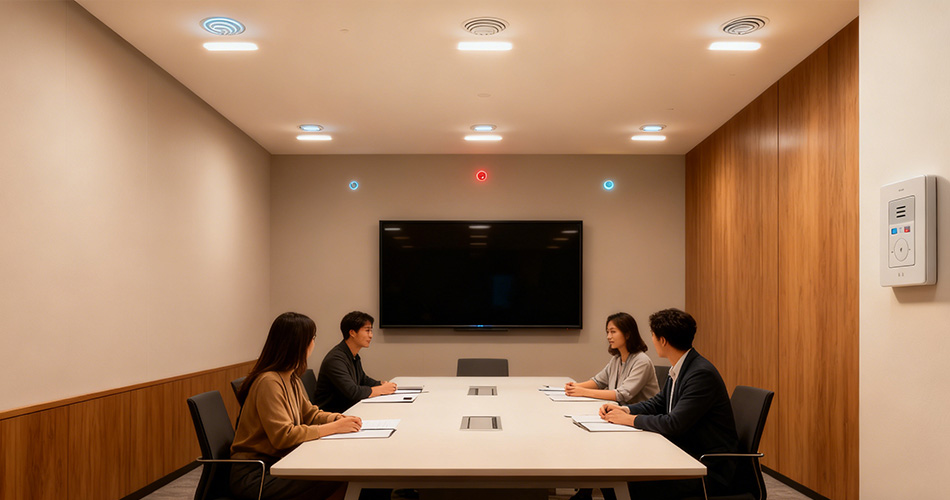
Wireless lighting control is transforming the landscape of commercial smart lighting, offering businesses the flexibility, efficiency, and personalization needed to thrive in a dynamic market. By integrating with intelligent sensors, controllers, and other smart components, wireless control systems create a seamless, data-driven lighting ecosystem that enhances operational efficiency, elevates user experience, and reduces environmental impact.
Whether you’re a small business looking to reduce energy costs, a retail chain aiming to enhance customer engagement, or a hotel brand focused on guest satisfaction, wireless lighting control is a strategic investment that delivers long-term value. Embrace this innovative technology to unlock the full potential of your commercial smart lighting system and gain a competitive edge in the modern business landscape.


)
)
)
)

+86 15899791249

+86 755 2955 3313


Address: Huafeng No.1 Science and Technology Park, Sanwei, Bao'an District, Shenzhen, Guangdong, China.
