

Time:2025-12-03
In the era of smart commercial buildings, the demand for flexible, efficient, and easy-to-deploy lighting solutions is escalating rapidly. Wireless zone lighting control has emerged as a groundbreaking technology, revolutionizing how facility managers oversee lighting by combining wireless connectivity with granular zone-based control. Unlike traditional wired lighting systems that are rigid and costly to install, wireless zone lighting control eliminates the constraints of physical wiring, enabling dynamic management of lighting across distinct zones in commercial spaces. As businesses strive for operational agility, energy savings, and enhanced user experiences, wireless zone lighting control has become an indispensable component of modern commercial lighting ecosystems.
At the heart of wireless zone lighting control’s appeal is its unparalleled flexibility and ease of deployment. Wired lighting systems require extensive cabling and structural modifications, making them time-consuming and expensive to install—especially in retrofitted commercial spaces or historic buildings where wiring is intrusive. Wireless zone lighting control, by contrast, can be deployed quickly with minimal disruption to daily operations. Facility managers can partition spaces into custom zones (such as workstations, meeting rooms, or product displays) and manage each zone independently via a wireless platform, without the need for complex wiring infrastructure.
Energy efficiency is another key benefit of wireless zone lighting control. By enabling precise control over individual zones, the technology eliminates energy waste from lights left on in unoccupied areas. For example, in an office building, wireless zone lighting control can automatically dim or turn off lights in a vacant meeting room zone while maintaining optimal lighting in adjacent work zones. Integration with occupancy sensors and natural light sensors further enhances energy savings: the system can adjust lighting intensity in each zone based on real-time occupancy and natural light levels, reducing lighting-related energy costs by up to 40%. This targeted approach to energy management aligns with global sustainability goals and helps businesses reduce their carbon footprint.
Remote and centralized management capabilities amplify the value of wireless zone lighting control. Facility managers can monitor and adjust lighting across all zones from a single, user-friendly platform—whether on-site via a desktop console or remotely through a mobile app or cloud-based system. This remote access enables quick responses to unexpected changes, such as extending lighting hours for a last-minute event or adjusting brightness in a retail display zone to highlight new merchandise. Additionally, centralized management simplifies maintenance by providing real-time insights into zone performance, allowing managers to identify and address issues (such as faulty fixtures) before they disrupt operations.
Scalability is another critical advantage. As businesses expand or reconfigure their spaces, wireless zone lighting control can be easily scaled to add new zones or adjust existing ones. Unlike wired systems that require rewiring to accommodate changes, wireless solutions allow for seamless updates—whether adding a new zone for a new department or redefining zones in a retail store during a seasonal redesign. This scalability makes wireless zone lighting control a cost-effective long-term solution for growing businesses.
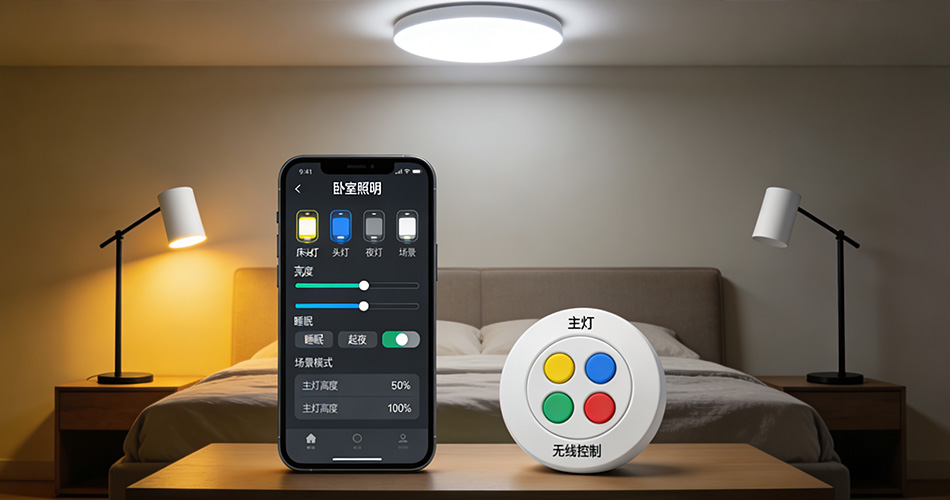
The versatility of wireless zone lighting control makes it suitable for a wide range of commercial environments, each leveraging its unique capabilities to address sector-specific challenges.
In retail settings, wireless zone lighting control is a game-changer for creating immersive shopping experiences while optimizing energy use. Retailers can divide their stores into zones for different product categories, fitting rooms, checkout areas, and promotional displays. Wireless control allows for dynamic adjustments: brightening promotional zones during peak shopping hours, dimming non-essential zones during off-peak times, and activating custom lighting scenes in fitting rooms to flatter merchandise. The ability to reconfigure zones without rewiring also supports seasonal redesigns, enabling retailers to adapt their lighting quickly to highlight holiday displays or new product lines.
Office buildings and corporate campuses benefit significantly from wireless zone lighting control. Facilities can be zoned by department, floor, or room type (e.g., open workspaces, meeting rooms, break rooms). For open workspaces, wireless zone lighting control can adjust brightness based on occupancy and natural light, creating a comfortable environment that boosts employee productivity. Meeting rooms can be equipped with wireless controls that allow users to activate pre-set lighting scenes (e.g., bright for presentations, dim for video calls) with a single touch. Remote management is particularly valuable for multi-building campuses, enabling facility managers to oversee lighting across all zones from a central location.
Industrial facilities and warehouses rely on wireless zone lighting control to balance safety, productivity, and energy efficiency. Large industrial spaces can be zoned into production lines, storage areas, loading docks, and administrative offices. Wireless control eliminates the risk of wiring damage in harsh industrial environments, ensuring reliable lighting performance. Production zones can be set to maintain bright lighting during operational shifts, while storage zones use motion-triggered lighting to save energy when unoccupied. Loading dock zones can have lighting adjusted based on delivery schedules, ensuring optimal visibility during peak hours without wasting energy during lulls.
Healthcare facilities, such as hospitals and clinics, find unique value in wireless zone lighting control. These environments require precise lighting to support patient care and medical procedures, while also maintaining sterile conditions. Wireless zone lighting control allows for customized lighting in different zones: bright, cool lighting in operating rooms to enhance visibility, warm, soft lighting in patient rooms to promote comfort, and low-level safety lighting in corridors during nighttime hours. The absence of wiring reduces the risk of contamination and simplifies maintenance in sterile areas, supporting the critical needs of healthcare operations.
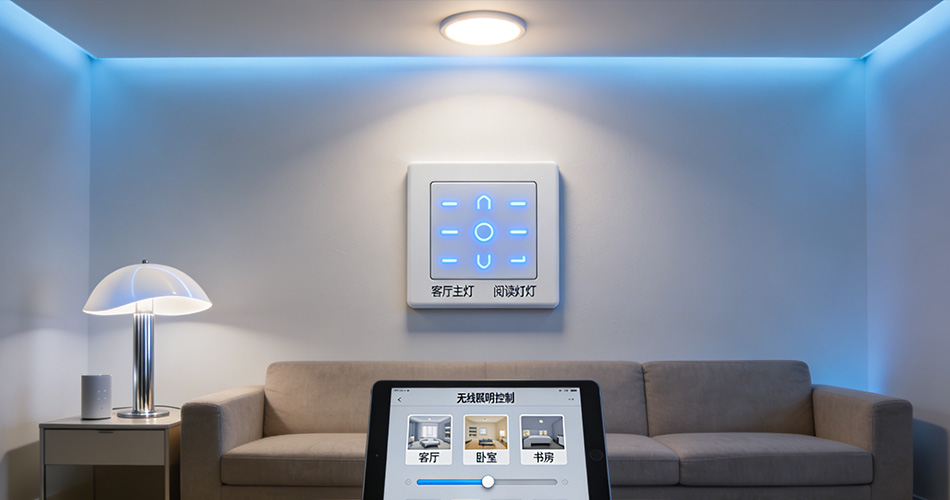
As smart building technology evolves, wireless zone lighting control is becoming increasingly intelligent and integrated. One key trend is the adoption of low-power wireless protocols, such as Bluetooth Low Energy (BLE) and Zigbee. These protocols extend the battery life of wireless controllers and sensors, reducing maintenance needs and enhancing the sustainability of the system. Additionally, low-power wireless technology enables seamless connectivity across large commercial spaces, ensuring reliable control even in expansive warehouses or multi-floor buildings.
Integration with artificial intelligence (AI) and machine learning (ML) is another growing trend. AI-powered wireless zone lighting control systems can analyze historical data on zone occupancy, energy use, and lighting preferences to automatically optimize lighting schedules. For example, an ML algorithm might learn that a particular office zone is consistently unoccupied on Friday afternoons and adjust the lighting schedule to dim lights during that period, or predict increased occupancy in a retail zone during holiday seasons and pre-adjust lighting accordingly. This predictive capability ensures that lighting is always aligned with actual needs, maximizing efficiency and user comfort.
Interoperability with broader smart building ecosystems is also transforming wireless zone lighting control. Modern systems are designed to integrate seamlessly with building management systems (BMS), HVAC systems, and security systems. This integration creates a holistic facility management approach where lighting works in tandem with other systems. For instance, if a security system detects unusual activity in an unoccupied zone, the wireless lighting system can trigger the zone’s lights to brighten, while alerting facility managers. Integration with HVAC systems can coordinate lighting and temperature adjustments based on zone occupancy, further enhancing overall building efficiency.
In conclusion, wireless zone lighting control is redefining commercial lighting management by combining flexibility, efficiency, and ease of use. Its ability to eliminate wiring constraints, enable precise zone-based control, and support remote management makes it an ideal solution for retail stores, offices, industrial facilities, and healthcare venues. As low-power wireless protocols, AI integration, and system interoperability continue to advance, wireless zone lighting control will play an increasingly vital role in the future of smart commercial buildings. For businesses looking to future-proof their operations, reduce energy costs, and enhance user experiences, wireless zone lighting control is not just a lighting solution—it’s a strategic investment in operational excellence.


)
)
)
)

+86 15899791249

+86 755 2955 3313


Address: Huafeng No.1 Science and Technology Park, Sanwei, Bao'an District, Shenzhen, Guangdong, China.
