

Time:2026-03-23
In the world of large-scale logistics and manufacturing, lighting is often a silent drain on the balance sheet. For many facilities, high-bay HID or legacy LED fixtures run at 100% capacity even when aisles are vacant, leading to astronomical utility bills. The solution to this inefficiency lies in a single, transformative technology: the integration of a professional motion sensor light network.
By transitioning from manual switching to an automated, sensor-driven infrastructure, industrial warehouses can reduce their lighting energy consumption by as much as 60% to 80%. This guide explores how advanced sensors, networked controls, and smart switches are redefining industrial efficiency in 2026.
In the competitive landscape of modern logistics, the primary objective of any forward-thinking facility manager is to eliminate "wasted lumens"—the costly energy spent illuminating empty aisles and vacant loading docks. A professional-grade motion sensor light network operates on a simple but powerful principle: illumination should only exist when it is serving a specific operational purpose. In a massive 500,000-square-foot warehouse, it is physically impossible and labor-inefficient for staff to manually manage thousands of individual light switches. Without automation, lights often remain at 100% output 24/7, leading to astronomical utility bills and unnecessary wear on LED drivers.
An automated system solves this by utilizing high-sensitivity PIR (Passive Infrared) or Microwave sensors to detect the precise presence of forklifts, AGVs (Automated Guided Vehicles), or personnel. These industrial-grade motion sensor lights are engineered to distinguish between actual work activity and minor environmental changes. When a sensor determines an aisle is empty, the system executes a programmed response: either turning the lights off entirely or, more commonly, dimming them to a safe 10% "background" or "security" level.
This creates a "follow-me" lighting effect where high-intensity illumination travels with the worker, ensuring maximum safety while harvesting deep energy savings in dormant zones. This is the foundation of modern motion sensor lights in industrial settings—shifting the facility from a rigid, "static" environment to a highly "responsive" digital infrastructure. By transitioning to this sensor-driven model, warehouses can reduce their lighting energy consumption by up to 80%, significantly improving the facility's overall carbon footprint and operational ROI.
To achieve truly granular control at the individual fixture level, modern electrical engineers utilize the motion sensor detector light switch as a cornerstone of facility design. Unlike a standard wall toggle—which offers only a binary ON/OFF state—this specialized switch acts as a sophisticated digital bridge between the environmental data collected by the sensors and the actual electrical output of the lighting fixtures. In an industrial context, the motion sensor detector light switch transforms a simple light into an intelligent node within a wider automated network, allowing for localized decision-making that saves energy without requiring a central server's constant intervention.
The integration of a professional-grade motion sensor detector light switch provides three distinct advantages that directly impact a facility's Return on Investment (ROI):
Dynamic Zonal Management: These switches empower facility managers to logically group fixtures into specific functional zones. For example, a high-traffic loading dock can be programmed with a higher lighting sensor sensitivity adjustment to account for rapid movement, while long-term storage aisles remain in a deep-dimmed state until specifically accessed. This targeted approach ensures energy is only spent where productivity is happening.
Ultra-Fast Instant Response: Safety is a non-negotiable priority in logistics. Modern motion sensor lights equipped with high-speed detection switches ensure that fixtures reach 100% brightness the exact microsecond a forklift or pedestrian enters a zone. This zero-latency performance ensures there is no compromise on visibility, effectively preventing accidents in high-speed industrial environments.
Intelligent Manual Overrides: Despite the benefits of automation, certain "mission-critical" situations require human control. The motion sensor detector light switch provides the flexibility for manual "Always On" modes. This is essential for detailed maintenance tasks, inventory audits, or emergency inspections where constant, unwavering illumination is required regardless of motion detection.
By investing in high-quality motion sensor lights and the underlying switch infrastructure, wholesalers can offer their clients a system that is both autonomous and adaptable.
One of the most daunting hurdles in large-scale warehouse retrofits is the prohibitive cost and complexity of rewiring an entire facility. Traditional control systems often require dedicated low-voltage communication lines to be pulled alongside power cables—a process that can double the labor budget. Fortunately, the motion sensor light switch has undergone a significant evolution to solve this exact problem. Today’s industrial-grade wireless switches are engineered for "drop-in" compatibility, allowing them to be integrated directly into existing 120-277V or even high-voltage 480V industrial circuits without the need for a total infrastructure overhaul.
The true breakthrough in modern deployment comes from using a motion sensor light switch that supports Bluetooth Mesh connectivity. By utilizing this decentralized communication protocol, installers can completely bypass the need for running miles of expensive CAT5 or signal wiring through high-bay ceilings. Instead of a linear, wired connection, each switch communicates wirelessly with the nearest light fixture and neighboring sensors, creating a robust, "self-healing" network. If one node in the mesh experiences a disruption, the data simply reroutes through the next available device, ensuring the motion sensor lights remain fully operational.
This technological shift dramatically simplifies the ceiling lighting sensor installation process. Because the system is commissioned via a software app rather than physical jumpers or hardwiring, the time spent on a scissor lift is cut in half. For electrical contractors and facility owners, this translates to a massive reduction in project timelines and labor costs by up to 70%. Furthermore, a wireless motion sensor light switch provides the ultimate flexibility for the future; as warehouse layouts change or racking is moved, the "zoning" of the sensors can be reconfigured digitally in seconds, ensuring the motion sensor lights always align with the facility's shifting workflow.
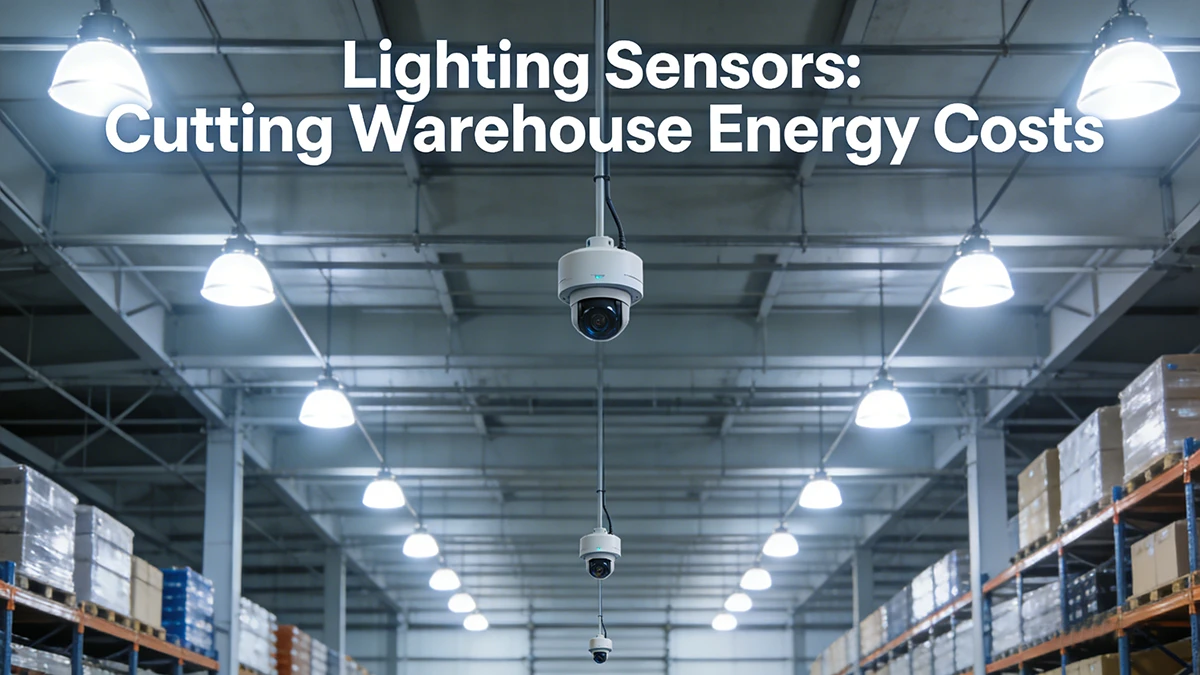
In the diverse ecosystem of a modern industrial facility, the hardware requirements for automation vary significantly by zone. While residential users often seek a simple, consumer-grade motion sensor light bulb for a porch or hallway, heavy-duty industrial applications demand integrated LED high-bay fixtures where the motion sensor detector light switch and sensors are embedded directly into the driver. These integrated units are designed to survive 24/7 operation in environments with extreme temperatures and dust. However, this doesn't mean the individual bulb has no place in the warehouse. For office spaces, break rooms, restrooms, and smaller utility closets, the motion sensor light bulb remains a highly effective, low-cost retrofit option that provides immediate energy savings without the need for a full fixture replacement.
When specifying hardware for a professional environment, not all bulbs are created equal. High-performance motion sensor lights must meet rigorous standards to avoid becoming a maintenance headache. Key factors to consider include:
Comprehensive Detection Angle: Unlike cheap retail versions that have a narrow "cone" of vision, an industrial-grade motion sensor light bulb offers a full 360-degree detection radius. This ensures that no matter how the bulb is oriented in the socket, it will accurately pick up movement from any direction.
Built-in Electrical Durability: Warehouses often experience significant voltage fluctuations and "dirty" power from heavy machinery starting up. Professional bulbs are built with robust internal surge protection to handle these spikes, ensuring a long operational life.
Precision Lighting Sensor Sensitivity Adjustment: One of the biggest issues with low-end sensors is the lack of customization. High-end models allow for granular lighting sensor sensitivity adjustment. This is critical for preventing lighting sensor false triggers caused by minor air currents from HVAC vents or small pests, ensuring the light only activates when a human or forklift is present.
By choosing a high-quality motion sensor light bulb or integrated fixture from a partner like LumiEasy, wholesalers can ensure their clients achieve the maximum automated lighting cost savings with minimum technical friction.
Efficiency and cost-reduction strategies should never stop at the warehouse door. In a comprehensive facility management plan, an outdoor motion sensor light network is critical for balancing operational energy savings with robust site security. Traditionally, loading docks, expansive parking lots, and perimeter fences are illuminated at full power throughout the night, regardless of activity. This practice is not only prohibitively expensive in terms of utility costs but also contributes significantly to light pollution and premature wear on high-output LED drivers.
Implementing an intelligent outdoor motion sensor light ensures that high-intensity motion sensor flood lights only activate to 100% brightness when a vehicle, personnel, or potential intruder approaches a sensitive zone, such as a main gate or a dark alleyway. This "on-demand" illumination serves two powerful purposes:
Dynamic Deterrence: For security, the sudden, brilliant activation of a motion sensor light acts as a far more effective deterrent to intruders than static lighting. Being caught in an unexpected spotlight creates a psychological barrier that "always-on" lights simply cannot provide.
Environmental Resilience: Industrial environments are notoriously harsh. When selecting hardware, it is non-negotiable to ensure the outdoor lighting sensor waterproof rating is at least IP65 or IP67. This level of protection ensures that the outdoor motion sensor light can withstand heavy rain, high-pressure washdowns, and freezing snow without internal corrosion or circuit failure.
By integrating these motion sensor lights with a Bluetooth Mesh network, security teams can even receive real-time alerts on their smartphones whenever a perimeter sensor is triggered, turning a simple light fixture into a proactive security asset.
In 2026, motion sensor lights have evolved far beyond their original identity as simple, isolated hardware devices. Today, they function as critical, data-gathering nodes within a comprehensive "Building Operating System." By deploying a strategic fleet of networked motion sensor lights across an industrial facility, managers can unlock insights that were previously invisible. These sensors do more than toggle power; they act as a continuous monitoring grid that collects granular "heat map" data in real-time. This information reveals exactly which aisles are the busiest, which loading docks experience the highest dwell times, and where traffic bottlenecks occur throughout a shift.
For a logistics hub, this level of versatility is transformative. By analyzing the activation frequency of motion sensor lights, management can execute data-driven workflow optimization. For example, if heat maps show that certain high-velocity items are stored in low-activity zones, the inventory can be relocated closer to the shipping bay to reduce forklift travel time. Furthermore, because these motion sensor lights are often integrated via Bluetooth Mesh, the data can be exported to third-party warehouse management software (WMS) to automate climate control or further refine safety protocols. Integrating a professional light automation system effectively turns your ceiling into a sophisticated data asset, ensuring that your facility is as smart as it is bright.
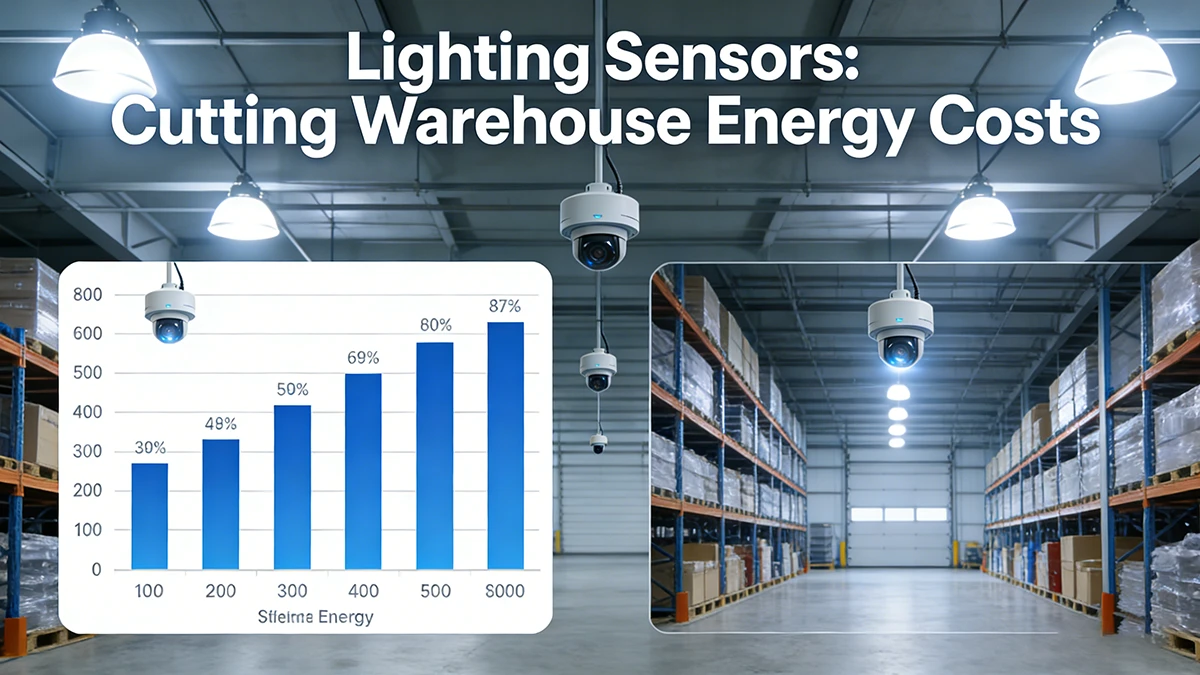
To transition from a basic setup to a high-performance industrial ecosystem, facility managers must look beyond simple "on/off" triggers. True optimization involves layering multiple technologies to ensure the motion sensor light network is as intelligent as it is efficient.
A critical companion to motion detection in modern sustainable architecture is Daylight Harvesting. Professional-grade sensors are equipped with integrated photocells that continuously monitor the level of ambient natural light entering through skylights, clerestory windows, or open bay doors. When the sun provides sufficient illumination to meet the facility's safety standards, the system automatically dims or deactivates the motion sensor lights—even if motion is currently detected in the aisle. This "ambient-aware" logic allows enterprises to squeeze every possible cent out of their energy budget by only using artificial light as a supplemental resource.
A frequent frustration in active warehouse environments is "ghosting," or lighting sensor false triggers. In vast logistics hubs, powerful HVAC fans or high-speed air curtains often move hanging plastic thermal strips, which legacy sensors can misinterpret as human or vehicle movement. This results in unnecessary energy spikes. High-performance systems, like those pioneered by LumiEasy, solve this by offering fine-tuned lighting sensor sensitivity adjustment via a dedicated smartphone app. By digitally filtering out minor environmental vibrations or small non-human movements, managers can eliminate "ghost" activations and ensure the motion sensor light switch only triggers for genuine operational needs.
In facilities with 40-foot ceilings, traditional PIR (Passive Infrared) technology may struggle due to the extreme distance. For these "high-mount" scenarios, Microwave sensors are preferred as they use radar pulses to penetrate obstacles and cover larger areas. During ceiling lighting sensor installation, it is vital to mathematically map the detection cones of each fixture. Overlapping these "vision fields" ensures there are no dangerous "dead zones" where a worker might be left in the dark. Utilizing a Bluetooth Mesh network during installation allows for the digital grouping of these sensors, ensuring that as a forklift approaches an aisle, the entire row of motion sensor lights activates in unison for maximum safety.
In a comprehensive industrial lighting strategy, "one size fits all" is a recipe for energy waste. Beyond the main warehouse floor, specialized hardware ensures that every specific zone—from dark stairwells to remote fences—is optimized for both safety and energy conservation.
In low-traffic zones like stairwells, hallways, and restrooms, using full-power overhead arrays 24/7 is a massive "vampire" energy drain.
The Solution: The motion sensor night light serves as a vital safety tool, providing high-contrast, low-wattage illumination only when personnel are present.
The Benefit: It ensures safe navigation during off-peak hours while keeping operational costs at a bare minimum.
Running electrical conduit to a remote fence line or auxiliary storage yard can be prohibitively expensive due to trenching costs.
The Solution: A high-quality solar motion sensor light is the ultimate off-grid answer.
The Tech: Equipped with an outdoor lighting sensor waterproof (IP65) rating, these units harvest enough sunlight to power security illumination for multiple consecutive nights on a single charge.
Loading docks are high-risk zones that require intense, wide-angle illumination for safe trailer loading and unloading.
The Solution: Motion sensor flood lights act as the heavy-duty workhorses of the dock.
The Advantage: These high-lumen fixtures deliver massive light output the moment a truck or technician is detected, ensuring 100% visibility during critical tasks, then returning to a dark, energy-efficient state during downtime.
Most industrial motion sensor lights use Passive Infrared (PIR) sensors that detect heat signatures or Microwave sensors that use radar pulses to detect movement. When the sensor detects a change in its environment, it sends a signal to the motion sensor light switch to complete the circuit and turn on the light.
While this usually refers to a vehicle's TPMS (Tire Pressure Monitoring System) light, in a warehouse context, sensors can sometimes be accidentally triggered by heavy equipment. If your lighting system is incorrectly reacting to equipment, you can use the LumiEasy app to adjust the "Hold Time" or "Sensitivity" settings to ignore certain types of movement.
The best outdoor solar motion sensor light for commercial use must have a high-capacity lithium battery and an outdoor lighting sensor waterproof rating of IP65 or higher. LumiEasy recommends models with monocrystalline solar panels for the fastest charging even in cloudy conditions.
While DIY enthusiasts use Arduino for small projects, industrial applications require UL-listed, NLC-certified hardware. For a simple prototype, you would connect a PIR sensor and a Photoresistor to an Arduino board and program it to trigger a relay. However, for a warehouse, a professional Bluetooth Mesh controller from LumiEasy provides the reliability and security that a DIY board cannot.
The transition to a sensor-driven warehouse is an investment that typically pays for itself within 12 to 18 months. By utilizing high-quality motion sensor lights, outdoor motion sensor lights, and advanced Daylight Harvesting logic, you are not just saving money—you are building a sustainable, future-proof enterprise.
LumiEasy specializes in OEM/ODM services for:
NLC-Certified Sensors: Meeting the highest North American efficiency standards.
Bluetooth Mesh Controllers: For wire-free, scalable installations.
Industrial Durability: Hardware designed for 24/7 operation in harsh environments.
Ready to slash your energy costs? Contact LumiEasy today for a customized warehouse lighting audit and sensor configuration plan.
Related news


)
)
)
)

+86 15899791249

+86 755 2955 3313


Address: Huafeng No.1 Science and Technology Park, Sanwei, Bao'an District, Shenzhen, Guangdong, China.
