

Time:2026-07-03
In the rapidly evolving world of commercial intelligent lighting, selecting a reliable, standardized communication architecture is the cornerstone of successful product scaling. For LED luminaire manufacturers, IoT developers, and commercial system integrators, proprietary wireless protocols are a thing of the past. Today, the global B2B sector relies heavily on interoperable standards, with the Silvair platform standing at the apex of Bluetooth SIG mesh optimization. Utilizing bluetooth mesh certified silvair devices is no longer optional—it is the ultimate safeguard ensuring that your smart hardware performs flawlessly inside high-density building networks.
For factory-level buyers and luminaire OEMs, sourcing components that are officially certified under the Silvair ecosystem significantly reduces engineering overhead and slashes your market deployment cycle from months to days. This engineering handbook breaks down the critical hardware architectures, pairing protocols, and manufacturing compliance guidelines required to maximize your smart lighting market share.
When deploying a premium wireless lighting control commercial project, the single greatest point of failure is device-to-cloud disconnect. If an occupancy sensor cannot instantly communicate with a third-party wireless wall switch or an LED driver, the entire network fails.
By sourcing components verified on the official silvair compatible sensor list, factory engineers eliminate the traditional headaches of wireless ecosystems:
Instant Protocol Synchronization: Certified devices utilize an identical firmware stack, enabling effortless grouping, zoning, and scene control.
Robust Security Infrastructure: Every data packet is protected with multi-layer encryption keys, mitigating corporate network security breaches.
Seamless Application Integration: Installers can utilize advanced ble network commissioning tools out of the box, without requiring custom software patches or specialized gateway modifications.
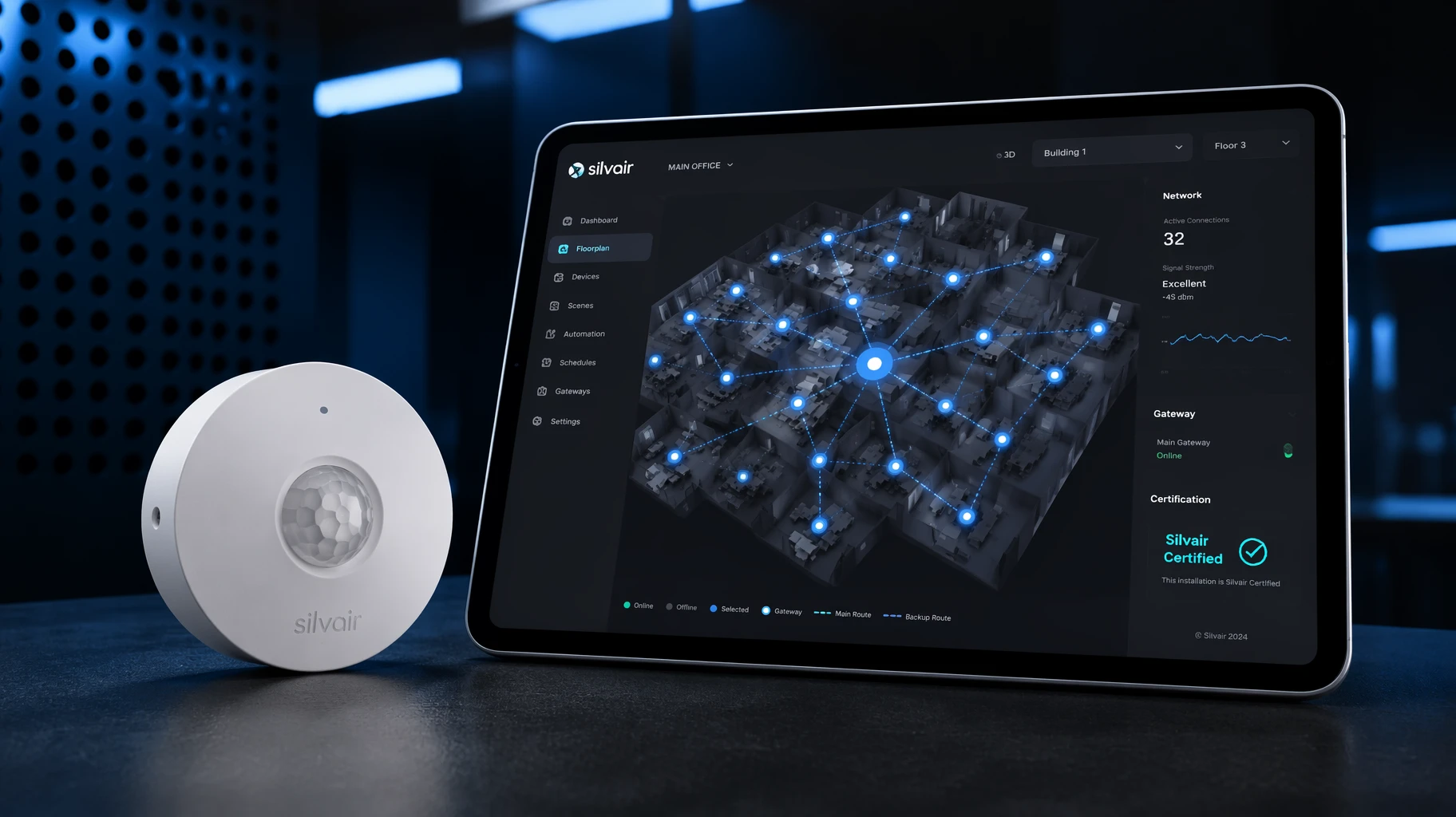
An industrial grade bluetooth mesh certified silvair devices selection involves looking deeply into the radio frequency (RF) engineering and electronic layout of the component. At LumiEasy, we build our wireless platforms with specialized hardware considerations optimized specifically for factory integration.
Wireless signals inside industrial warehouses or architectural linear slots face extreme challenges due to metal fixture shielding and electrical ambient noise. True commercial-grade smart sensors require high-efficiency omnidirectional ceramic or trace antennas designed with explicit clearance boundaries to ensure an unobstructed signal transmission range of over 30 meters within indoor spaces.
Modern fixtures require compact control units that do not compromise aesthetic industrial designs. Our development team focuses on creating low-profile, modular form-factors. This design methodology supports plug-and-play sensor integration, allowing assembly lines to slide wireless sensor modules directly into pre-punched fixture profiles without specialized rewiring.
By matching a qualified sensor with a DALI-2 or D4i certified LED driver, the luminaire achieves true LLLC status. The certified wireless device functions as a decentralized processor, gathering real-time ambient data, processing local daylight harvesting routines, and broadcasting system analytics directly across the peer-to-peer network mesh.
To help your engineering team make data-driven decisions, the table below highlights the performance variables of certified Bluetooth Mesh peripherals compared to non-certified wireless hardware.
| Hardware Feature / Metric | Bluetooth Mesh Certified Silvair Devices | Uncertified Generic BLE Components | OEM Manufacturing Benefit |
| Commissioning App Pairing | 100% Instant Detection via official Silvair apps. | High error rates; manual entry or token inputs required. | Slashes labor times during field configuration cycles. |
| Over-The-Air (OTA) Updates | Secure, multi-node concurrent encrypted updates. | Fragmented single-device firmware flashing. | Future-proofs fixtures against emerging software changes. |
| Daylight Harvesting Accuracy | Continuous, step-less dimming data integration. | Stepped, erratic lux-level adaptations. | Delivers up to 75% measurable energy savings for ESCOs. |
| Cross-Brand Interoperability | Flawless data exchange with any qualified switch/driver. | Closed ecosystems; high risk of protocol dropouts. | Allows factories to source cross-brand peripheral components safely. |
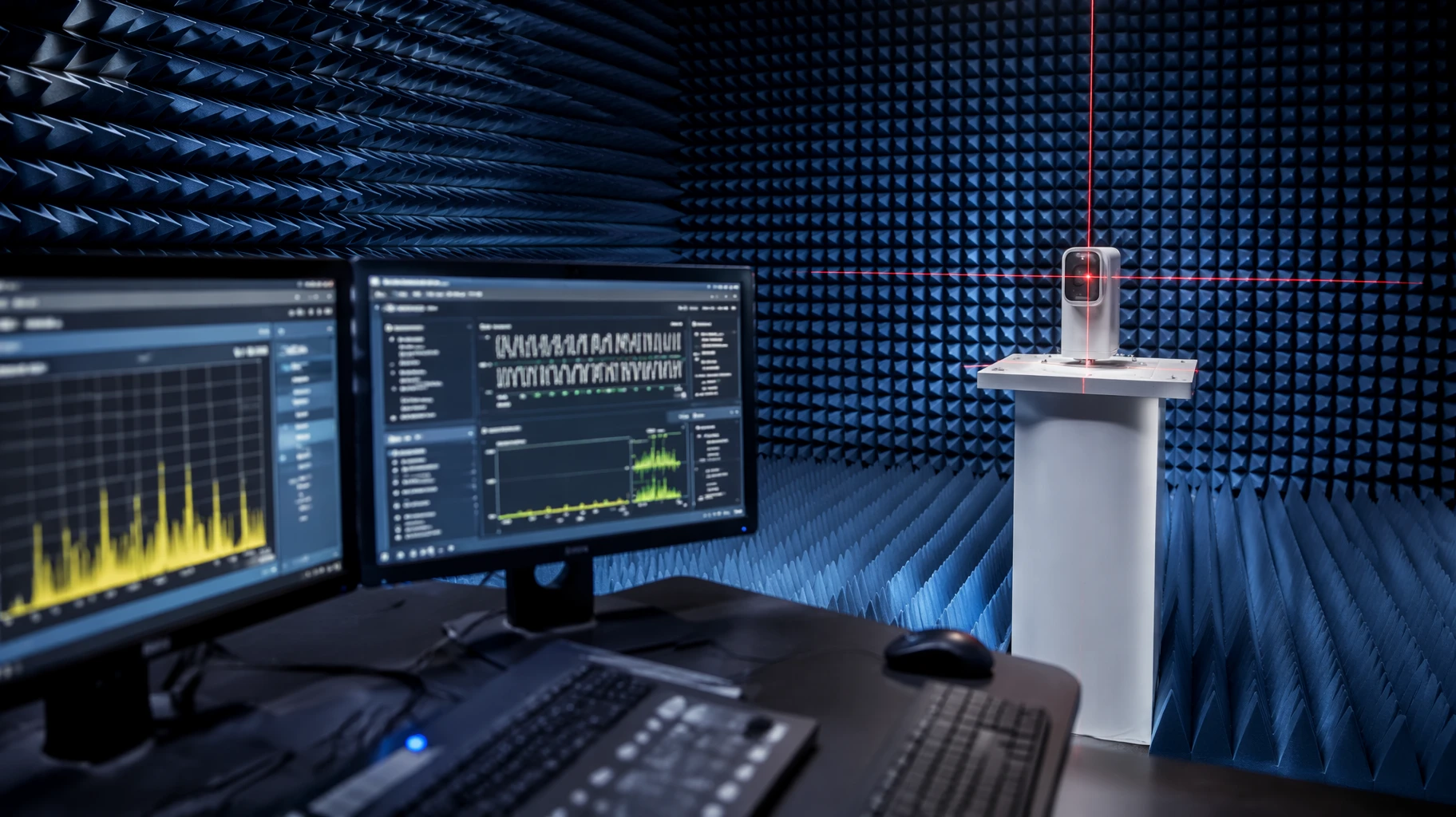
As an established smart lighting solutions provider, LumiEasy does not rely on third-party guesswork. Our factory floor houses dedicated RF chambers and digital protocol testing benches specifically calibrated for advanced Bluetooth SIG Mesh verification.
RF Shielding Chamber Validation: Every batch of wireless sensors undergoes strict transmission power and reception sensitivity testing inside an anechoic chamber to isolate antenna performance from external Wi-Fi interference.
Multi-Node Traffic Stress Testing: We simulate actual commercial deployments by building a live network consisting of over 200 nodes running simultaneously. This tests data packet propagation latency, proving that our devices maintain instantaneous response times even during high-density signal traffic.
Silvair Ecosystem Commissioning Trial: Our engineers run automated scripts utilizing commercial ble network commissioning tools to cycle devices through continuous pairing, unpairing, zoning, and firmware updating routines for over 48 continuous hours.
For factories exploring robust alternatives or seeking a comprehensive overview of cross-brand component synchronization, consult our technical analysis on
For large-scale commercial lighting manufacturers, managing a resilient component supply chain is vital. While sticking strictly to a certified component checklist ensures smooth project delivery, unexpected supply chain constraints or unique aesthetic restrictions may require your engineering group to evaluate reliable hardware alternatives.
When evaluating alternative components, ensure they utilize identical standard profiles to guarantee that your software maps don't break during commissioning. Selecting components engineered with flexible firmware options allows your production lines to quickly pivot between localized control strategies without modifying your structural physical housings.
Discover how your factory can optimize component flexibility while maintaining zero software friction by reading our specialized guide on
To maximize the yield rates of fixtures embedded with intelligent wireless controllers, factory assembly plants should incorporate the following production standards:
Aesthetic Shielding Avoidance: Never encase the RF antenna portion of your Bluetooth module entirely in a sheet-metal junction box. Always position the sensor lens and antenna array so that they face through a cutout or non-metallic composite cover.
Electrostatic Discharge (ESD) Protection: Wireless mesh chipsets are highly sensitive to static electricity. Ensure all assembly personnel wear grounded anti-static wrist straps during the sensor integration phase.
Pre-Commissioning Quality Checks: Implement a quick functional RF ping test at the end of your assembly line to verify that the integrated device is actively broadcasting its Bluetooth beacon before boxing and shipping.
A1: Choosing bluetooth mesh certified silvair devices guarantees absolute interoperability across any international commercial project footprint. It removes the risk of firmware-level communication errors and ensures total out-of-the-box compatibility with the mainstream Silvair software platform.
A2: Yes. LumiEasy provides high-performance alternative silvair sensors customized to match specific physical requirements. We offer modular shapes ranging from ultra-thin linear profiles to rugged IP65 high-bay geometries while maintaining strict compliance standards.
A3: Absolutely. All LumiEasy smart Bluetooth components feature advanced OTA firmware architecture, allowing electrical contractors to roll out wireless patches and feature updates simultaneously across multiple nodes using standard mobile devices.
Launching a smart, high-performance commercial luminaire line does not require complex in-house protocol development. By partnering with a specialized component manufacturer like LumiEasy, your production lines gain instant access to certified, bulletproof wireless hardware built to satisfy demanding global standards. Maximize your project margins, ensure field reliability, and position your brand as a premier player in the smart building economy.
Don't let complex wireless integration issues stall your business growth. Contact our expert engineering team today to review engineering drawings, request certified evaluation samples, and lock in volume OEM pricing.


)
)
)
)

+86 15899791249

+86 755 2955 3313


Address: Huafeng No.1 Science and Technology Park, Sanwei, Bao'an District, Shenzhen, Guangdong, China.
