

Time:2026-06-02
In 2026, industrial facilities face rising costs and strict emission laws. Traditional lighting wastes electricity and demands constant maintenance.
The ultimate fix is an intelligent lighting control system built with rugged industrial grade photocell sensors and automated led fixture networks. Sourcing these heavy-duty components allows seamless communication with modern smart devices, automating daylight harvesting while slashing utility bills. Far beyond basic on/off switches, investing in these advanced optical nodes is a strategic decision that guarantees high energy efficiency and maximizes your long-term corporate ROI.
This guide breaks down hardware engineering standards. It details architectural design paths. It also shows how to maximize your long-term ROI.
To build a reliable automation grid, your technical team must understand different hardware standards. Standard commercial light nodes cannot match true industrial grade photocell sensors. Cheap nodes break down fast in brutal environments. They fail in heavy manufacturing plants, outdoor shipping docks, and coastal logistics yards.
True industrial-grade photocells feature premium internal components. To ensure maximum durability in heavy-duty hubs, these sensors are engineered around three core structural pillars:
UV-Stabilized Glass Lenses: This choice prevents yellowing, cracking, and clouding caused by continuous exposure to direct outdoor sunlight.
Low-Voltage 12V/24V DC Inputs: This setup operates on a safe power loop. It minimizes internal heat buildup. It also lengthens the lifespan of your sensor.
Enclosed Gas Gasket Seals: This construction keeps out fine dust, water spray, and chemical vapors from sensitive internal electronics.
They utilize solid-state silicon photodiode detectors instead of cheap cadmium sulfide (CdS) resistors. Silicon photodiodes do not drift over time. They read ambient light levels with absolute mathematical precision year after year.
What's more, these sensors pack built-in surge protection components. This heavy-duty shielding guards internal radio chips against massive voltage spikes. It stops damage from machinery startup cycles or local lightning strikes. These rugged nodes act as sensory organs for your facility. They connect directly into a modern iot lighting control network. They track ambient lux data continuously. Then, they pass clean signals back to your central management systems. This manages power loads with flawless accuracy.
When building a massive building automation grid, engineering teams must prioritize native compatibility across different hardware brands. Older building designs frequently suffered from a major problem. They trapped building owners in closed, single-vendor hardware loops. If a specific component went out of stock, the entire construction project stalled.
Modern procurement strategies avoid this risk by sourcing nlc certified lighting hardware built on standardized communication rules:
Top-tier alternative photocells use standardized Bluetooth Mesh profiles. They also carry certified Bluetooth Networked Lighting Control (NLC) firmware frameworks. This means that when a sensor reads an ambient light change, it transmits standard data packets over the air. Any qualified central controller on the network reads this data instantly, regardless of what company manufactured the backend hub.
Large-scale infrastructure projects frequently mix and match different component production batches. Some hardware nodes may arrive at the site carrying earlier firmware variations. Meanwhile, newly sourced photocell sensors arrive with the latest Bluetooth NLC software profile.
Your integration team must verify one key feature to keep performance perfectly smooth. All sourced alternative sensors must support over-the-air (OTA) updates. This smart feature helps a field energy manager. They can execute instant, bulk firmware refreshes across the entire sensor grid using standard ble commissioning tools. This proactive strategy prevents communication errors, locks in absolute network stability, and ensures cross-brand hardware harmony over a 10-year facility lifecycle.
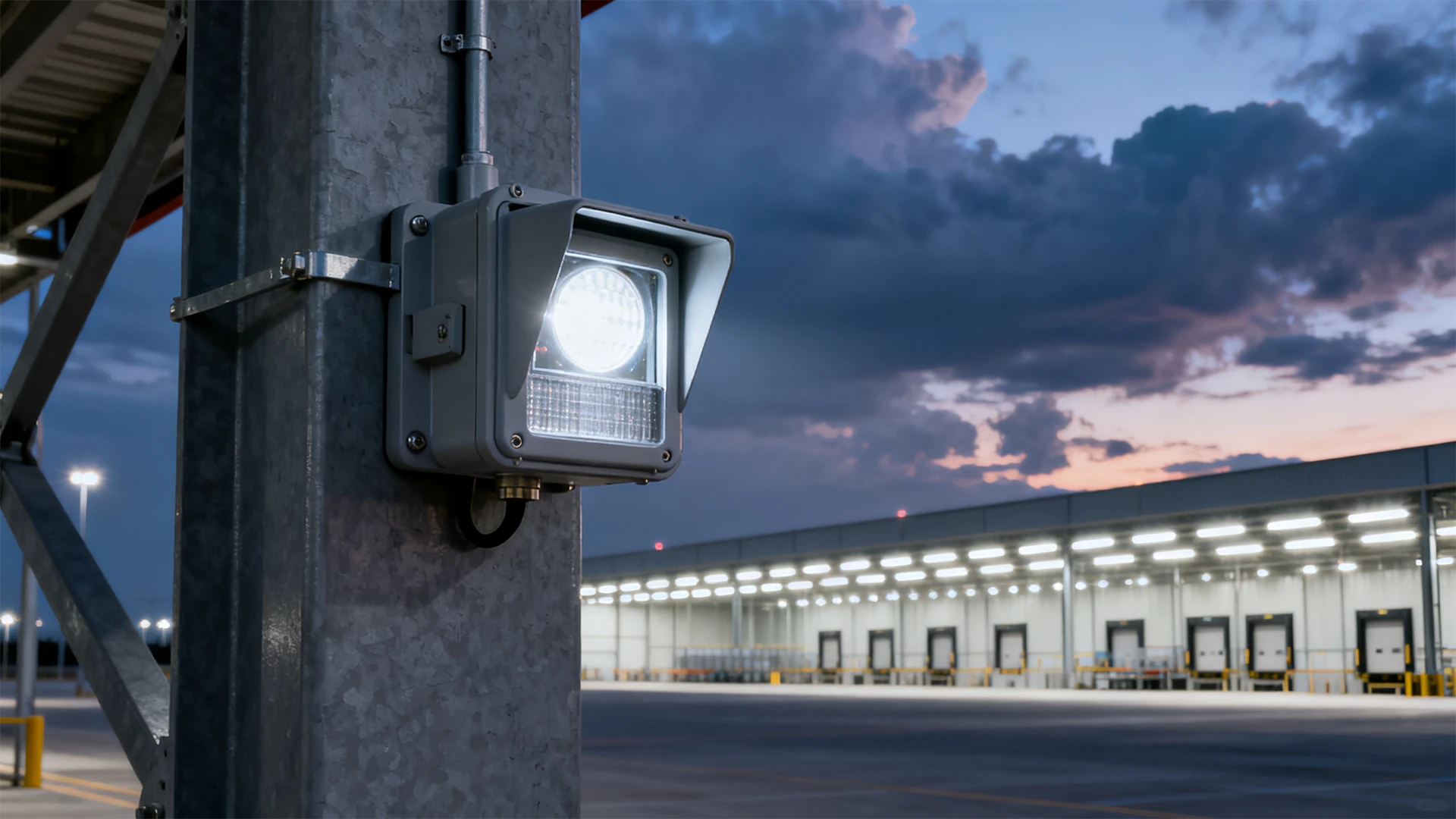
Commercial building shapes vary wildly from low-ceiling corporate offices to cavernous 40-foot industrial warehouses. To guarantee smooth data collection and perfect light balance, procurement managers must source replacement sensors with versatile mounting choices.
These models fit directly into standard acoustic ceiling tiles. They are the ideal choice for office spaces, conference rooms, side hallways, and common areas. They sit flush against the ceiling to preserve clean architectural lines. At the same time, their optical lenses aim directly at workspace surfaces.
These ultra-compact sensors are designed to fit directly into pre-punched knockouts on individual light housings. Sourcing a fixture-integrated led fixture node cuts out independent mounting steps completely. This clever design dramatically reduces on-site assembly work. It allows factory assembly teams to ship fully automated, smart-ready fixtures directly to the construction site.
Industrial factories and logistics hubs feature rooflines extending from 30 to over 40 feet high. Standard proximity sensors cannot track motion or read light curves effectively from those extreme heights.
To solve this problem, industrial photocells must use specialized high-bay optical lenses. These precision-molded lenses focus light collection zones accurately over long distances. They ensure the internal photodiode captures clear floor-level lux data. This layout prevents confusion from reflection clutter near the ceiling steel.
Traditional commercial lighting frameworks rely heavily on line-voltage connections. Sourcing sensors that run on standard high-voltage lines brings major structural and financial downsides to large development projects. High-voltage installations require thick copper wiring, heavy steel junction boxes, and rigid metal conduit. Old structures require highly paid, certified electricians. These crews must install and test every single junction point to ensure basic life-safety compliance.
Smart building developers are moving rapidly toward low-voltage DC building designs. You can source alternative sensors engineered to run on a clean 12v/24v dc input loop. This choice completely rewrites your project economics:
Rapid Wire Routing: Crews can route lightweight control wires quickly through open drop ceilings. They do not need rigid metal pipes or heavy junction boxes.
Drastic Labor Reductions: Low-voltage circuits carry zero shock or fire risks. Because of this, general data technicians can handle the entire sensor installation safely.
Unmatched Spatial Flexibility: Imagine a factory layout changes during a future remodel. Repositioning a low-voltage sensor node takes minutes. It eliminates days of expensive conduit demolition and electrical rewiring.
Standardize your hardware grid on a low-voltage DC power foundation. This step slashes starting material expenses. It also accelerates your project completion schedule.
Sourcing heavy-duty alternative hardware requires a clear understanding of long-term operational wear. In industrial environments, physical failure is the single largest threat to project profits. Traditional light controllers use mechanical relay switches. These moving parts trigger minor electric arcs during daily operation. Over time, these arcs fuse the metal contacts together, causing the sensor to lock up or completely burn out.
Modern industrial photocells eliminate this vulnerability. They replace old mechanical components with advanced zero-crossing solid-state circuits:
Zero-Crossing Solid-State Timing: The internal microchips track the electrical AC wave cycle in real time. The sensor only switches power at the exact microsecond the voltage touches zero.
Inrush Current Suppression: This timing method eliminates destructive inrush currents completely. It keeps internal components running cool and stops premature component wear.
Extended Product Longevity: Because there are no moving parts to break or fuse, these solid-state units easily deliver over 100,000 continuous operating hours.
By moving to solid-state tech, you extend the system life to match your premium LEDs. Top-tier manufacturers back this exceptional engineering with a comprehensive 5-to-10-year factory replacement warranty. This strong backing ensures enterprise buyers eliminate routine bulb replacements. It locks in a secure, zero-cost maintenance lifecycle across your entire facility footprint.

Deploying heavy-duty industrial grade photocell sensors does more than just switch lights off when the sun shines. This integration converts your building's lighting layout into a tool. It acts as a high-speed data collection pipeline for the broader Internet of Things (IoT).
When smart sensors communicate across a unified wireless network, they continuously track real-time spatial data. By routing this clean data back through a central Smart Gateway, corporate facility managers can build deep asset models. This framework forms the basis of comprehensive Space Utilization Data Collection systems:
Real-World Space Tracking: The gateway logs real-time presence data across specific factory zones. This helps corporate leadership identify empty warehouse aisles or underused assembly lines, allowing them to optimize spatial layouts effectively.
Daylight Optimization Auditing: Continuous photocell lux tracking records environmental data. It logs exactly how much natural daylight enters different building sectors throughout the year.
Predictive Asset Maintenance: The smart network tracks live operating temperatures and signal strengths across all nodes. If a specific component begins to show efficiency drops, the software flags the issue early. This allows maintenance teams to complete a quick fix before a total component blackout occurs.
This tracking provides empirical proof of energy reduction. You need this data to pass international green compliance audits. It also helps earn prestigious building ratings. This high-level data layer turns your basic facility hardware into a core corporate asset, maximizing your long-term corporate profits.
When engineering teams write technical specifications for enterprise-grade facilities, component validation is crucial for long-term risk mitigation. Sourcing cheap, unbranded commodity parts to save a few pennies upfront is a dangerous financial trap. Low-quality components frequently suffer from severe lens yellowing under harsh UV sunlight. This problem causes calibration settings to drift, which drives up your monthly utility bills.
Premium alternative hardware is engineered to withstand severe environmental stress. Project planners must look for physical durability in harsh building zones. These areas include outdoor loading docks, coastal container yards, and unheated warehouses. Always choose sensors that carry a verified linear smart sensor ip rating (up to IP65/IP66).
A high IP rating guarantees that the sensor housing features tight physical gaskets and sealed joints. These heavy-duty barriers protect the internal microchips completely. They keep out fine airborne metal dust, oil vapors, high ambient moisture, and direct water washdowns. By selecting rugged, certified alternative sensors, you minimize expensive component failures, maximize your energy savings, and prevent costly operational facility downtime.
Executing a successful commercial upgrade requires a perfect balance of rugged hardware engineering, standardized wireless compatibility, and smart software control. Move away from closed, single-vendor frameworks. Source premium industrial grade photocell sensors built on open Bluetooth NLC rules. This strategy protects project timelines and maximizes long-term system ROI.
Are you ready to eliminate maintenance headaches? Do you want to slash your monthly utility overhead? Contact us to build an intelligent, data-driven facility grid. Partner with an industry-tested manufacturing expert. This guarantees you secure high-quality, factory-direct smart components tailored to your exact architectural needs.
A: Yes. All LumiEasy premium industrial grade photocell sensors use standard designs. They use standardized Bluetooth Mesh profiles and certified Bluetooth NLC firmware standards. This technical alignment allows them to connect instantly. They act as seamless alternative components within existing Silvair web networks and mobile apps. You can pair our nodes directly with your current central controller. This setup does not need custom software patches or specialized programming work.
A: Traditional high-voltage sensors require heavy metal conduit and thick copper wiring. They also require expensive, certified electricians to handle hazardous line-voltage circuits. LumiEasy solves this maintenance problem directly. We offer specialized low-voltage sensors that operate on a safe 12v/24v dc input loop. These smart devices clip into place quickly using simple control wires. General data technicians can complete installations rapidly without metal pipes, cutting your labor costs in half.
A: Absolutely. Every LumiEasy sensor links directly to standard ble commissioning tools. A professional energy manager can execute a precise lighting sensor sensitivity adjustment. They can set target daylight harvesting lux curves completely from the safety of the floor using native mobile apps. This modern remote workflow eliminates the need to rent expensive scissor lifts. It stops crews from blocking active warehouse aisles for routine calibration checks.
【Contact us for a free quote】
Related Articles
Industrial Grade Photocell Sensors: The Reliable Backbone of Commercial Smart Lighting


)
)
)
)

+86 15899791249

+86 755 2955 3313


Address: Huafeng No.1 Science and Technology Park, Sanwei, Bao'an District, Shenzhen, Guangdong, China.
