

Time:2026-10-20
In the modern industrial landscape, optimizing a factory or large-scale warehouse is a multifaceted challenge. Facility managers and factory owners are constantly balancing operational efficiency, cost management, and regulatory compliance. At the heart of this operational matrix lies lighting. It is no longer a simple utility but a critical system that impacts productivity, safety, and energy consumption. This comprehensive guide explores the rapidly evolving luminaire lighting control market, providing industrial clients with the expert insights needed to navigate technical choices and future-proof their operations. Based on our extensive experience advising OEM and ODM clients, we understand the unique pressures faced by factory environments. You cannot afford downtime or unreliable systems.
Keep up with the latest industry news through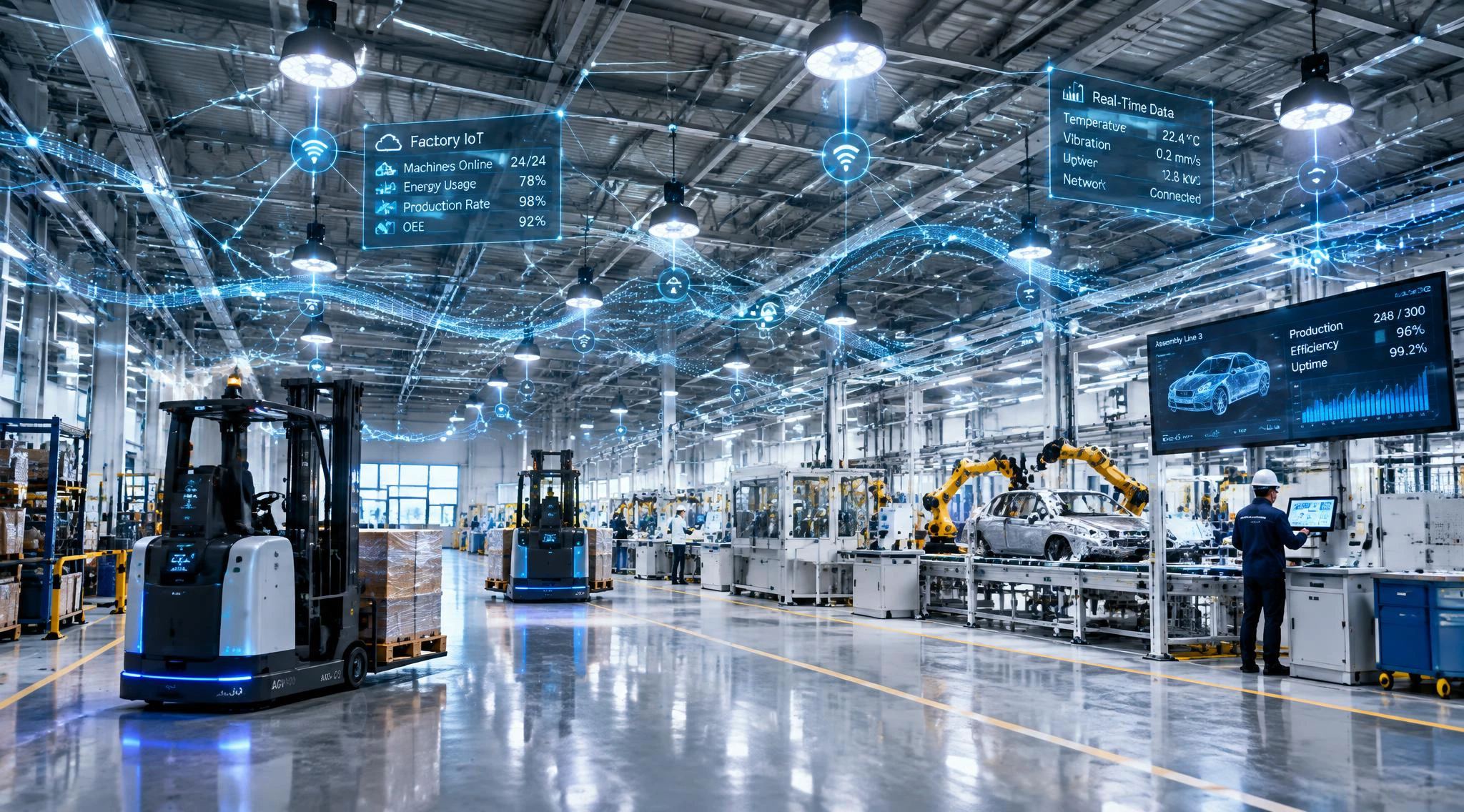
To navigate the market effectively, one must first grasp the foundational terminology that has defined the transition from traditional setups to intelligent systems.
When we talk about lighting in a professional context, we use the term "luminaire." Simply defined, what is luminaire lighting refers to the complete light fixture itself. It is the official technical term, as defined by the illuminating Engineering Society (IES). It represents the full unit that emits, distributes, and modifies the light.
When factory owners seek to upgrade, they often focus on the lamp (the bulb), but in a smart lighting scenario, you must consider the entire luminaire lighting system.
Expanding on the previous definition, what is a luminaire lighting fixture is the physical assembly that includes the complete lighting unit. It consists of the light source (like LEDs), the lamp holder, and other parts designed to position and protect the light sources. Crucially, a luminaire also includes the ballasts, drivers, or control devices required to connect the system to the power source.
In the intelligent era, the driver is the brain of the luminaire, and the fixture itself becomes a node in a networked control system. This is where the true power of the luminaire lighting control market is realized.
Traditionally, factory lighting was static. You turned it on, and it stayed on, wasting vast amounts of energy in unoccupied aisles or during bright daylight hours. The movement from traditional fluorescent or HID lighting to LEDs was the first step toward modernization, but it was merely the infrastructure phase. The true revolution is the control phase.
Factories are now shifting from "set and forget" lighting to reactive, intelligent luminaire lighting control.
Understanding the broader luminaire market and the specific lighting control market requires analyzing its growth drivers, technological shifts, and future landscape. The market isn’t merely growing; it is fundamental to the IoT ecosystem.
The global luminaire lighting control market is expanding rapidly, and the industrial sector is a major driver of this growth.
Energy Regulations: Countries globally are tightening energy efficiency standards (like DLC 5.1 in North America or ErP in Europe). Smart controls are the most direct path to meeting these requirements.
desire for ESG Compliance: For multi-national factories and large OEMs, Environmental, Social, and Governance (ESG) standards are crucial. Lighting control is a quantifiable way to reduce carbon footprints.
desire for Data in Industrial IoT (IIoT): Lighting is ubiquitous. Every light is connected to power. By integrating sensors and controls into the luminaire lighting fixture, it becomes an infrastructure node for data gathering, supporting predictive maintenance and asset tracking.
It is impossible to view the control market without considering the overall luminaire market. The main fixture market has moved almost entirely to LED. The challenge for today's factory clients is not simply finding LEDs but finding controls that integrate seamlessly into those LEDs, especially for industrial grade fixtures designed for high-bay or harsh environments.
We are seeing a convergence of technologies. Lighting control is moving away from centralized, proprietary wired systems toward decentralized, open wireless standards. The "controls as a service" model is also gaining traction, allowing factories to upgrade with lower upfront capital expenditure, focusing instead on long-term energy savings.
For a factory型 customer, understanding the technical differences in market controls is vital. How a system is architected determines its reliability, ease of installation, and long-term maintenance costs.
Understanding the complex interaction in the luminaire lighting control market
Traditional wired systems like DALI (Digital Addressable Lighting interface) or DMX have long been the gold standard for stability. They are robust, less susceptible to interference, and offer deep control. DALI, in particular, has seen global standardized adoption.
However, for industrial retrofits, wired luminaire market controls pose significant challenges. The labor cost of pulling new wires throughout a functioning warehouse is prohibitive. wired systems often require localized expertise for configuration, adding long-term maintenance complexity.
The industrial market has increasingly embraced wireless solutions. They eliminate the need for extensive data cabling, significantly reducing installation time and cost.
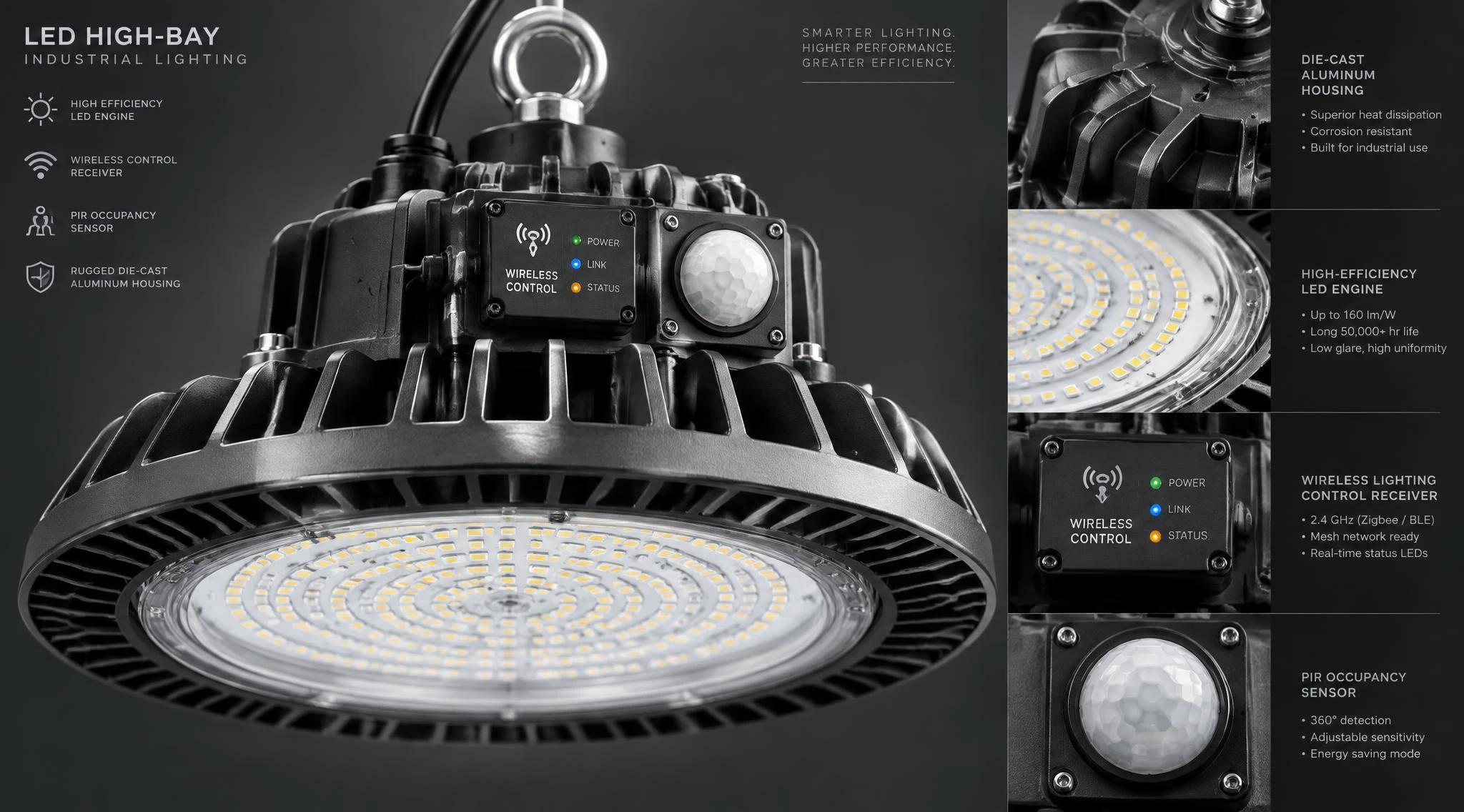
Specifically, wireless mesh technologies (like Zigbee, Bluetooth Mesh, or Thread) are favored. In a mesh network, each luminaire lighting control device acts as both a node and a router. If one fixture fails, the signal automatically reroutes, ensuring the overall network remains stable. This is crucial for large warehouses where physical obstructions can block signals. Open standards ensure interoperability across different fixture brands.
The true value of a luminaire lighting control system lies in sensor data. Modern fixtures integrate motion sensors and daylight harvesting sensors directly. Instead of sending data back to a central server, many advanced control market devices now utilize edge computing. They process the sensor data locally and react instantly—for example, turning off an aisle light the moment a forklift exits, ensuring both safety and energy conservation.
You must move beyond the technical specifications and analyze the concrete benefits these systems bring to an active production environment.
Modern factories prioritize sustainability; learn how
Warehouse lighting is a prime candidate for a high-ROI upgrade.
desire for Safety through Reactive Dimmable Lighting: Instead of completely switching off light, reactive controls utilize "high/low" dimming. An aisle is dimly lit for safety but instantly goes to full brightness when motion is detected.
desire for Occupancy Sensing and daylight harvesting: Sensors ensure that lights only operate at required levels. In areas with skylights, daylight sensors dim the LED fixtures as natural light increases.
Production floors have different needs than warehouses.
Task-specific dimming: Different areas might require varying light levels. A control system enables facility managers to adjust brightness for specific zones via software, rather than physically changing fixtures.
Data gathering and Asset Tracking: The networked lighting infrastructure can integrate with Bluetooth low energy (BLE) tags to track equipment, tools, or even finished goods as they move through the production lifecycle.
Lighting control in the luminaire market extends beyond the factory walls. Smart controls for parking areas and access roads are essential for security and energy efficiency. These systems can adjust brightness based on the time of day, car movement, and can provide status updates to security personnel.
When you choose a solution in the luminaire lighting control market, you are not just buying hardware; you are choosing a long-term partner for your facility's reliability. This is where E-E-A-T logical flow—Experience, Expertise, Authoritativeness, and Trustworthiness—becomes a business requirement.
An experienced lighting control vendor understands the industrial context. We know that industrial environments have high EMF (electromagnetic field) interference, extreme temperatures, and heavy physical vibration. Systems built for commercial office lighting will fail in a factory setting. Our experience in advising OEM and ODM clients on industrial fixtures means we select or develop controls meant for harsh environments.
Expertise is the key to deep integration. A reliable partner doesn't just sell you a wireless node. They work with your luminaire lighting fixture design to ensure the driver, control module, and LED engine are perfectly paired. They understand the intricacies of dimming protocols, mesh network planning, and sensor calibration. This expert guidance prevents flickering, unstable networks, and false triggers that annoy workers.
Trustworthiness is built on reliability. Authoritativeness comes from being an established part of the intelligent luminaire lighting control ecosystem. A vendor who participates in standard-setting organizations (like the Zigbee Alliance or Bluetooth SIG) or holds recognized industrial certifications provides you with the peace of mind that the products you install today will be supported for years to come.
As a seasoned player in this market, we frequently address core questions from factory customers.
what is luminaire lighting refers to the complete light fixture, not just the bulb or lamp. Think of the lamp as the source and the luminaire as the entire engine that regulates power (via the driver/ballast), manages heat, and directs the light. The "engine" is where the controls are built in.
Yes, but only if designed correctly using networked mesh technologies. Modern industrial grade wireless mesh systems (like Zigbee or Bluetooth Mesh) are highly resilient. Because each node acts as a router, the network has no single point of failure. It automatically self-heals, meaning if one fixture fails, the others will reroute the signal, maintaining complete network stability. The eliminating extensive data cables also means there's less physical wiring to maintain.
For industrial facilities with 24/7 or 16/7 operation, the ROI can be as short as 18 months. Intelligent luminaire lighting control systems typically achieve energy savings of 40% to 70% on top of the savings from upgrading to LED. This is achieved through granularity—having every light only operating when needed and at the precise required level. The data gathered can also support predictive maintenance, further reducing operational costs.
The luminaire lighting control market is no longer a niche for "early adopters." It is now an essential industrial investment. As we move deeper into the era of the Smart Factory and tighter energy regulations, a reactive, data-enabled lighting infrastructure is vital for competitiveness. Traditional, non-networked lighting is rapidly becoming an operational liability. By embracing intelligent controls, factory owners gain control over costs, regulatory compliance, and security, all while gathering essential operational data. The time for static lighting is over. The standard for today's factory must be dynamic, networked control, built on open standards and industrial expertise.




+86 15899791249

+86 755 2955 3313


Address: Huafeng No.1 Science and Technology Park, Sanwei, Bao'an District, Shenzhen, Guangdong, China.
