

Time:2026-02-10
In the modern industrial landscape, "time is money" is more than a cliché—it is a operational directive. For factory managers, electrical contractors, and facility engineers, the challenge of upgrading lighting infrastructure often hinges on the complexity of labor and downtime. This is where wholesale plug-and-play sensors have revolutionized the market.
At LumiEasy, we recognize that industrial-grade lighting must be agile. By removing the traditional barriers of complex wiring and long commissioning times, our plug and play sensors allow for immediate energy savings and enhanced safety with zero operational interruption.
Traditional sensor installations often require specialized electrical work, conduit runs, and manual wire stripping. A plug-and-play lighting sensor kit simplifies this entire ecosystem. These kits are designed with standardized connectors (such as M12 or 2-pin dimming ports) that allow a sensor to be "clicked" into a compatible LED fixture in seconds.
Labor Reduction: Installation time is slashed by up to 80% compared to hardwired alternatives.
Error-Proofing: Polarized connectors prevent wiring mistakes that could damage expensive LED drivers.
Scalability: Facilities can start with a basic lighting setup and add plug and play sensor light functionality later as budgets allow.
Our kits are engineered as a "Super Growth Point" for your facility. Instead of a one-size-fits-all approach, we provide modular kits that support both PIR (Passive Infrared) and Microwave technology, ensuring you have the right detection for your specific warehouse layout.
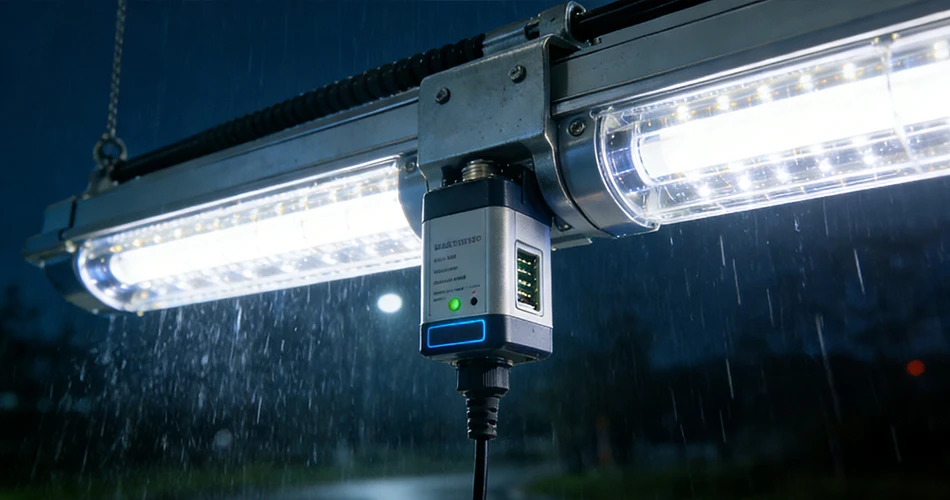
One of the biggest pain points for factory owners is the presence of existing, non-smart LED fixtures. Retrofit plug-and-play sensors bridge the gap between legacy hardware and modern energy standards (like DLC 5.1).
A retrofit plug-and-play sensor can be added to an existing "sensor-ready" (SR) driver or integrated via a simple bypass module. This allows a standard high-bay light to suddenly gain daylight harvesting and occupancy sensing capabilities.
Cost Efficiency: You don't need to replace the entire fixture; you simply upgrade its "intelligence."
Sustainability: Reducing e-waste by keeping existing aluminum housings while upgrading the control logic.
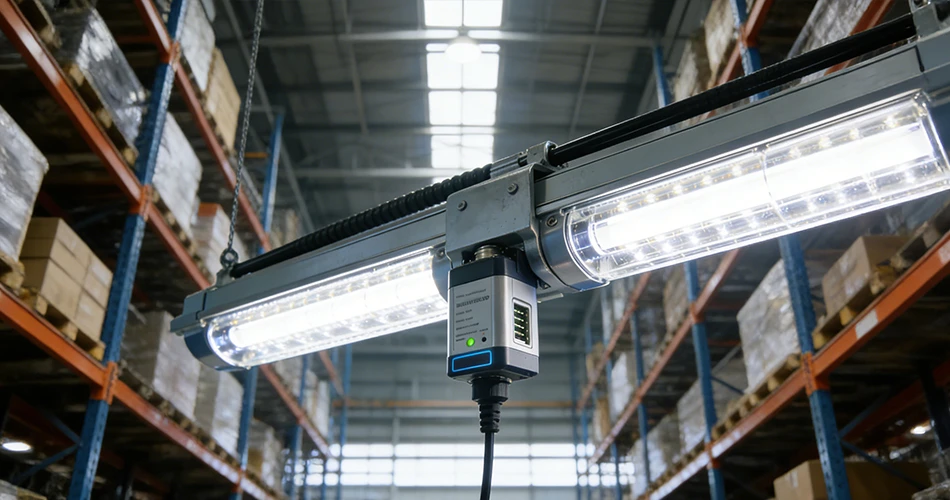
In the world of wholesale procurement, "compatibility" is a Trust Point (RTB). Nothing halts a project faster than a plug and play sensor that doesn't talk to the LED driver.
We ensure that our sensors adhere to universal protocols like 0-10V dimming and DALI-2.
Driver Interoperability: Whether you use specialized industrial drivers or standard commercial ones, our plug-and-play sensor compatibility ensures seamless communication.
Smart App Integration: Many of our sensors, such as the Alwen plug and play sensor style modules, can be configured via the LumiEasy mobile app, allowing you to set delay times and dimming levels without ever climbing a ladder.
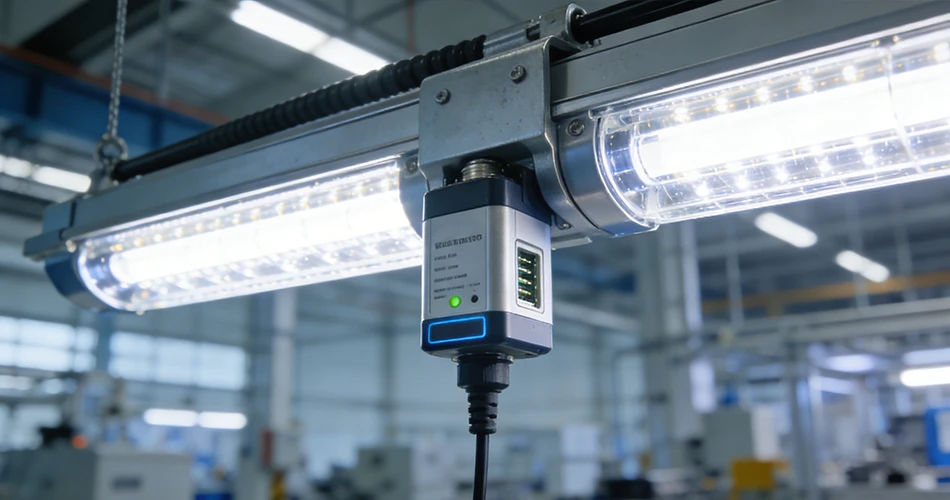
For many sensitive environments—such as food processing or cleanrooms—breaking into conduits or opening ceilings is a major contamination risk. The no wiring plug-and-play sensor offers a non-invasive solution.
These sensors typically utilize a "twist-lock" or "socket-base" design.
The Socket: The LED fixture comes with a pre-installed Zhaga or NEMA socket.
The Connection: The no wiring plug-and-play sensor is simply twisted into the socket.
Instant Active: The fixture immediately recognizes the sensor and begins automated operation.
This "no-tool" approach is particularly beneficial for high-ceiling warehouses where maintaining a walking dead plug and play sensor (one that has failed and is difficult to reach) is a costly logistical nightmare. Our big buck hunter pro plug and play sensor equivalents for industrial use are designed for ultra-long lifespans, minimizing the need for replacement.
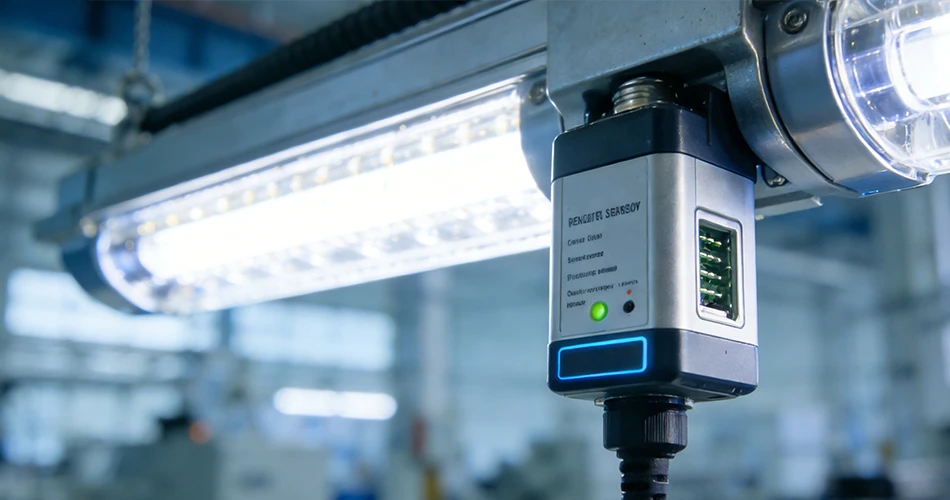
In a smart factory (IoT) environment, the four primary sensors typically include:
Motion/Occupancy Sensors: For lighting and security.
Temperature/Humidity Sensors: For climate control and machinery health.
Proximity Sensors: Used in production lines and safety zones.
Pressure Sensors: To monitor fluid systems or mechanical stress. At LumiEasy, we focus on the first category, providing the "eyes" for your facility's lighting.
In automotive contexts, many are. In an industrial lighting context, "speed" often refers to the response time of a sensor. Our plug and play sensors are designed with near-zero latency, ensuring that as soon as a forklift enters an aisle, the lights are at 100% brightness.
For lighting specifically, the three main types are:
PIR (Passive Infrared): Best for heat-signature detection (people).
Microwave: Best for detecting movement through obstacles or in large open areas.
Photo Cells (Daylight Sensors): Best for "daylight harvesting" by measuring ambient light.
Yes, provided the fixture has a "sensor-ready" driver or a compatible dimming port. Using a retrofit plug-and-play sensor from LumiEasy is the most cost-effective way to achieve this without a full system overhaul.
Related news
DLC Certified Lighting for Industrial Factory Efficiency | LumiEasy
Silvair-Compatible Sensors for Bluetooth Mesh Lighting | LumiEasy
Wholesale Controller-Compatible Sensors for OEM/ODM | LumiEasy
Linear BLE Tunable White PIR Senso


)
)
)
)

+86 15899791249

+86 755 2955 3313


Address: Huafeng No.1 Science and Technology Park, Sanwei, Bao'an District, Shenzhen, Guangdong, China.
