

Time:2026-02-23
In the rapidly converging worlds of Industrial IoT (IIoT) and smart lighting, the "sensor" has evolved from a simple switch to a sophisticated data node. For OEM/ODM manufacturers and large-scale industrial projects, sourcing wholesale controller-compatible sensors is no longer a matter of basic hardware procurement—it is a strategic investment in system interoperability and long-term energy ROI.
At LumiEasy, we understand that for a factory-type client, a sensor failure is not just a maintenance ticket; it is a disruption of the supply chain. By focusing on controller sensor compatibility, we ensure that our partners can deploy smart systems that are "Future-Ready" for the 2026 global energy mandates.
The Digital Addressable Lighting Interface (DALI) has entered its DALI-2 and D4i era, setting the benchmark for commercial and industrial automation. DALI controller compatible sensors are the preferred choice for projects requiring granular, bidirectional data exchange.
Unlike legacy systems, DALI controller compatible sensors offer structured memory banks. This means the sensor controllers can report not just "occupancy," but also energy consumption, lamp operating hours, and even internal temperature diagnostics.
Standardized Interoperability: Certified DALI-2 sensors from LumiEasy are tested for cross-vendor compatibility, ensuring they won't trigger a "control not recognizing controller" error when paired with third-party application controllers from Tridonic, Helvar, or Schneider.
Multi-Instance Functionality: A single DALI sensor can house multiple "instances"—such as a PIR motion detector and a lux sensor—occupying only one DALI address. This significantly reduces the cost of wholesale controller-compatible sensors by minimizing the hardware footprint.
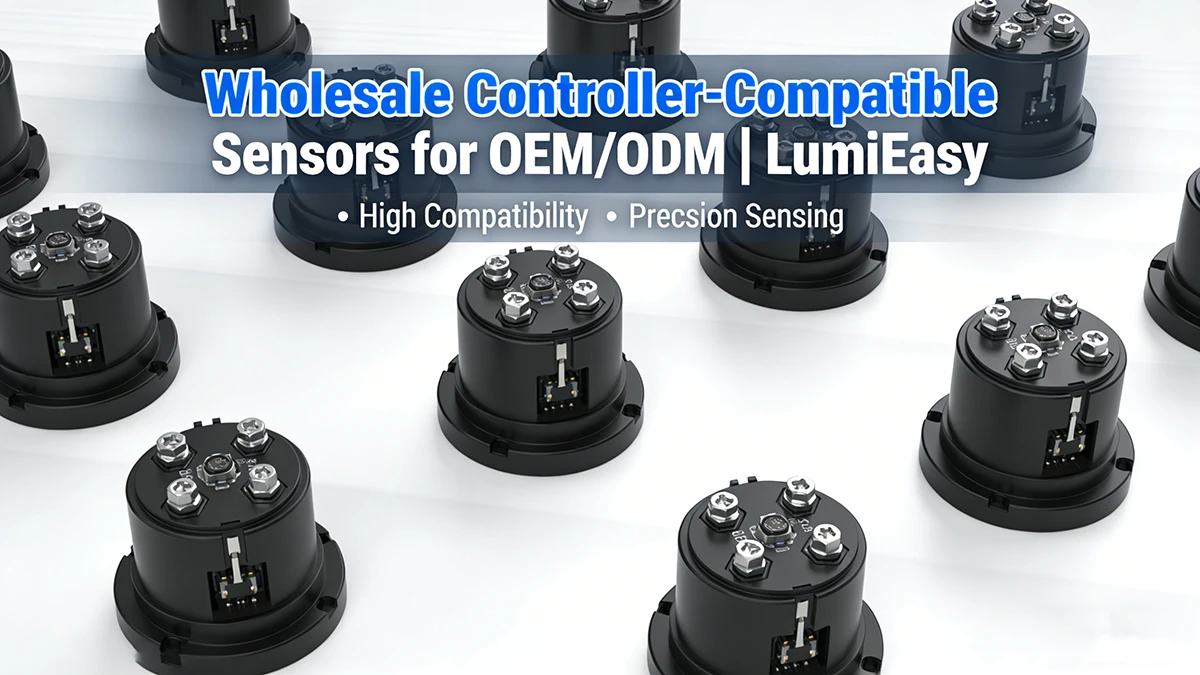
For procurement managers, the controller sensor compatibility list is the single most important document in the technical submittal phase. Incompatibility in the field leads to "ghost switching," flicker, or total system failure.
Protocol Handshaking: Whether using Zigbee 3.0, Matter, or DALI, the firmware versions must be aligned. Our 2026 universal controller compatible sensors utilize "Adaptive Firmware," which can auto-negotiate protocols based on the connected controller's signal.
Inrush Current Support: High-power industrial LED drivers have significant inrush currents. A high-quality 0-10V controller sensor must be paired with a controller relay designed to handle these peaks without welding the contacts.
Voltage Tolerance: Industrial grids are rarely stable. Our sensors are tested for a ±15% voltage swing to ensure the link between sensor controllers remains active during peak machinery operation.
While digital protocols garner the headlines, 0-10V controller sensors remain the most widely deployed technology in global warehouses and manufacturing plants. Their simplicity is their greatest strength.
Analog Robustness: In environments with high electromagnetic interference (EMI)—such as near heavy motors or welding stations—digital signals can sometimes be corrupted. The analog nature of 0-10V controller sensors provides a "physical" signal level that is much harder to disrupt.
Cost-Effective Scalability: For OEMs looking to provide "Smart-Ready" fixtures, a 0-10V controller sensor allows for basic dimming and occupancy sensing at a fraction of the cost of a full DALI system.
Low-Voltage Safety: Operating on a Class 2 low-voltage circuit, these sensors simplify the hardwired occupancy sensor installation process, often allowing for installation without the need for expensive high-voltage conduit in certain regions.
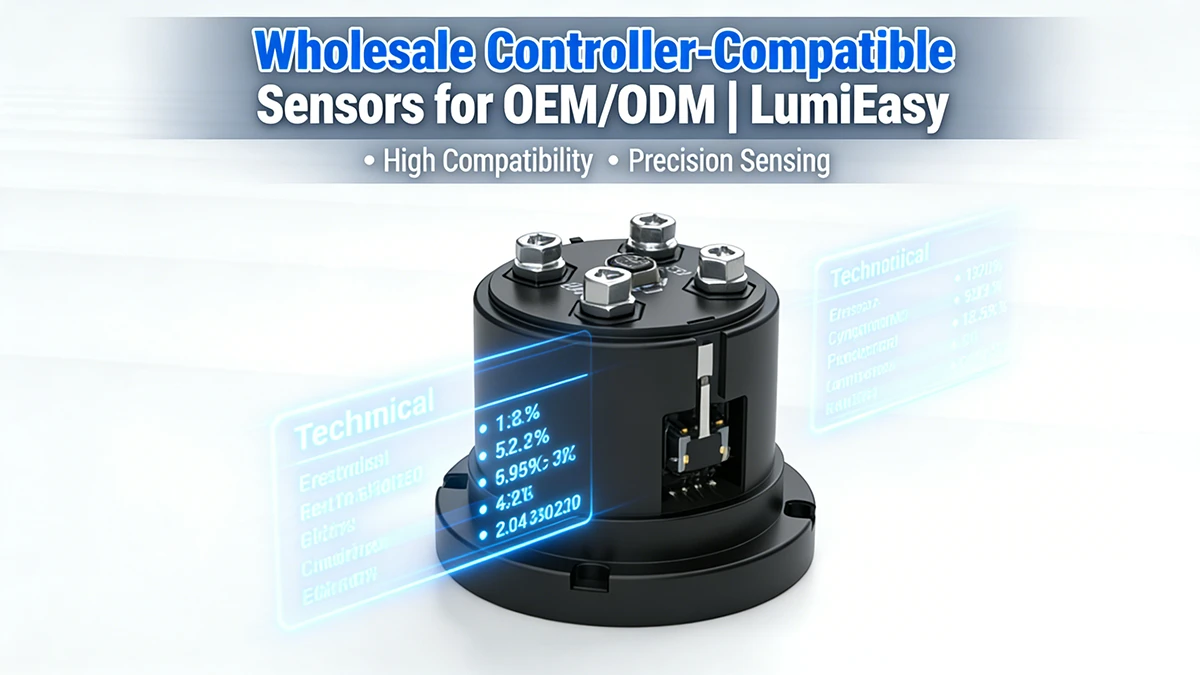
In the B2B sector, professional terminology is a RTB (Trust Point).
Terminology Precision: While "controler" is a frequent misspelling in global search queries, a professional manufacturer must always utilize Controller. In our technical documentation, we use SEO strategies to capture the intent of those searching for "controler" while presenting a refined, authoritative "Controller" interface.
Troubleshooting the "Control Not Recognizing Controller" Issue: This is the #1 pain point for installers. Most failures aren't hardware-based; they are "commissioning" errors. Our universal controller compatible sensors feature LED diagnostic codes (Blink Codes) that instantly tell the installer if the issue is a wiring fault, a protocol mismatch, or a lack of auxiliary power.
While the term controller compatible android games might seem out of place, the underlying technology—Bluetooth Low Energy (BLE) and HID (Human Interface Device) profiles—is increasingly used in "Gamified Facility Management." Facility managers now use tablet-based apps (often built on Android) to "game" their energy savings. Our BLE-enabled sensor controllers are fully compatible with these modern mobile interfaces, bridging the gap between industrial hardware and consumer-grade UX.
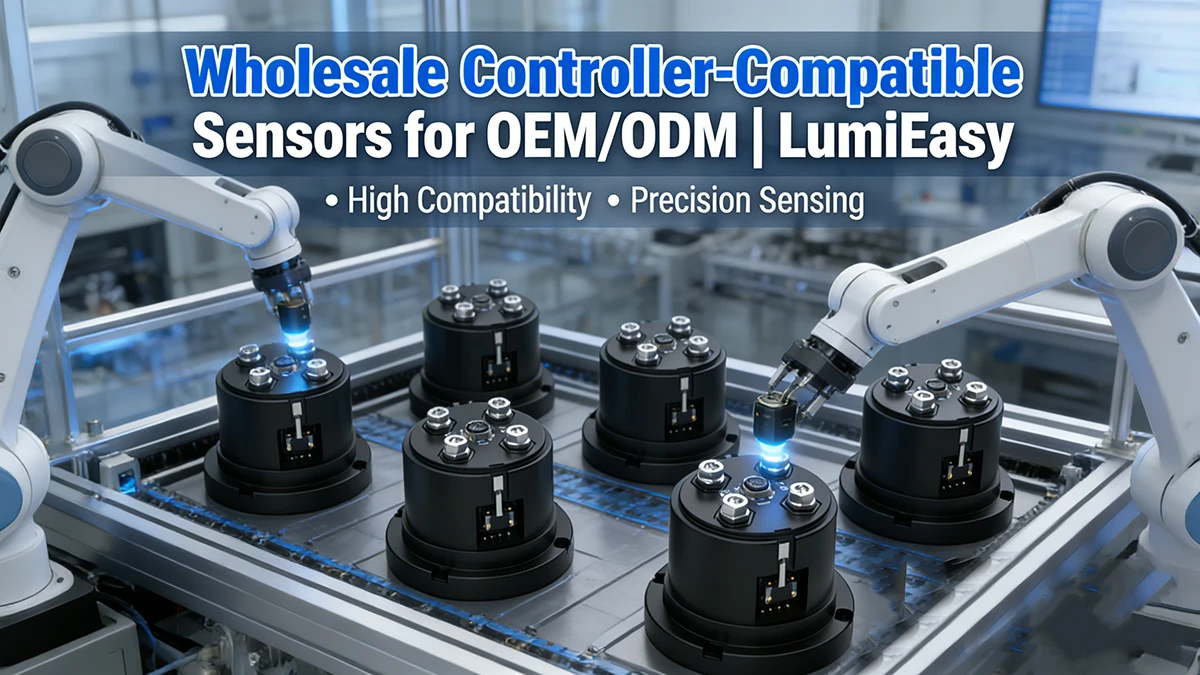
For an ODM partner exporting to diverse markets, SKU consolidation is key. Sourcing universal controller compatible sensors that can work across 120V (USA), 230V (EU), and 277V (Industrial) markets is a massive SGP (Super Growth Point) for inventory management.
Multi-Voltage Support: 100-277VAC universal input.
Multi-Protocol Output: Sensors that can output 0-10V, PWM, or DALI via a selectable switch.
Mounting Versatility: Fixture-mounted, ceiling-mounted, or integrated into the LED wraparound light.
Electronic components are the heart of the sensor's "sense-and-respond" cycle. PIR Pyroelectric elements detect infrared radiation change; ASIC chips (Application-Specific Integrated Circuits) process these signals into logic; and MOSFETs or Relays execute the switching or dimming command. In 2026, we are also seeing the rise of AI-edge chips inside sensor controllers to filter out false triggers from pets or machinery.
Success in ODM depends on "Component Binning." You must select components that share a high MTBF (Mean Time Between Failures). For LumiEasy sensors, we prioritize Japanese or German-made capacitors and high-grade silicon to ensure the sensor outlasts the LED fixture itself—a critical Trust Point for your brand.
B2B buyers should avoid "open market" brokers where counterfeit components are rampant. Purchasing wholesale controller-compatible sensors directly from an ISO-certified manufacturer like LumiEasy ensures a traceable supply chain. We provide "Certificate of Conformity" (CoC) for every batch, securing your project's compliance.
In the 2026 market, lead times have settled but remain sensitive to raw material costs. Standard DALI controller compatible sensors usually have a 4-6 week lead time. Custom ODM projects, including firmware customization to match your specific controller sensor compatibility list, typically require 10-14 weeks for full validation and production.
Related news
DLC Certified Lighting for Industrial Factory Efficiency | LumiEasy
Indoor Lighting Sensor Guide for Efficient Smart Light Automation
Commercial Smart Lighting Cost Analysis: Unlocking Long-Term Savings for Businesses
Commercial Smart Lighting Solutions for Energy-Saving Buildings
Scalable Smart Lighting Solutions Grow With Your Commercial Success


)
)
)
)

+86 15899791249

+86 755 2955 3313


Address: Huafeng No.1 Science and Technology Park, Sanwei, Bao'an District, Shenzhen, Guangdong, China.
