

Time:2026-01-19
Commercial smart lighting is an integrated approach to lighting that uses connected control systems to automate and optimize lighting performance. Instead of fixed schedules or manual switching, smart lighting adapts in real time based on inputs like occupancy and available daylight, and can be centrally monitored and adjusted through software.
A typical commercial smart lighting system includes:
High-efficiency LED luminaires (or LED retrofits)
Sensors (occupancy/motion, daylight/illuminance, sometimes environmental)
Controllers/dimmers (luminaire-level or zone-level)
Networking (wired or wireless communication)
Software platform (commissioning, scheduling, dashboards, reporting)
Done right, smart lighting becomes an operational tool—not just hardware—supporting predictable schedules, fewer maintenance surprises, and energy reporting for management.
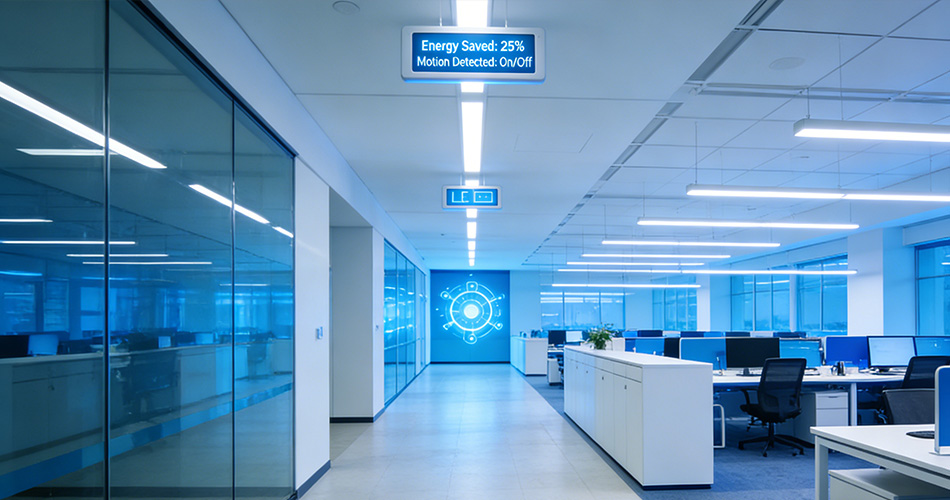
Industry writeups commonly note that lighting can represent a significant portion of commercial electricity use, making it an attractive target for efficiency projects. One commercial energy-efficiency article states lighting accounts for up to 38% of electricity consumption in commercial buildings and notes that smart lighting upgrades can deliver substantial savings when properly implemented.
Smart lighting savings come from reducing unnecessary runtime and over-lighting. When controls combine strategies like scheduling, occupancy response, and daylight harvesting, many sources describe savings ranges that can be compelling for commercial owners.
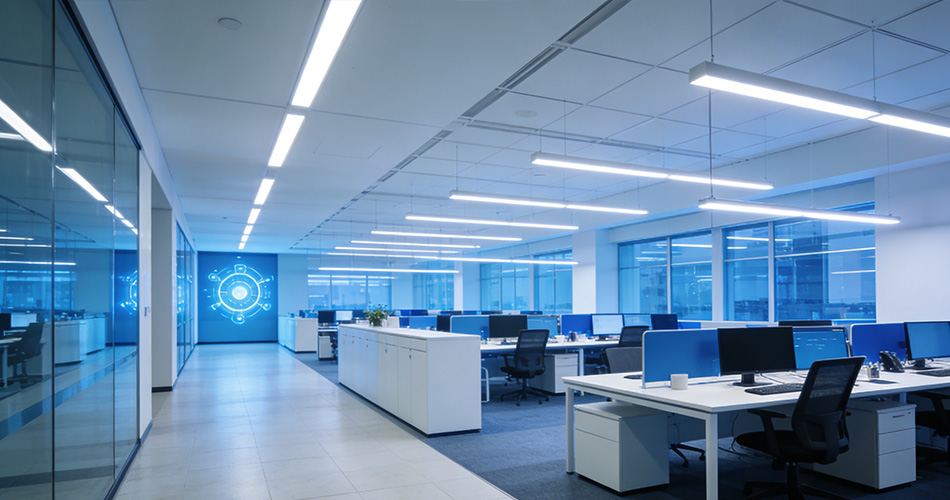
Not every “smart” product delivers enterprise value. For real projects, commercial smart lighting control systems should include these capabilities:
Automatically switch off or dim lighting in vacant areas. This is especially impactful for restrooms, meeting rooms, corridors, storage spaces, and after-hours zones.
Reduce artificial light when natural daylight is available near windows and skylights—without sacrificing visual comfort. This is a major lever for perimeter zones and atriums.
Time-based policies aligned to business hours, cleaning schedules, security rounds, and holidays. Scheduling is often the “quickest ROI” feature because it immediately cuts after-hours waste.
A modern system should support:
Device/zone status (online/offline)
Fault alerts (to speed maintenance)
Energy/runtimes by area
Exportable summaries for internal reporting
Smart-building commentary frequently highlights the importance of sensor-driven control plus data visibility for operational improvements.
Many implementations emphasize coordination with HVAC, security, or broader building automation for a more seamless operational experience and optimized savings.
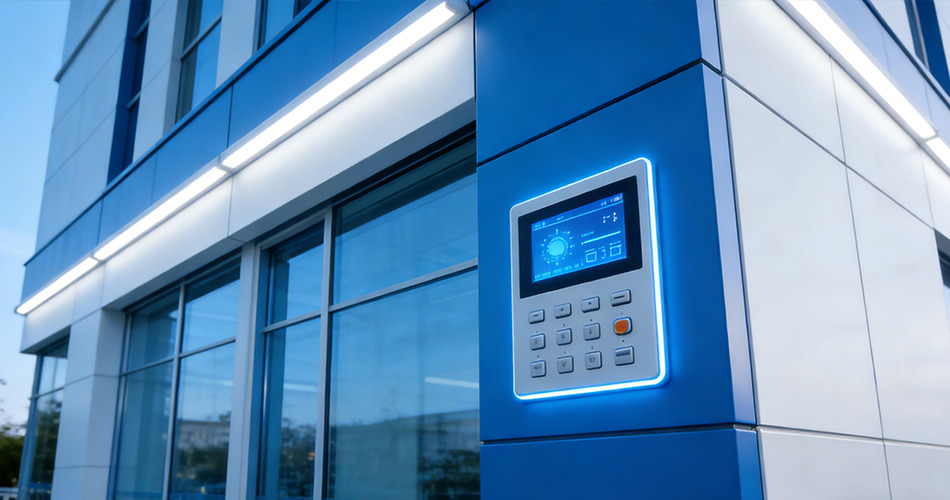
Most real projects are retrofits, not new construction. The “best” solution depends on your building, ceiling type, IT policies, and downtime tolerance. A widely discussed framework for introducing smart lighting into commercial buildings compares multiple approaches and helps teams choose based on constraints and goals.
Here are three common retrofit pathways:
Best for: occupied offices, retail, hospitality, multi-tenant buildings
Quicker installation with less invasive cabling
Easier regrouping when tenants reconfigure spaces
Good fit for phased upgrades (floor-by-floor)
Best for: projects that want standardized wired control and clear zoning
Popular in many commercial markets as a lighting-control standard
Can be paired with wireless gateways in hybrid architectures for flexibility
Best for: some new-builds or deep retrofits where IT-led infrastructure is desired
Uses Ethernet cabling to deliver power and data (a concept frequently discussed in smart lighting adoption options)
Requires careful coordination between lighting and IT teams
Practical takeaway: Your retrofit strategy should prioritize minimal disruption, future scalability, and an operations-friendly software workflow—not just hardware specs.
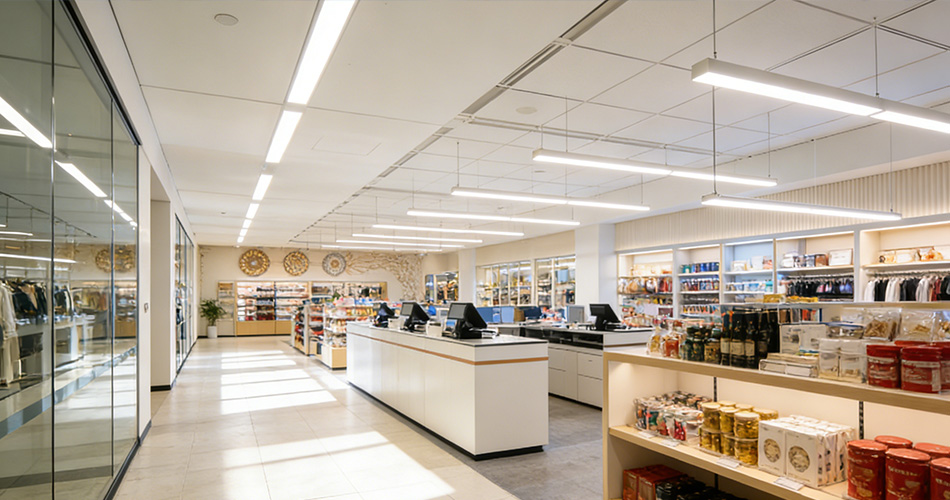
A strong commercial smart lighting cost analysis looks beyond fixture pricing. It considers total cost of ownership and measurable benefits.
Hardware
Fixtures or retrofit kits
Sensors/controllers
Gateways/hubs (if needed)
Labor
Installation
Commissioning (mapping, grouping, testing)
Training for facility teams
Software
Licensing (if any)
Ongoing support/updates
Operations
Maintenance labor reduction (fewer truck rolls, faster diagnostics)
Longer fixture life due to dimming and reduced runtime
Energy reduction (kWh + demand impact where relevant)
Maintenance savings (labor + fewer emergency calls)
Productivity/comfort benefits (harder to quantify, but relevant in offices)
As a reference point, one commercial smart-lighting overview emphasizes that upgrades combining intelligent controls can achieve major energy reductions when done correctly, and highlights structured planning and evaluation as part of selection.
Buyer tip: Ask vendors to estimate savings by zone (not just a building-wide percentage). The best proposals show how occupancy/daylight/schedule strategies apply to your specific areas.
If your goal is strong commercial smart lighting energy savings, focus on control strategy design—not just the devices.
Open offices: scheduling + daylight harvesting near windows + occupancy-based meeting rooms
Meeting rooms: occupancy + scene presets (presentation/cleaning)
Retail: scheduling + scene control by daypart
Corridors/stairs: dim-to-low + occupancy triggers
Parking/exterior: schedules + photocell strategies + motion boost zones
A professional implementation approach typically emphasizes careful planning, correct installation, and ongoing monitoring/maintenance—because controls must be tuned to real building behavior to sustain savings.
Successful projects follow a repeatable process:
Fixture inventory and wattage
Hours of operation by zone
Current issues (dark spots, glare, over-lighting)
Control gaps (manual switching, inconsistent schedules)
Define:
Target illuminance for tasks
Occupancy logic (timeouts, dim levels)
Daylight zones
Schedule policies (hours, exceptions, holidays)
Start with high-return zones (meeting rooms, corridors, restrooms, perimeter daylight zones), then scale across floors and buildings.
Map devices correctly
Test scenes and overrides
Validate sensor behavior during real occupancy patterns
Use dashboards and reports to identify:
zones running longer than expected
overrides causing energy creep
sensors needing retuning
If you’re sourcing a solution that emphasizes cloud visibility and centralized management, LumiEasy describes a cloud platform designed with remote control and energy consumption statistics, aligning with the “monitor + optimize” workflow that commercial buildings need.
Its app descriptions also mention centralized control of zones/groups/scenes/parameters and energy statistics, plus energy monitoring—capabilities that map directly to modern operational requirements for smart commercial lighting.
Additionally, LumiEasy’s own networked lighting control content references typical NLC savings ranges and centralized cloud management concepts often used in commercial incentive-driven projects.
Commercial smart lighting control systems combine sensors, controllers, networking, and software to automate lighting based on occupancy, daylight, and schedules—improving efficiency and making lighting performance measurable and manageable.
The best commercial smart lighting retrofit solutions depend on building constraints: wireless for fast, low-disruption upgrades; DALI/hybrid for structured control; and PoE for certain IT-led deployments. A staged rollout often reduces risk and downtime.
A solid commercial smart lighting cost analysis includes hardware, labor, commissioning, software, and ongoing operations—then compares against energy savings, maintenance reduction, and reporting/operational benefits.
Savings vary by building type and control strategy mix. The highest commercial smart lighting energy savings typically come from combining scheduling, occupancy-based control, and daylight harvesting in the right zones, then maintaining the system through tuning and monitoring.
Commissioning accuracy and ongoing optimization matter. Use system dashboards to detect abnormal runtime, review schedules regularly, tune sensor timeouts, and establish a monthly/quarterly review routine to prevent performance drift.
If you’re planning an office, retail, hospitality, school, or multi-building upgrade, commercial smart lighting is one of the most practical ways to reduce waste and improve operations—especially when your system includes robust monitoring, scheduling, and scalable control architecture.
To get an accurate proposal, prepare:
Building type and floor plans (or zone list)
Fixture types/quantities and dimming requirements
Retrofit constraints (hours, access, downtime limits)
Control goals (occupancy, daylight, schedules, reporting, integration)
Reporting needs for ESG, audits, or utility incentives
If you want, send your target segment (office / retail / parking / campus) and I’ll tailor the examples and keyword placement to match the exact buyers you want to attract.
Related news
Wholesale Controller-Compatible Sensors for OEM/ODM | LumiEasy
Indoor Lighting Sensor Guide for Efficient Smart Light Automation
Commercial Smart Lighting Cost Analysis: Unlocking Long-Term Savings for Businesses
Industrial Smart Lighting Maintenance: Essential Guide for Efficiency & Longevity
Scalable Smart Lighting Solutions Grow With Your Commercial Success


)
)
)
)

+86 15899791249

+86 755 2955 3313


Address: Huafeng No.1 Science and Technology Park, Sanwei, Bao'an District, Shenzhen, Guangdong, China.
