

Time:2026-02-07
In the rapidly evolving landscape of industrial automation, the integration of fixture mounted sensors has become a non-negotiable standard for LED manufacturers and large-scale facility managers. As energy codes become more stringent toward 2026, simply providing "bright light" is no longer enough. The goal is "intelligent illumination"—systems that react to presence, save energy, and extend the lifespan of the hardware.
At LumiEasy, we understand that for a factory-type client, a sensor is not just a component; it is a critical "Trust Point" in their operational infrastructure. This guide provides a deep technical dive into selecting and implementing fixture mounted occupancy sensor technology to maximize ROI and compliance.
A fixture mounted sensor is an integrated device installed directly onto or inside a lighting fixture to control its operation based on occupancy or daylight levels. For industrial buyers, this "all-in-one" approach simplifies the procurement cycle and reduces installation labor costs, which is a core "Super Growth Point" for project efficiency.
Unlike standalone sensors that require separate wiring and mounting, a fixture mounted motion sensor travels with the light. This ensures that the detection zone is perfectly aligned with the light output, eliminating dark spots and ensuring safety in high-traffic warehouse aisles.
Granular Control: Each light behaves independently, ensuring that power is only consumed in the exact spot where a worker or forklift is present.
Simplified Maintenance: Integrated designs reduce the number of external failure points in the system.
Aesthetic Integration: Leading brands like Wattstopper fixture mounted motion sensor and Lithonia lighting fixture mounted motion sensor offer low-profile designs that do not disrupt the fixture’s IP rating or thermal management.
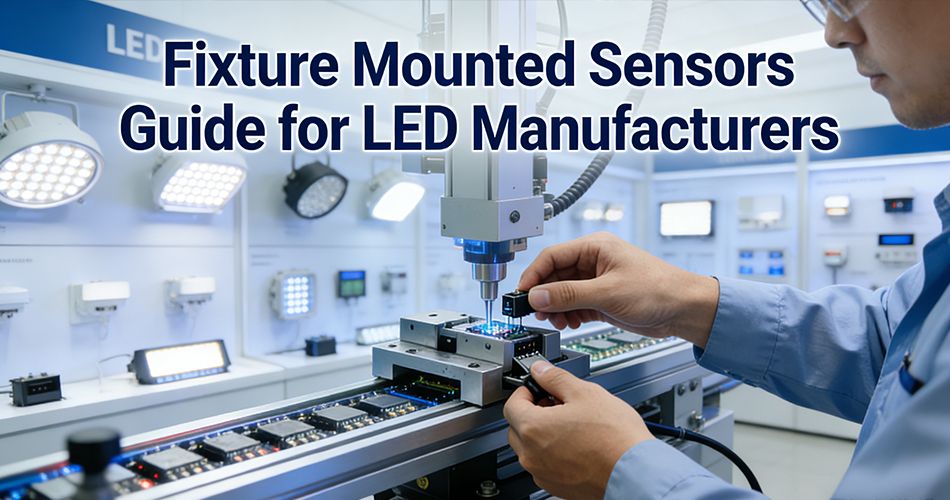
For permanent industrial facilities, hardwired occupancy sensor installation remains the gold standard for reliability. When a sensor is hardwired, it draws power directly from the fixture’s driver or the primary circuit, ensuring it is always active without the need for battery replacements.
Power Compatibility Check: Before installation, verify that the sensor’s relay can handle the inrush current of the LED driver.
Mounting Location: Ensure the fixture mounted occupancy sensor is not obstructed by the fixture's housing or nearby structural beams.
Wiring Integrity: Use high-temperature rated wiring to withstand the heat generated by high-output industrial LEDs.
For many facility managers, the choice often comes down to the specialized performance of a Lithonia lighting fixture mounted motion sensor, known for its robust housing and ease of integration into existing wraparound or high-bay fixtures.
When evaluating hardwired vs wireless sensors, factory-type clients must weigh the "Trust Points" of reliability against the flexibility of installation.
| Feature | Hardwired Sensors | Wireless Sensors |
| Reliability | Superior; no signal interference. | Variable; subject to RF noise. |
| Maintenance | Low; no batteries to change. | High; periodic battery cycles. |
| Initial Labor | Moderate; requires wiring. | Low; "stick-on" or plug-in. |
| Scalability | Fixed to the fixture grid. | Highly flexible mesh networks. |
In mission-critical environments like chemical processing or heavy machinery plants, the hardwired occupancy sensor installation is typically preferred because it eliminates the risk of signal drops in electromagnetically noisy environments.
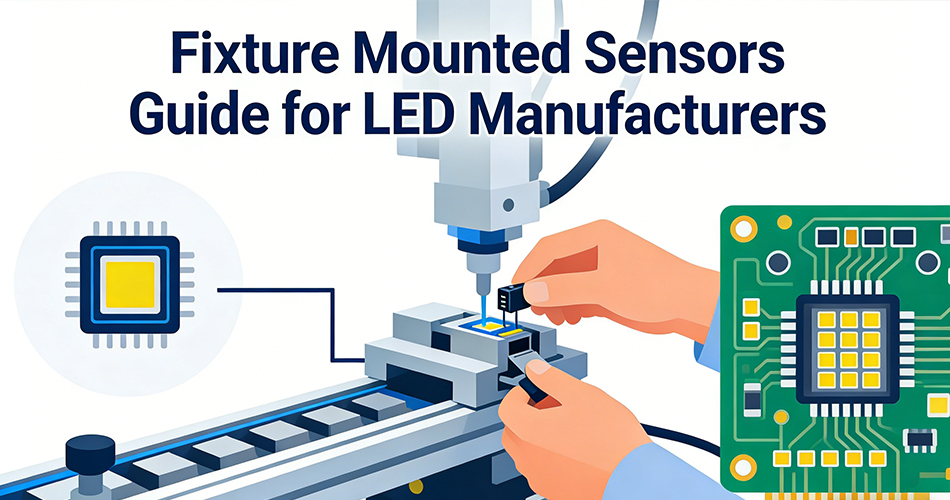
For large open spaces, a ceiling hardwired motion sensor provides wide-area coverage that fixture-mounted units might miss due to mounting heights. However, for high-bay warehouses, combining both yields the best results.
A ceiling hardwired motion sensor often utilizes dual-technology (PIR and Ultrasonic). This is particularly effective in factory settings where shelving might block the line-of-sight for a standard fixture mounted motion sensor. By hardwiring these into the system, you ensure that even subtle movements—like a worker at a desk or a packing station—keep the lights active.
Many of our clients request Wattstopper fixture mounted motion sensor modules specifically for their high-ceiling sensitivity. These sensors are engineered to distinguish between the heat signature of a human and the ambient heat of machinery, reducing "false-on" triggers that waste energy.
One of the most frequent points of failure in industrial lighting procurement is a misunderstanding of hardwired sensor voltage requirements. Industrial grids often operate at voltages higher than residential standards (e.g., 277V or 480V).
Multi-Voltage Support: Ensure the sensor supports 120-277V universal input to cover most North American industrial applications.
Low-Voltage Control: Many fixture mounted sensor units use 0-10V dimming wires to communicate with the driver. Ensuring compatibility between the sensor's output and the driver’s dimming circuit is essential for smooth "step-dimming."
Power Pack Necessity: For systems where the sensor controls multiple fixtures, a dedicated power pack may be required to convert high-voltage line power to the low-voltage signal needed by the sensor.
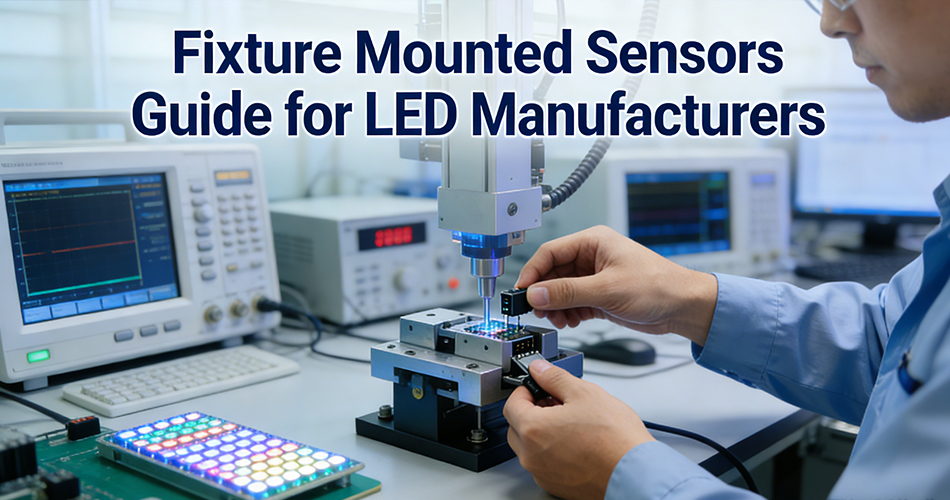
When selecting the best outdoor lighting system or indoor industrial setup, look for these specific "Trust Anchors":
IP Ratings: For wet locations, the fixture mounted motion sensor must have a rating of at least IP65.
Cold Storage Compatibility: If installing in a freezer, verify that the sensor can operate at -40°C.
Mounting Height: Standard sensors fail at heights above 20 feet; ensure you specify "High-Bay" models for warehouse applications.
Choosing a fixture starts with the environment. For factories, look for durability, high IP ratings, and ease of sensor integration. At LumiEasy, we recommend fixtures that offer pre-drilled knockouts for fixture mounted occupancy sensor installation to save on-site labor.
Size is determined by the mounting height and required foot-candles. For high-bay applications, smaller, high-output fixtures are often better for heat dissipation and leave more room for integrated ceiling hardwired motion sensor units.
Wattage should be calculated based on the required "Lumen per Watt" efficiency. However, with a smart outdoor lighting system or indoor motion control, you can often specify higher wattage for safety and rely on the sensor to dim the light to 30% when the area is unoccupied, maximizing both safety and savings.
Focus on "Total Cost of Ownership." Look for DLC-certified fixtures, high-quality drivers, and integrated fixture mounted sensor options. A system that is easy to install and requires zero maintenance for 5 years provides the highest ROI for industrial clients.
Related news
PR Sensor Coverage Specs: Key to Precision & Accuracy
Optimize Outdoor Photocell Sensor: Calibration Guide
Photocell Light Sensor: Dusk-to-Dawn Outdoor Lighting Control
Dimmers Switches & Accessories


)
)
)
)

+86 15899791249

+86 755 2955 3313


Address: Huafeng No.1 Science and Technology Park, Sanwei, Bao'an District, Shenzhen, Guangdong, China.
