

Time:2025-12-04
Modern warehouses operate in a dynamic, high-pressure environment where efficiency, safety, and sustainability are paramount. Lighting, as a foundational element of warehouse operations, directly impacts all three pillars. Traditional manual or timer-based lighting setups often fail to keep pace with the variable workflows of warehouses—leading to excessive energy waste, inconsistent illumination, and heightened safety risks. In this context, automated lighting systems warehouse have emerged as a transformative solution, leveraging smart technology to align lighting with real-time operational demands. For warehouse operators seeking to optimize resource use, enhance workplace safety, and future-proof their facilities, these automated systems have become an essential investment.
Warehouses are no longer just storage spaces; they are interconnected hubs of logistics, inventory management, and order fulfillment, with workflows that shift constantly based on order volumes, shipment schedules, and personnel movement. Traditional lighting systems, which rely on manual switches or fixed timers, are ill-equipped to adapt to this dynamism. Lights may remain on for hours in unoccupied zones (such as empty storage aisles or off-peak loading docks) or fail to provide adequate illumination during sudden surges in activity—creating a dual problem of wasted energy and compromised safety.
The rise of e-commerce and just-in-time inventory practices has further amplified the need for flexible lighting solutions. Warehouses now operate extended hours, with varying levels of activity throughout the day and night. Automated lighting systems warehouse address these challenges by eliminating human intervention and enabling real-time adjustments. By integrating sensors, smart controllers, and warehouse management system (WMS) integration, these systems ensure that lighting is only active when and where it is needed, transforming static illumination into a responsive, efficient component of warehouse operations.
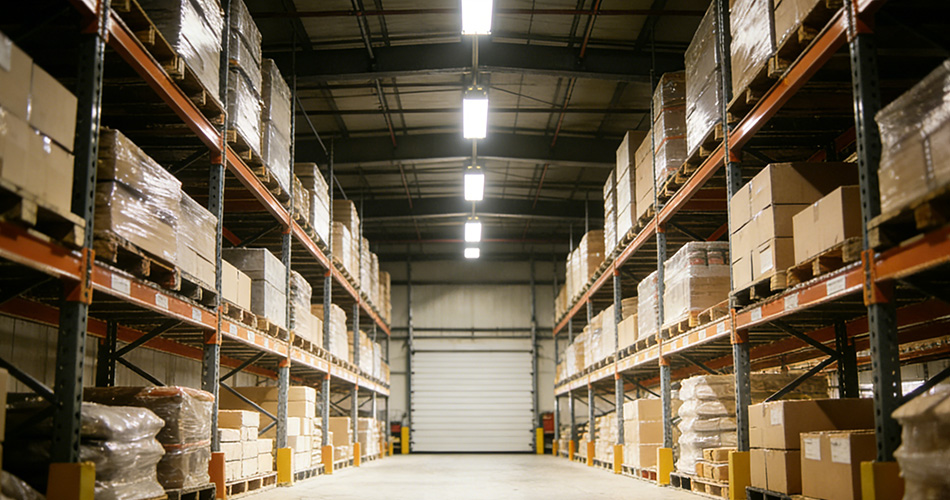
Automated lighting systems warehouse deliver multi-faceted value that extends beyond simple energy savings, addressing the core needs of modern warehouse management.
First, dynamic energy optimization. Unlike traditional systems that operate at full intensity regardless of need, automated lighting systems use occupancy and motion sensors to detect human or equipment presence. When a zone is unoccupied, lights dim to a low-power standby mode or turn off entirely; upon detecting activity, they instantly ramp up to the required intensity. Additionally, ambient light sensors integrate natural light (from skylights or windows) into the system, dimming artificial lighting on bright days to further reduce energy consumption. Studies show that automated lighting systems warehouse can cut lighting-related energy costs by 40-60%, a significant saving for facilities with large square footage.
Second, enhanced operational safety and productivity. Consistent, task-aligned illumination is critical for preventing accidents in warehouses, where heavy equipment (forklifts, pallet jacks) and high shelving create inherent risks. Automated lighting systems ensure that high-traffic zones (such as picking aisles, loading docks, and crosswalks) maintain optimal brightness, eliminating dark spots and glare that can lead to collisions or falls. For precision tasks—such as inventory counting or order sorting—the systems can be programmed to deliver targeted, high-intensity lighting, reducing errors and improving workflow efficiency. By removing the need for personnel to adjust lighting manually, the systems also free up staff to focus on core tasks.
Third, seamless integration with smart warehouse ecosystems. Modern automated lighting systems warehouse are designed to connect with other smart warehouse technologies, including WMS, IoT sensors, and equipment control systems. This integration enables end-to-end workflow synchronization: for example, the lighting system can pre-activate illumination in a picking zone when the WMS schedules an order for that area, or adjust lighting in a loading dock to match the arrival time of a shipment. This level of coordination streamlines operations and reduces bottlenecks.
Warehouses comprise diverse zones with unique lighting needs, and automated lighting systems warehouse are adaptable to each scenario, delivering targeted value.
High-bay storage zones, with their tall ceilings and dense shelving, require powerful, far-reaching illumination. Automated systems in these zones use motion sensors calibrated to detect forklift and personnel movement, activating lighting only in the specific aisles being accessed. This avoids the energy waste of illuminating entire high-bay areas continuously while ensuring that operators have clear visibility of inventory and equipment.
Picking and sorting zones benefit from task-specific lighting automation. These zones experience constant personnel movement and require precise illumination to ensure accurate order fulfillment. Automated systems here can adjust lighting intensity based on the time of day or task complexity—providing brighter light during peak order periods and maintaining consistent levels during off-peak hours. Some systems also integrate with picking equipment, activating lighting in the exact bin or shelf being targeted by a worker.
Loading and unloading zones, which are exposed to external weather conditions and variable activity, require flexible lighting. Automated lighting systems warehouse in these zones use a combination of motion sensors and time-based triggers to adjust illumination: brightening when a truck arrives, dimming during lulls, and adapting to low-light conditions (such as dusk or rain) to ensure safe loading/unloading operations.
Cold storage warehouses, with their extreme temperature conditions, face unique lighting challenges. Automated systems here are designed to be energy-efficient and durable, using sensors that function reliably in low temperatures. The systems minimize energy use by activating lighting only when personnel or equipment are present, reducing the load on the warehouse’s cooling systems.
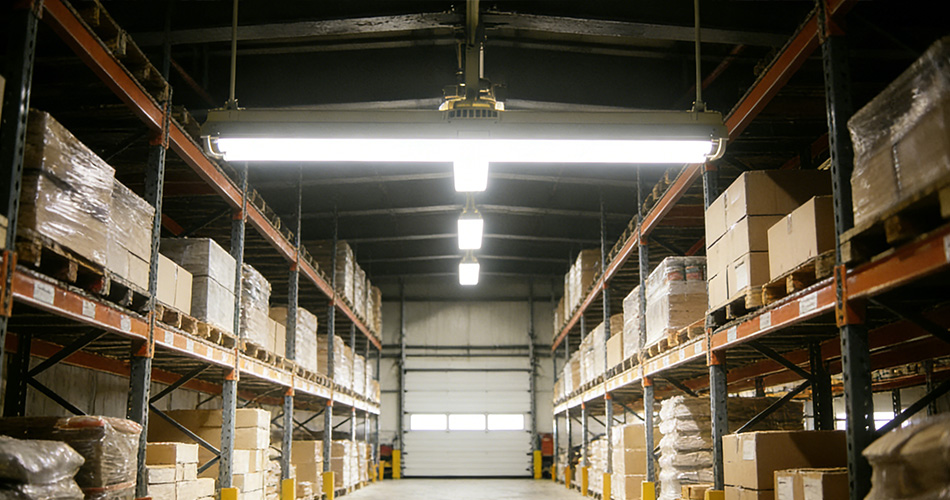
To maximize the value of automated lighting systems warehouse, operators should consider several critical factors during implementation.
System compatibility is paramount. The automated lighting system should integrate seamlessly with existing warehouse technologies, such as WMS, IoT platforms, and equipment control systems. Choosing a system with open communication protocols ensures flexibility and avoids vendor lock-in.
User-centric design is also essential. The system’s control interface should be intuitive, allowing warehouse managers to program lighting profiles, monitor energy use, and troubleshoot issues easily. Training staff on basic system operations ensures that the technology is used to its full potential.
Scalability is another key factor. As warehouses expand or modify their layouts, the automated lighting system should be easy to scale—adding new sensors or lighting zones without requiring extensive rewiring or system overhauls. This ensures that the system grows with the business.
Automated lighting systems warehouse are poised to become even more intelligent as technology advances, driven by AI, machine learning, and enhanced IoT connectivity.
AI-powered predictive lighting is emerging as a game-changing trend. These systems analyze historical data on warehouse activity—including order volumes, personnel movement, and equipment routes—to predict lighting needs in advance. For example, the system can pre-activate lighting in a picking zone before the first worker arrives during peak hours, ensuring seamless operations without energy waste.
Machine learning also enables predictive maintenance, as the system can detect abnormal lighting performance (such as dimming fixtures or unresponsive sensors) and alert maintenance teams before failures occur. This reduces downtime and extends the lifespan of lighting components.
Enhanced IoT integration will further connect automated lighting systems to a broader network of warehouse sensors, enabling holistic facility optimization. For example, lighting data can be combined with temperature, humidity, and equipment performance data to create a comprehensive view of warehouse operations, identifying opportunities for further efficiency gains.
In conclusion, automated lighting systems warehouse are transforming industrial illumination by combining energy efficiency, safety, and operational agility. Their ability to adapt to diverse warehouse zones, integrate with smart ecosystems, and deliver tangible cost savings makes them a cornerstone of modern warehouse management. As AI and IoT technologies advance, these systems will become even more intelligent, helping warehouse operators achieve new levels of efficiency and sustainability. For businesses looking to stay competitive in the fast-paced logistics landscape, investing in automated lighting systems warehouse is a strategic step toward operational excellence.
Related Articles
2026 Commercial Outdoor Lighting System Integration Guide | LumiEasy
Indoor Lighting Systems for Smart Industrial Buildings
Automated Lighting Systems: Smart Controls for Commercial and Industrial Buildings
AI Automated Lighting Systems: Redefining Efficiency and Intelligence in Smart Buildings
Automated Theatre Lighting Systems: Shaping Narrative and Immersion in Live Performances


)
)
)
)

+86 15899791249

+86 755 2955 3313


Address: Huafeng No.1 Science and Technology Park, Sanwei, Bao'an District, Shenzhen, Guangdong, China.
