

Time:2026-03-11
Industrial facilities, warehouses, and large commercial buildings are increasingly adopting smart lighting solutions to reduce energy consumption, enhance worker productivity, and support sustainability goals. One of the most effective energy-saving strategies in modern lighting control is daylight harvesting. By leveraging natural light to supplement artificial illumination, daylight harvesting helps factories and commercial facilities reduce electricity use while maintaining optimal lighting conditions for operations.
A well-designed daylight harvesting system integrates sensors, control modules, and automation algorithms to continuously adjust artificial lighting levels based on available natural light. LumiEasy specializes in advanced daylight harvesting solutions, providing industrial clients with energy-efficient, automated lighting control systems tailored for complex facilities.
This article explores daylight harvesting integration in smart lighting, covering sensor technologies, system design, energy-saving potential, and practical implementation strategies for factories and industrial environments.
Daylight harvesting refers to the practice of adjusting indoor lighting in response to natural sunlight. By monitoring ambient light levels, automated lighting systems can reduce artificial lighting when sunlight is sufficient and increase illumination when natural light diminishes.
In industrial facilities, daylight harvesting offers multiple benefits:
Energy efficiency: Reduces unnecessary electricity consumption
Improved visual comfort: Maintains consistent lighting levels for work areas
Operational savings: Lowers maintenance costs by extending lamp lifespan
Environmental sustainability: Reduces carbon footprint
Factories with high ceilings, large windows, or skylights can particularly benefit from daylight harvesting, as natural light penetrates deep into the facility, supplementing artificial lighting.
A daylight harvesting sensor is the cornerstone of automated daylight management. These sensors detect ambient light levels and communicate with the lighting control system to adjust fixture output.
Photocells: Measure illuminance at specific locations
Integrated fixture sensors: Built into luminaires to monitor light output
Wireless networked sensors: Communicate readings across multiple zones for coordinated control
Proper placement of daylight harvesting sensors is essential for optimal performance. Sensors should avoid direct glare from windows, reflections, or shadows from machinery that could lead to inaccurate readings.
LumiEasy’s sensors feature advanced algorithms to provide reliable, real-time daylight monitoring in industrial environments, supporting both continuous dimming daylight harvesting and discrete on/off adjustments.
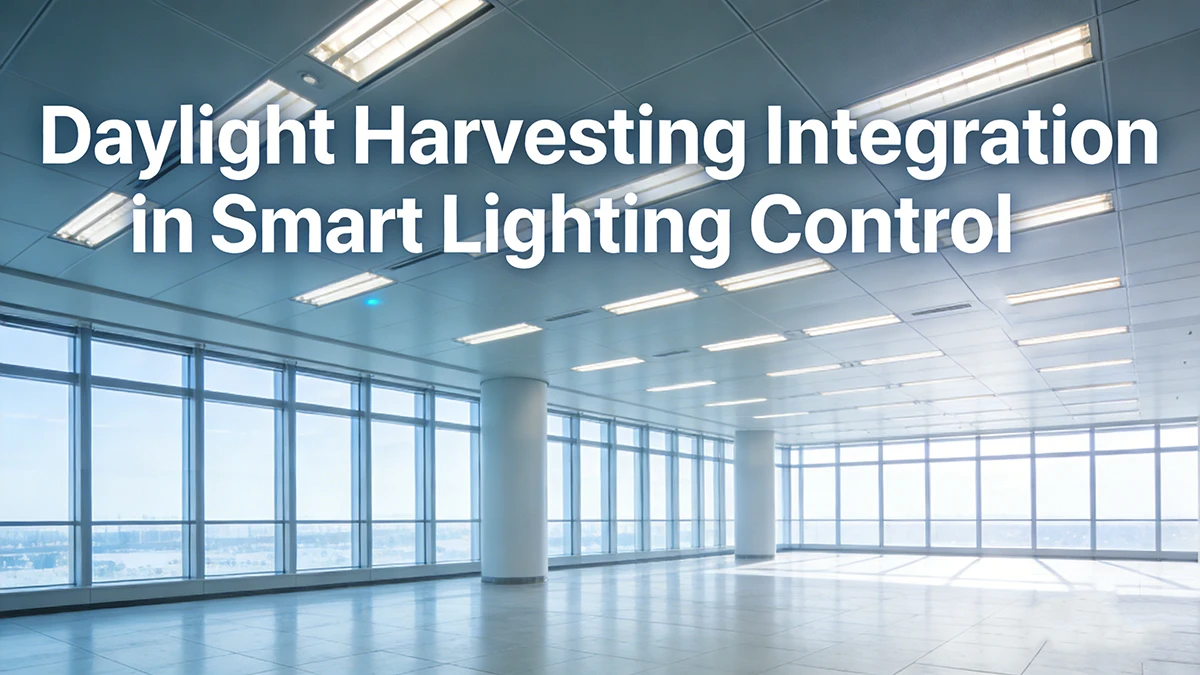
The concept of daylight harvest emphasizes using natural light to minimize artificial lighting whenever possible. Industrial facilities implementing daylight harvest strategies achieve substantial energy savings without compromising illumination quality.
Identify areas with significant natural light penetration
Zone lighting based on occupancy and daylight exposure
Integrate daylight sensors with lighting control modules for automation
Use dimmable LED luminaires for precise light adjustments
LumiEasy’s daylight harvesting solutions allow facilities to combine automated sensor readings with fixture dimming, optimizing energy usage throughout the workspace.
Harvesting daylight involves capturing available sunlight and using it to reduce artificial lighting needs. In industrial environments, this process requires careful system planning and sensor calibration.
Key considerations include:
Window orientation and size: Determines the amount of natural light available
Ceiling height and fixture spacing: Affects sensor coverage and dimming performance
Sensor sensitivity and placement: Ensures accurate measurement of ambient light
By strategically harvesting daylight, factories can achieve significant reductions in lighting-related electricity costs while maintaining safety and productivity standards.
Daylight harvesting system design is a critical step in achieving optimal energy efficiency. A well-designed system balances natural light with artificial lighting, providing consistent illumination while maximizing energy savings.
Sensor selection and placement: Ensures accurate detection of ambient light
Dimming strategies: Continuous or stepped dimming for smooth illumination adjustment
Zoning: Divides facility into areas with similar daylight exposure for efficient control
Integration with building management systems: Centralized monitoring and control
LumiEasy works with industrial clients to create customized daylight harvesting system designs that match their facility layout, operational requirements, and sustainability objectives.
Daylight harvesting control calibration is the process of fine-tuning sensors and control algorithms to ensure the lighting system responds appropriately to changing natural light conditions.
Avoids over- or under-lighting of work areas
Maximizes energy savings without compromising safety
Reduces wear on fixtures by preventing excessive switching
Calibration involves testing sensor placement, adjusting threshold levels, and monitoring the response of the lighting system under different daylight scenarios.
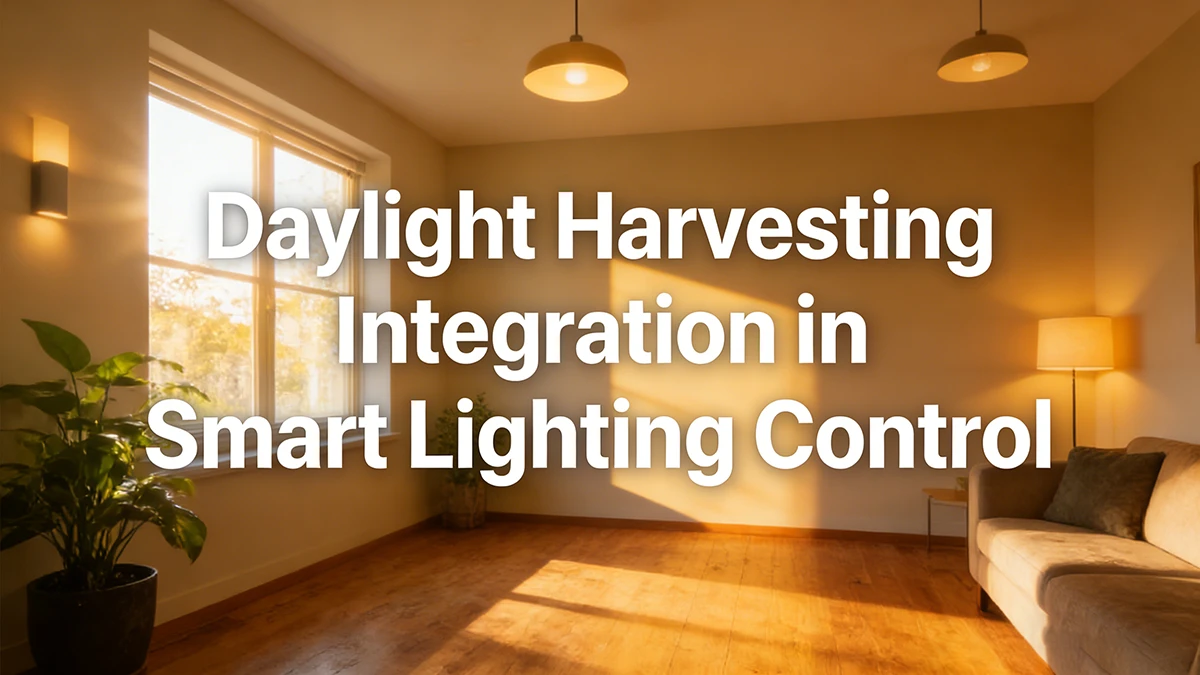
Automated daylight harvesting sensors enable real-time adjustments to lighting systems without manual intervention. These sensors communicate with lighting control modules, networked controllers, or building automation platforms.
Immediate response to changing daylight conditions
Integration with occupancy sensors for combined energy savings
Supports continuous dimming daylight harvesting
Scalable for large industrial facilities
LumiEasy offers automated daylight harvesting sensors designed for high-ceiling warehouses, factories, and large commercial buildings.
Daylight harvesting energy savings result from reducing artificial lighting when natural light is sufficient. Industrial studies show that implementing daylight harvesting can reduce electricity consumption by 20% to 60%, depending on building design and operational patterns.
Energy savings are maximized by:
Combining daylight sensors with occupancy-based lighting controls
Using LED luminaires with dimming capability
Zoning lighting to target areas with the highest potential for daylight utilization
LumiEasy’s energy management dashboards provide detailed reporting on electricity savings, enabling facility managers to quantify the financial and environmental benefits.
Continuous dimming daylight harvesting allows luminaires to adjust brightness in fine increments, rather than simple on/off switching. This provides smoother transitions and maintains consistent lighting levels.
Enhances worker comfort and productivity
Avoids sudden lighting changes that can cause glare or eye strain
Optimizes energy efficiency by matching fixture output precisely to daylight levels
Continuous dimming is especially effective in large production areas or warehouses where lighting uniformity is critical.
Daylight harvesting lighting control integrates sensor data with control algorithms to optimize lighting in real time. Modern control systems include features such as:
Centralized dashboards for monitoring and reporting
Integration with occupancy sensors for additional energy savings
Compatibility with networked LED luminaires for zone-specific adjustments
Emergency override for safety-critical areas
LumiEasy’s lighting control platforms combine daylight harvesting with intelligent automation to provide efficient, reliable lighting for industrial facilities.
Daylight harvesting is a technique where lighting systems adjust artificial light based on available natural light. Sensors detect daylight levels and dim or switch off lights accordingly, improving energy efficiency and reducing electricity costs.
Daylight harvesting is also referred to as daylight-responsive lighting, natural light integration, or daylight-based lighting control.
A daylight sensor measures ambient light levels and communicates with the lighting control system. The system then adjusts the brightness of LED luminaires or other fixtures to maintain consistent illumination while minimizing energy use.
Related news
Photocell Light Sensors for Industrial Energy Saving Lighting | LumiEasy
Daylight Harvesting Calibration Accuracy: Boost Energy Efficiency
NLC Solutions for Modern Smart Factories
Optimize Energy Use with Daylight Harvesting


)
)
)
)

+86 15899791249

+86 755 2955 3313


Address: Huafeng No.1 Science and Technology Park, Sanwei, Bao'an District, Shenzhen, Guangdong, China.
