

Time:2026-03-12
Energy efficiency has become a key priority for industrial facilities around the world. Factories, warehouses, logistics centers, and manufacturing plants rely heavily on lighting systems to maintain safe and productive operations. However, traditional lighting systems often operate continuously regardless of daylight conditions, resulting in unnecessary energy consumption and increased operational costs.
One of the most effective solutions for optimizing industrial lighting is the use of photocell light sensors. These sensors automatically detect ambient light levels and control lighting systems accordingly. By switching lights on at dusk and off at dawn—or adjusting brightness levels based on available natural light—photocell sensors significantly reduce electricity usage.
Modern photocell sensor lighting systems are widely used in outdoor industrial environments such as parking lots, loading docks, storage yards, and building perimeters. LumiEasy provides advanced industrial lighting solutions that integrate photocell light sensors, smart control modules, and energy-efficient LED luminaires to create intelligent lighting infrastructures for factories and industrial facilities.
This article explores the benefits of photocell lighting sensors, how they work, and why they are an essential component of modern industrial lighting control systems.
A photocell sensor for outdoor lighting is designed to automatically control lighting based on ambient daylight levels. These sensors detect natural light and activate lighting fixtures when illumination drops below a predefined threshold.
Industrial facilities often operate around the clock, requiring reliable outdoor lighting for safety and security. Without automated control, outdoor lighting systems may remain active during daylight hours, wasting electricity.
Photocell sensors prevent this problem by enabling automatic lighting operation:
Lights turn on automatically at dusk
Lights turn off automatically at sunrise
Lighting adapts to changing daylight conditions
Energy waste is minimized
By integrating photocell sensors into outdoor lighting infrastructure, factories can significantly reduce energy consumption while maintaining safe working environments.
LumiEasy offers robust photocell sensor solutions for outdoor lighting that are specifically designed for industrial applications and harsh environments.
Choosing the best photocell sensor for outdoor lighting requires careful consideration of several factors, including durability, detection accuracy, and compatibility with industrial lighting systems.
Industrial clients should prioritize sensors with the following characteristics:
High sensitivity for accurate daylight detection
Weatherproof housing to withstand rain, dust, and temperature variations
Stable switching thresholds to prevent flickering
Compatibility with LED luminaires
Long operational lifespan
LumiEasy designs industrial grade photocell sensors that meet the demands of large-scale lighting environments such as warehouses, factories, and industrial parks.
These sensors are engineered to provide consistent performance while minimizing maintenance requirements.
A light sensor photocell is a device that detects light intensity and converts it into an electrical signal used to control lighting systems.
Photocell sensors operate based on photoelectric technology. When light strikes the sensor, the device measures the intensity and triggers a response from the lighting control system.
In industrial lighting applications, photocells perform several functions:
Activating lights during low-light conditions
Turning lights off when daylight is sufficient
Supporting automated lighting schedules
Enhancing energy management systems
These sensors are particularly valuable for outdoor industrial lighting systems where manual operation would be impractical.
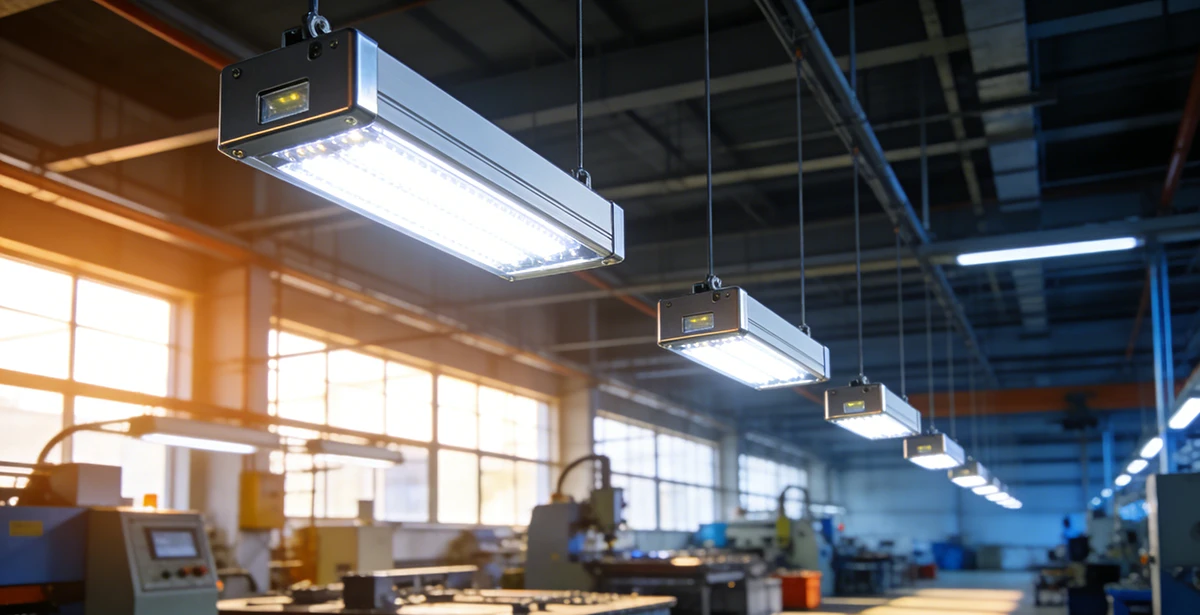
A photocell sensor for outdoor lights ensures that lighting systems operate only when needed, improving energy efficiency and reducing electricity costs.
Photocell sensors are commonly used in:
Factory perimeter lighting
Warehouse loading docks
Outdoor storage areas
Industrial parking lots
Security lighting systems
In these environments, automated lighting control improves safety while minimizing operational costs.
LumiEasy integrates photocell sensors with intelligent lighting control platforms to provide seamless automation and centralized monitoring.
A photocell light sensor plays a critical role in smart lighting systems. These sensors provide real-time feedback to lighting control modules, enabling automated adjustments based on environmental conditions.
Industrial facilities that implement photocell lighting technology gain several advantages:
Reduced energy consumption
Improved operational efficiency
Lower maintenance costs
Enhanced sustainability performance
Photocell sensors also support smart building initiatives by enabling integration with centralized lighting management systems.
An outdoor lighting photocell sensor is specifically designed for exterior environments where lighting must respond to natural daylight cycles.
Outdoor sensors must be capable of operating reliably under challenging conditions, including:
Extreme temperatures
Moisture exposure
Dust and airborne particles
Vibration from industrial machinery
LumiEasy outdoor lighting photocell sensors are built with rugged housings and advanced detection technology to ensure reliable operation in demanding industrial environments.
Proper outdoor photocell sensor calibration ensures accurate detection of ambient light levels.
Calibration typically involves:
Adjusting sensor sensitivity levels
Setting appropriate light thresholds for activation
Testing sensor response during sunrise and sunset conditions
Correct calibration prevents issues such as premature activation or delayed lighting response.
Industrial facilities often perform calibration during system commissioning to optimize lighting performance.
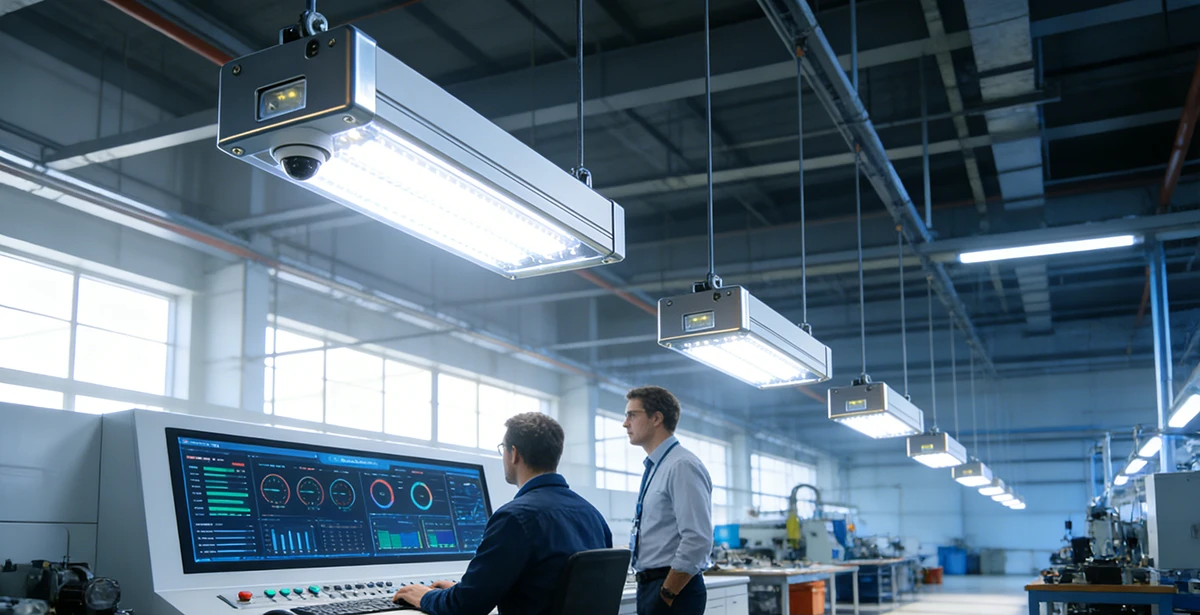
Weatherproof photocell sensor installation is essential for maintaining long-term reliability in outdoor lighting systems.
To ensure proper operation:
Install sensors in locations with clear exposure to natural light
Avoid placing sensors under artificial light sources
Use weatherproof connectors and sealed housings
Follow manufacturer wiring instructions
LumiEasy photocell sensors are designed for easy installation while maintaining protection against environmental conditions.
Photocell dusk dawn operation refers to the automatic switching of lights based on the transition between day and night.
Dusk-to-dawn operation provides several benefits:
Fully automated lighting control
Improved security for industrial facilities
Reduced manual intervention
Lower energy costs
This feature is widely used in industrial outdoor lighting systems where lighting must remain operational throughout nighttime hours.
Industrial grade photocell sensors are specifically engineered to withstand demanding environments and provide reliable performance over extended periods.
High durability and long service life
Stable switching thresholds
Compatibility with LED lighting systems
Resistance to environmental stress
LumiEasy industrial photocell sensors are designed to support smart lighting control systems in large-scale industrial environments.
Photocell sensors ensure that lights operate only when needed, significantly reducing electricity consumption.
Proper illumination enhances safety in outdoor areas such as loading docks and storage yards.
Automated lighting systems reduce manual intervention and extend the lifespan of lighting fixtures.
Photocell sensors integrate seamlessly with intelligent lighting control systems for advanced automation.
LumiEasy provides advanced lighting technologies designed for industrial environments.
Our solutions include:
High-performance LED luminaires
Industrial-grade photocell sensors
Smart lighting control systems
Automated energy management platforms
By integrating photocell sensors with intelligent lighting controls, LumiEasy helps factories achieve significant energy savings while maintaining reliable lighting performance.
As smart factories continue to evolve, photocell technology will play an increasingly important role in automated lighting control.
Future innovations may include:
AI-powered lighting optimization
Integration with IoT-based building management systems
Advanced energy monitoring and analytics
Adaptive lighting strategies for sustainable industrial operations
Photocell sensors will remain a foundational technology supporting intelligent lighting infrastructures.
Wiring a photocell sensor typically involves connecting the sensor between the power supply and the lighting fixture. The sensor detects ambient light and controls the electrical circuit to switch the light on or off. LumiEasy provides installation guides and industrial-grade wiring solutions for reliable integration.
A photocell light sensor is an electronic device that detects light levels and automatically controls lighting systems based on ambient illumination conditions.
Photocell sensors use photoelectric materials that generate electrical signals when exposed to light. These signals trigger lighting control systems to activate or deactivate lights depending on ambient brightness.
Related news
Daylight Harvesting Integration in Smart Lighting Control | LumiEasy
Daylight Harvesting Calibration Accuracy: Boost Energy Efficiency
NLC Solutions for Modern Smart Factories
Optimize Energy Use with Daylight Harvesting


)
)
)
)

+86 15899791249

+86 755 2955 3313


Address: Huafeng No.1 Science and Technology Park, Sanwei, Bao'an District, Shenzhen, Guangdong, China.
