

Time:2026-03-16
Energy costs have become a major concern for industrial facilities, commercial buildings, and smart infrastructure projects worldwide. Lighting alone can account for 15%–40% of total electricity consumption in factories, warehouses, and large commercial environments. Traditional lighting systems often operate inefficiently because they rely on manual controls, outdated fixtures, and fixed lighting schedules.
In contrast, smart lighting solutions combine LED technology, sensors, wireless communication, and IoT platforms to create intelligent lighting networks. These systems automatically adjust lighting levels based on occupancy, daylight availability, and operational requirements. As a result, companies can significantly reduce energy consumption while improving operational efficiency.
For industrial clients, smart lighting is not simply a technological upgrade—it is a strategic investment that improves productivity, sustainability, and cost control. Companies like LumiEasy specialize in delivering advanced smart lighting systems designed for factories, warehouses, logistics centers, and commercial facilities.
This article explores how smart lighting technologies reduce energy costs, the different types of smart lighting solutions available, and why they are essential for modern industrial environments.
Although the term smart home lighting solutions is commonly associated with residential applications, the core technologies behind smart home lighting are also widely used in commercial and industrial environments.
Smart lighting solutions typically include:
Energy-efficient LED luminaires
Motion and occupancy sensors
Daylight harvesting sensors
Wireless lighting control networks
Cloud-based monitoring platforms
In residential environments, these systems allow homeowners to control lighting using smartphones or voice commands. In industrial settings, similar technologies allow facility managers to automate and optimize lighting operations across large facilities.
Smart lighting systems reduce energy costs in several ways:
Automatic shutoff when spaces are unoccupied
Dimming based on natural daylight availability
Centralized monitoring of lighting usage
Optimized lighting schedules
For factories operating around the clock, these automation features can deliver substantial reductions in electricity consumption.
LumiEasy develops intelligent lighting systems that bring the convenience of smart home lighting technologies to large-scale industrial environments.
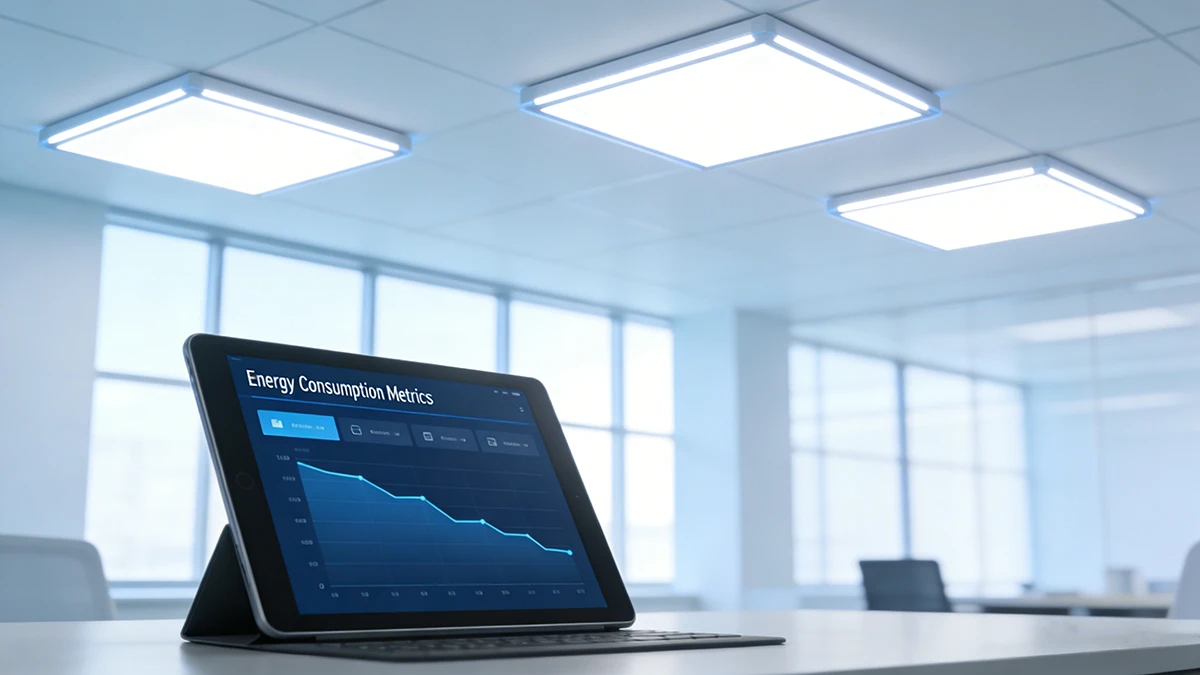
Smart lighting and shading solutions combine lighting control with automated window shading systems to maximize energy efficiency.
In buildings with large windows or skylights, natural daylight plays a significant role in indoor illumination. Smart lighting and shading systems work together to balance artificial and natural lighting.
Key benefits include:
Reduced dependence on artificial lighting
Improved indoor comfort for workers
Lower HVAC cooling loads
Enhanced building energy efficiency
For example, when sunlight is abundant, automated shading systems can adjust blinds while smart lighting systems dim artificial lights accordingly.
Smart lighting and shading solutions are commonly used in:
Manufacturing facilities
Office buildings
Warehouses
Educational institutions
By optimizing daylight usage, companies can reduce electricity costs while maintaining consistent illumination levels.
Urban infrastructure is increasingly adopting smart city lighting solutions to improve energy efficiency, safety, and sustainability.
Smart city lighting typically includes:
Networked streetlights
Remote monitoring systems
Adaptive brightness control
Integration with traffic and environmental sensors
These systems allow municipalities to monitor lighting performance and adjust brightness levels based on real-time conditions.
Smart city lighting provides several advantages:
Reduced electricity consumption
Lower maintenance costs
Improved public safety
Enhanced environmental sustainability
Industrial lighting systems often use the same technologies as smart city lighting networks, such as wireless control platforms and IoT-enabled luminaires.
LumiEasy provides scalable lighting technologies that can support both industrial projects and smart city infrastructure.
Another popular trend in lighting technology is smart home lighting solutions with voice-activated control.
Voice assistants such as smart speakers allow users to control lighting systems using simple voice commands.
Typical voice control features include:
Turning lights on or off
Adjusting brightness levels
Activating lighting scenes
Scheduling lighting automation
While voice control is more common in residential environments, the underlying technology is based on connected IoT systems that can also support industrial lighting automation.
Even without voice commands, industrial facilities benefit from similar connected lighting features:
Mobile app control
Remote system monitoring
Integration with building management systems
These capabilities allow facility managers to optimize lighting operations across multiple buildings.
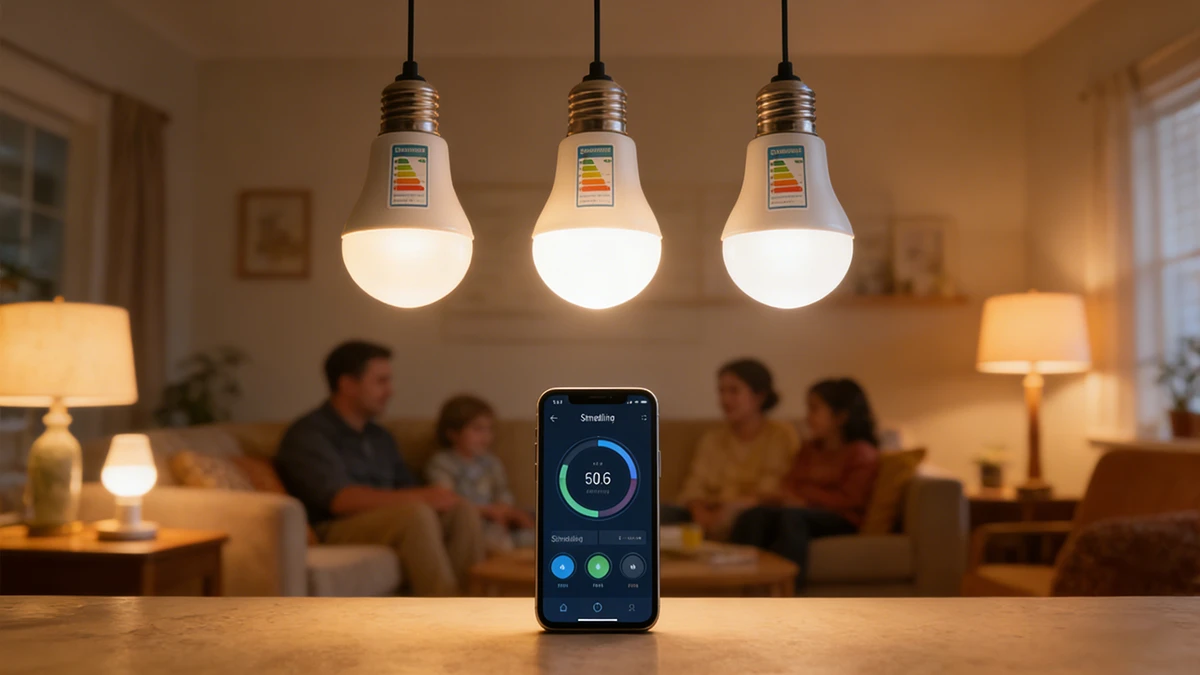
One of the most powerful aspects of modern lighting systems is smart lighting IoT data solutions.
IoT-enabled lighting systems collect and analyze operational data such as:
Energy consumption
Occupancy patterns
Equipment performance
Environmental conditions
This data helps facility managers identify opportunities for energy savings and operational improvements.
IoT lighting platforms can also support predictive maintenance by detecting early signs of fixture failure.
Benefits include:
Reduced maintenance costs
Improved system reliability
Minimized downtime
LumiEasy smart lighting platforms incorporate IoT data capabilities that allow industrial clients to monitor lighting performance and optimize energy usage.
Hotels require flexible lighting systems that provide both energy efficiency and enhanced guest experiences.
Hotels typically use lighting in:
Guest rooms
Lobbies and reception areas
Conference rooms
Restaurants and lounges
Smart lighting solutions allow hotels to create customized lighting scenes that enhance ambiance while reducing energy consumption.
Automated lighting systems in hotels can:
Turn off lights when rooms are unoccupied
Adjust lighting levels during daytime hours
Optimize energy use across large properties
These technologies help hotel operators reduce operational costs while improving guest satisfaction.
IoT smart lighting solutions are transforming how buildings manage lighting systems.
IoT lighting systems connect luminaires, sensors, and controllers through wireless networks. This enables centralized monitoring and automation.
Typical components include:
Wireless lighting controllers
Occupancy sensors
Daylight sensors
Cloud-based management platforms
These components communicate continuously to optimize lighting performance.
Real-time system monitoring
Automated energy optimization
Remote access and control
Seamless integration with building management systems
LumiEasy designs IoT-enabled lighting systems that provide reliable performance in industrial environments.
Choosing the right smart lighting solutions provider is critical for successful lighting upgrades.
Industrial clients should evaluate several criteria:
Technical expertise in smart lighting systems
Experience in industrial projects
Product reliability and certifications
System scalability and compatibility
A professional lighting provider should offer complete solutions that include hardware, software, and system integration.
LumiEasy specializes in providing intelligent lighting solutions for industrial and commercial projects. Our product portfolio includes:
High-efficiency LED luminaires
Wireless lighting control modules
Smart sensors and IoT platforms
Centralized lighting management systems
These technologies help factories and industrial facilities achieve significant energy savings.
Large industrial facilities require scalable smart lighting solutions that can grow with operational needs.
Lighting systems should support future expansion, including:
Additional lighting fixtures
New building areas
Integration with smart building platforms
Scalable lighting systems allow companies to expand their infrastructure without replacing existing equipment.
Modern smart lighting networks use modular designs that enable:
Easy system expansion
Flexible control zones
Seamless integration with IoT devices
LumiEasy designs scalable lighting systems that adapt to the evolving needs of industrial clients.
Smart lighting technologies provide numerous advantages for factories and commercial facilities.
Energy Savings
Automated lighting control reduces electricity consumption significantly.
Operational Efficiency
Centralized control simplifies lighting management across large facilities.
Improved Safety
Proper illumination enhances workplace safety and visibility.
Reduced Maintenance Costs
IoT monitoring allows early detection of equipment issues.
Sustainability Goals
Energy-efficient lighting systems help organizations reduce carbon emissions.
These benefits make smart lighting a key component of modern industrial infrastructure.
LumiEasy delivers advanced lighting technologies designed specifically for industrial applications.
Our solutions include:
Intelligent LED lighting fixtures
Wireless lighting control systems
IoT-enabled monitoring platforms
Automated lighting scheduling
Energy analytics dashboards
By integrating these technologies, LumiEasy helps factories reduce energy costs while improving lighting performance and operational efficiency.
As industries continue to adopt digital transformation strategies, smart lighting systems will become increasingly sophisticated.
Future innovations may include:
AI-powered lighting optimization
Integration with smart factory systems
Advanced environmental sensing
Fully autonomous lighting management
These technologies will further enhance the role of lighting systems in improving energy efficiency and operational performance.
Popular smart home lighting solutions include app-controlled LED bulbs, motion sensor lighting, voice-controlled lighting systems, and automated lighting schedules. Similar technologies are also used in industrial environments through advanced lighting platforms like LumiEasy.
Many lighting manufacturers offer smart lighting products. However, companies like LumiEasy focus specifically on intelligent lighting systems designed for industrial and commercial projects, offering integrated control platforms and IoT connectivity.
Retail spaces often use smart lighting solutions such as automated display lighting, occupancy-based lighting control, daylight harvesting systems, and centralized lighting management platforms to reduce energy costs while enhancing the shopping experience.
Related news
Commercial Lighting Cost Analysis Comparison Report: A Guide to Smart Investments for Businesses
Commercial Smart Lighting Energy Savings: Proven Strategies to Cut Costs & Boost Sustainability
Industrial Warehouse Smart Lighting: Comprehensive Solutions & Best Practices
Industrial Smart Lighting Solutions for Factories and Warehouses


)
)
)
)

+86 15899791249

+86 755 2955 3313


Address: Huafeng No.1 Science and Technology Park, Sanwei, Bao'an District, Shenzhen, Guangdong, China.
